Courtrooms are designed to be controlled spaces. Judges speak carefully, attorneys follow procedure, officers remain alert, and everyone in the room is expected to respect the seriousness of the legal process. But even in such structured environments, emotions can rise quickly when a person hears a sentence that changes the rest of their life.
That is what happened in a widely discussed courtroom moment involving a defendant who learned he had been sentenced to more than 200 years behind bars. The sentence was so long that it extended far beyond a normal human lifetime, leaving the courtroom silent and viewers online shocked by what followed.
According to the account, the courtroom was filled with people waiting for the judge’s decision. Attorneys sat quietly. Officers stood nearby. Family members and observers watched as the judge prepared to read the sentence.
The atmosphere was tense before a single number was spoken.
A Sentence That Shocked the Room
As the judge began reading through the charges, the seriousness of the case became clear. One charge was followed by another, then another. Each count carried its own penalty, and those penalties were ordered to be served one after the other.
By the time the judge finished, the combined sentence reportedly exceeded 200 years.
For anyone hearing that number, the meaning was unmistakable. The defendant was not simply facing years in prison. He was facing a sentence that effectively meant he would never leave prison as a free man.
This type of punishment is often connected to consecutive sentencing. In a consecutive sentence, multiple prison terms are served back-to-back instead of at the same time. Courts may use this structure in serious cases involving multiple charges, repeated offenses, or multiple victims.
While the total number of years may sound symbolic, it can have practical legal importance. It can ensure that each offense is counted separately and reduce the possibility of early release if laws, appeals, or parole rules change later.
The Defendant’s Reaction Changes Everything
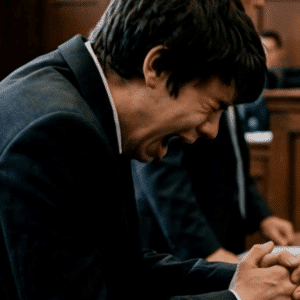
The most unforgettable part of the courtroom moment was not only the sentence itself. It was the defendant’s reaction.
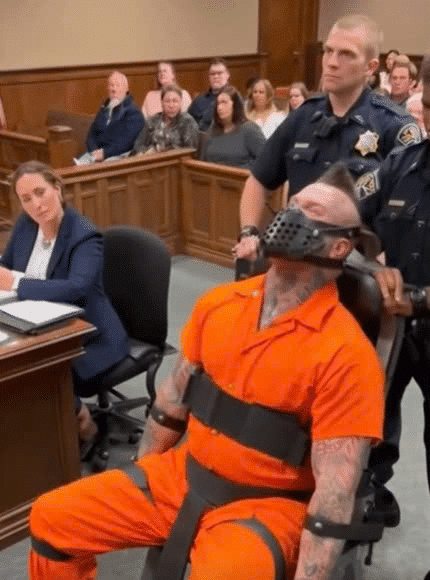
As soon as the judge finished speaking, the defendant appeared to tense up. His body shifted sharply, and his expression changed from stillness to visible anger and disbelief. Within moments, he lunged against his restraints.
Officers immediately moved in to secure the situation. According to the account, the defendant was seated in a reinforced restraint chair, but he still struggled with enough force to alarm the courtroom. Officers held the chair steady and worked to calm him before the situation could escalate.
The room reportedly fell into a heavy silence.
Some people looked away. Others stared in shock. What had been a formal sentencing became a raw emotional moment in which the defendant seemed to fully realize the weight of his future.
Courtroom reactions are often emotional, but this one stood out because it showed the exact moment a person appeared to understand that his life outside prison was over.
Why Courts Issue Sentences Beyond a Lifetime
To many people, a sentence of more than 200 years may seem impossible to understand. No person can serve that amount of time in a literal sense. But in the legal system, extremely long sentences can serve several purposes.
First, they may recognize each charge separately. If a case involves multiple crimes, the court may want the punishment to reflect every count rather than allowing all sentences to merge into one.
Second, long consecutive sentences may help protect the public by making release unlikely. Even if one conviction is reduced or overturned later, other sentences may still remain in place.
Third, such sentences can send a strong message about accountability. They show that the court views the crimes as severe enough to require punishment that extends beyond a standard prison term.
These sentencing decisions are often debated. Some people believe lengthy sentences are necessary for public safety and justice. Others question whether century-long sentences are excessive or whether the justice system should focus more on rehabilitation in certain cases.
Still, for serious offenses, courts often prioritize accountability, protection, and recognition of harm done to victims.
Public Reaction After the Video Spread Online
After the courtroom video began circulating online, viewers reacted strongly. Some people were stunned by the defendant’s physical response. Others focused on the sentence itself, saying it showed the serious consequences of criminal actions.
Many online discussions centered on whether punishments that exceed a lifetime are fair, necessary, or symbolic. Some commenters argued that such sentences are appropriate when the crimes are severe. Others said the legal system should always be examined carefully to ensure that sentencing is consistent, fair, and based on evidence.
The video also became a reminder of how quickly courtroom clips can go viral. A brief moment may capture public attention, but it rarely shows the full case, the victims’ experiences, the evidence, or the legal arguments that led to sentencing.
That is why it is important to avoid judging an entire case from a short video alone. A viral clip can show emotion, but it cannot always show the full legal background.
The Emotional Reality of Sentencing
Sentencing is one of the most serious moments in any criminal case. For victims and their families, it may represent accountability after a long and painful process. For defendants, it may be the moment when every decision, action, and consequence becomes unavoidable.
Even in courtrooms filled with procedure and legal language, sentencing remains deeply human. Lives change in that moment. Families are affected. Futures are rewritten. Communities may feel relief, grief, anger, or confusion.
The defendant’s reaction in this case showed the emotional impact of hearing a sentence that stretches beyond a lifetime. Whether viewers felt sympathy, anger, or shock, the moment revealed how powerful the consequences of the justice system can be.
It also offers a broader lesson about choices and accountability. Actions can carry consequences that affect not only one person, but entire families, victims, communities, finances, careers, housing, insurance concerns, and long-term stability. A single path can lead to outcomes that cannot easily be undone.
A Larger Conversation About Justice
The case has sparked broader discussion about the meaning of justice. Is justice about punishment? Protection? Deterrence? Closure for victims? Rehabilitation? In many cases, the answer may involve more than one of these goals.
Long sentences often reflect the court’s belief that the offense was severe and that the public must be protected. However, they also raise important questions about prison systems, legal appeals, sentencing guidelines, and how society measures accountability.
For some people, the viral moment confirmed that serious crimes should bring serious punishment. For others, it opened a conversation about whether the justice system should rely on extreme sentencing numbers or use clearer alternatives.
What cannot be denied is that the courtroom reaction made people pay attention.
Final Thoughts
The viral courtroom moment involving a defendant receiving a sentence of more than 200 years is a striking reminder of the seriousness of the legal system. In a matter of minutes, a judge’s words changed the defendant’s future permanently.
The reaction that followed stunned the room because it showed the emotional force of that realization. It was not just a number. It was the moment a person confronted the reality of a lifetime behind bars.
While the full details of the case remain limited in the account, the broader message is clear: choices carry consequences, and the justice system has the power to impose penalties that last beyond a single lifetime.
For viewers, the moment serves as a powerful reminder that behind every courtroom headline are real people, real consequences, and decisions that can never be taken back.