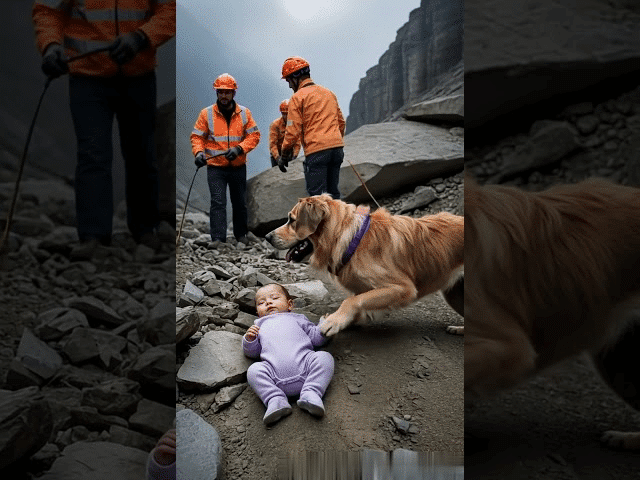
In a world where difficult headlines often dominate the news, stories of courage and compassion remind us that hope can still appear in the most unexpected ways. One emotional rescue story has captured widespread attention after a search team, nearly out of options, was led to a missing baby by a highly trained search-and-rescue dog.
What began as a desperate race against time became a powerful example of preparation, trust, and teamwork. It also showed why trained rescue animals remain such an important part of emergency response efforts across the country.
According to the account, authorities received urgent information that a baby was missing and possibly in danger. The details were limited at first, but responders understood one thing clearly: every second mattered. When a child is missing, time becomes one of the most important factors in determining the outcome.
Emergency personnel quickly organized a search operation. Officers, rescue workers, medical staff, and a canine unit were brought in to cover the area as quickly and carefully as possible. The team knew the situation required speed, but also precision. A rushed search could miss important clues. A delayed response could put the child at greater risk.
Search Teams Face Difficult Conditions
When rescuers arrived, they were met with challenging conditions. The area was difficult to search visually, and early efforts did not immediately reveal the baby’s location. Team members checked every possible path, listened for sounds, and followed any sign that might point them in the right direction.
But as time passed, concern grew.
In missing-person cases, especially those involving infants or young children, the emotional pressure can be overwhelming. Responders must balance urgency with careful decision-making. Families wait for answers. Communities hold their breath. Every minute feels longer than it should.
Despite their training, the human search team struggled to find a clear lead. That was when the search-and-rescue dog became essential.
The Dog Picks Up a Scent
Search-and-rescue dogs are trained to detect human scent in ways people cannot. Their sense of smell allows them to follow trails across difficult terrain, through debris, and in conditions where visual clues may be almost impossible to spot.
Guided by its handler, the dog began working the area with focus and discipline. It moved carefully, checking the air and ground for scent. To an observer, the behavior may have looked simple. But to the handler, every movement mattered.
Then the dog’s behavior changed.
It became more focused, more alert, and more determined. The handler recognized the signal immediately. The dog had picked up something important.
The rescue team followed.
A Breakthrough at the Critical Moment
As the dog moved forward, rescuers stayed close behind, trusting its training and instincts. The atmosphere shifted from uncertainty to intense focus. After a long and stressful search, this was the lead they had been waiting for.
Moments later, the dog led the team directly to the baby’s location.
The discovery brought immediate relief. What had felt like a search with fading hope suddenly became a rescue.
Rescuers carefully approached the child, making sure the area was safe before providing assistance. The baby was found alive, and medical personnel quickly began checking the child’s condition. In moments like this, even after a successful discovery, professional care remains critical. The baby needed to be assessed for exposure, dehydration, injury, or any other possible health concern.
The child was then placed in safe hands, and the focus turned to medical evaluation and family reunification.
An Emotional Reunion
Shortly after the rescue, the baby was reunited with family members in a deeply emotional moment. Tears, relief, and gratitude filled the scene as loved ones processed what had happened.
For the family, the fear of the unknown had been almost unbearable. Not knowing where a child is—or whether they are safe—is one of the most terrifying experiences any parent or relative can face.
The rescue brought an answer they had been praying for.
For the emergency team, the moment was also meaningful. Rescue workers train for situations like this, but every life saved carries emotional weight. Their work requires discipline, courage, and the ability to stay calm when others are overwhelmed.
And in this case, one four-legged partner played a life-saving role.
Why Search-and-Rescue Dogs Matter
This story highlights the important role of canine units in emergency response. Search-and-rescue dogs are not simply pets with strong instincts. They are carefully trained working animals that spend countless hours learning how to detect scent, follow commands, operate in stressful environments, and communicate with their handlers.
Their training can make the difference in cases involving missing children, disaster zones, collapsed buildings, wooded areas, and difficult terrain.
The bond between the dog and handler is also essential. They must trust each other completely. The handler learns how to read the dog’s body language, while the dog learns to respond to direction even in chaotic conditions.
That partnership is built over time through discipline, patience, and repetition.
The Importance of Emergency Preparedness
Beyond the emotional impact, this rescue is a reminder of why communities must invest in emergency response systems. Trained rescue teams, canine units, communication tools, medical services, and proper equipment all require funding and support.
Just as families plan for health insurance, life insurance, personal finance goals, emergency savings, home safety, and long-term security, communities also need strong preparation for unexpected crises. Emergency services are often most appreciated when disaster strikes, but their success depends on training and resources provided long before the emergency happens.
Supporting rescue programs can help save lives when every second matters.
A Story of Hope and Teamwork
The reason this story resonates with so many people is simple: it reminds us that even in frightening moments, hope can survive.
The rescue was not the result of one person acting alone. It took a team. It took trained responders, medical support, community concern, and a dog whose skills helped guide everyone to the right place.
Stories like this also remind us that animals can serve humanity in extraordinary ways. Whether working in search-and-rescue, therapy, security, or medical support, trained dogs often become trusted partners in moments when human ability alone may not be enough.
Final Thoughts
The rescue of a missing baby by a search-and-rescue dog is more than a heartwarming headline. It is a powerful reminder of courage, training, teamwork, and the bond between humans and animals.
When the search team was close to losing hope, the dog found a lead no one else could see. That lead changed everything.
A baby was found alive. A family was reunited. A community was reminded of the value of emergency preparedness and the incredible role trained animals can play in saving lives.
Sometimes, heroes wear uniforms.
And sometimes, they arrive on four legs.