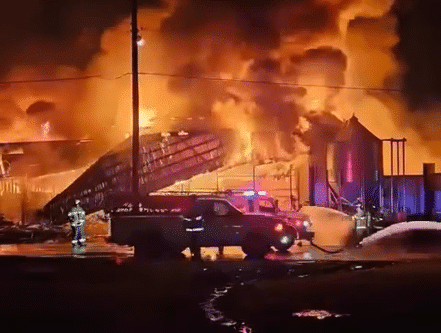
A major fire near Glasgow Central Station sent thick smoke into the sky, damaged a historic city-center building, and caused widespread travel disruption across one of Scotland’s busiest transport hubs.
The blaze broke out on Sunday, March 8, 2026, near Glasgow Central Station, in a commercial building on Union Street. Emergency services were alerted at about 3:46 p.m., and firefighters quickly moved in as flames spread through the structure. Reuters reported that the fire affected the ground floor of a four-story commercial building identified as a vape shop, leading to a partial collapse and major disruption to train services.
The fire was intense enough to force the closure of Glasgow Central’s high-level services, leaving thousands of passengers facing delays, cancellations, and alternative travel plans. The Guardian reported that Scotland’s busiest station was expected to remain closed “until further notice” after the fire.
Although the damage was extensive, officials reported no casualties, bringing some relief to a community shocked by the scale of the destruction. ITV News reported that more than 200 firefighters were involved in tackling the fire and making the area safe, and that there were no reports of casualties.
A Busy City Center Turns Into an Emergency Zone
The fire broke out in one of Glasgow’s busiest areas, close to shops, businesses, hotels, restaurants, public transport links, and pedestrian traffic.
Witnesses described smoke rising over the city as fire crews arrived and police moved quickly to secure the area. Roads around the scene were closed, pedestrians were kept away from the danger zone, and emergency crews worked to prevent the fire from spreading to nearby buildings.
For people in the area, the scene was chaotic and frightening. Sirens echoed through the streets as emergency vehicles arrived in quick succession. Commuters, shoppers, workers, and nearby residents were forced to adjust quickly as the fire created a fast-moving public safety situation.
In an urban center, fire risks are especially serious. Buildings are close together, foot traffic is heavy, and transportation systems can be affected almost immediately. A fire in one commercial property can quickly become a wider emergency involving public safety, business continuity, insurance claims, property damage, and citywide disruption.
Firefighters Battle an Intense Blaze
Firefighters responded with a major operation to contain the flames and stop the blaze from spreading further.
According to ITV News, the fire caused “enormous” damage, and a 19th-century building partially collapsed, including a dome that caved in during the incident. The report also said crews worked to prevent the fire from spreading to a nearby hotel.
That effort was critical.
In dense city centers, fire crews must think beyond the building already burning. They must protect neighboring structures, manage falling debris risks, control smoke hazards, and keep emergency routes clear. Crews often work under difficult conditions involving heat, unstable walls, limited visibility, and the risk of further collapse.
The Scottish Sun reported that more than 200 firefighters and 18 appliances battled the fire for over 12 hours, working to stop it from spreading to Glasgow Central Station and the Grand Central Hotel.
The response showed the importance of emergency planning and coordinated public safety work. Police, firefighters, transport officials, city leaders, and medical teams all had roles to play as the incident unfolded.
No Casualties Reported, But Businesses Suffer Heavy Losses
One of the most important updates from officials was that no casualties were reported.
That fact offered relief, but it did not erase the seriousness of the incident. The property damage was severe, and multiple businesses were affected. The Guardian reported that the fire severely damaged a Victorian-era office block next to Glasgow Central Station and destroyed multiple businesses.
For business owners, a fire like this can be financially devastating.
Even when no one is injured, the aftermath may include lost inventory, structural damage, smoke damage, lost revenue, employee disruption, relocation costs, legal paperwork, insurance claims, loan obligations, and uncertainty about reopening.
Small businesses often operate with tight margins. A sudden fire can interrupt cash flow overnight. Owners may need to work with insurers, banks, landlords, accountants, solicitors, and city officials just to understand what comes next.
This is why commercial property insurance, business interruption coverage, emergency planning, and fire safety compliance are so important. They may not prevent every disaster, but they can help businesses survive the financial shock after one.
Travel Disruption Spreads Across the Rail Network
The fire’s location made the situation especially disruptive.
Glasgow Central is a major rail hub, and when services were halted, the effects spread quickly. Reuters reported that dozens of train services were canceled after the fire, while National Rail announced the station’s closure until further notice.
Passengers were urged to check travel updates, seek alternative routes, and avoid the area where possible.
For commuters, tourists, football fans, and workers, the timing created major frustration. But transport closures are often necessary during fires near rail infrastructure. Smoke, structural instability, falling debris, emergency hoses, power risks, and blocked access routes can all make normal operations unsafe.
Even after flames are brought under control, transport disruption may continue. Engineers must inspect tracks, overhead systems, platforms, nearby structures, power supplies, and access routes before services can safely resume.
That process can take time, especially when a damaged building is close to a major station.
Investigation Into the Cause
The exact cause of the fire remained under investigation after the incident.
Reuters reported that the fire affected a ground-floor commercial property identified as a vape shop. The Guardian also reported that the blaze erupted in a vape shop and mentioned explosions believed to have come from vape device batteries.
At the same time, officials emphasized the need for a proper investigation before final conclusions are drawn.
That caution matters. Fire investigations require careful review of burn patterns, electrical systems, witness statements, business records, building materials, safety systems, and possible ignition sources. Investigators must determine not only where a fire started, but how it spread and whether any safety failures contributed.
Until officials release final findings, speculation should be avoided.
Social Media Spreads the Images Quickly
As smoke rose above Glasgow, videos and photos spread quickly across social media.
This can help alert the public, especially during fast-moving emergencies. Real-time images may warn people to avoid an area, help commuters understand delays, and allow families to check on conditions.
But social media can also create confusion.
Old videos may be reposted as new. False claims about casualties may spread before officials confirm facts. Speculation about the cause can create panic or unfairly target businesses before investigators complete their work.
During emergencies, the safest approach is to rely on verified updates from fire services, police, transport authorities, local government, and reputable news outlets.
Sharing responsibly matters.
A Reminder About Fire Safety in Urban Buildings
The Glasgow fire is a powerful reminder that fire safety is not only a private concern. In crowded city centers, one building can affect thousands of people.
Commercial property owners and tenants should regularly review fire alarms, extinguishers, evacuation routes, electrical systems, battery storage practices, emergency lighting, staff training, and insurance coverage.
Businesses that store electronic devices, batteries, chemicals, flammable goods, or high-risk materials should take extra precautions. Proper storage, ventilation, labeling, staff training, and risk assessments can reduce danger.
For landlords and property investors, fire safety is also part of asset protection. A building may represent real estate value, rental income, loans, mortgages, insurance exposure, and long-term investment planning. Failure to manage fire risk can lead to major financial loss and legal liability.
For residents and workers, the lesson is simple: know your exits, follow evacuation orders, and never ignore smoke alarms or fire warnings.
Community Recovery Will Take Time
After a fire of this scale, recovery does not happen overnight.
Damaged structures must be assessed. Unsafe areas may need to be demolished or stabilized. Businesses must file insurance claims. Employees may need support. Transport officials must restore services safely. City leaders must consider whether regulations, inspections, or emergency planning should change.
The Guardian reported that Scotland’s First Minister John Swinney pledged government support after the fire and called for a comprehensive investigation into the causes.
That kind of coordinated recovery is essential. Fires affect more than buildings. They affect livelihoods, public confidence, local commerce, transportation, and the emotional well-being of a community.
Final Thoughts
The major fire near Glasgow Central Station was a frightening reminder of how quickly an ordinary day can become an emergency.
The blaze caused enormous property damage, disrupted rail travel, forced emergency closures, and left multiple businesses facing an uncertain future. More than 200 firefighters were involved in the response, and officials reported no casualties, a fortunate outcome given the intensity of the fire.
As investigators continue reviewing the cause, the incident highlights the importance of fire safety, emergency preparedness, business insurance, public cooperation, and responsible information sharing.
For Glasgow, the fire was not just a dramatic scene of smoke and flames.
It was a major urban emergency — and a reminder that safety planning matters long before disaster strikes.