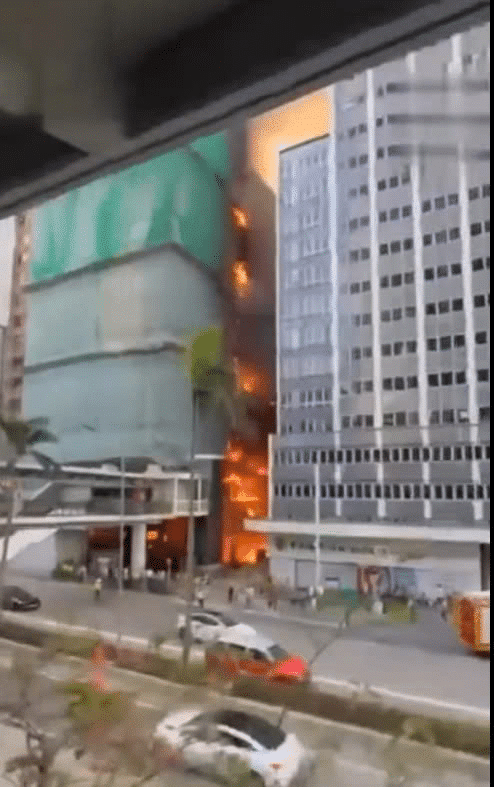
A powerful earthquake struck Myanmar on March 28, 2025, turning an ordinary afternoon into a major humanitarian crisis and sending shockwaves across parts of Southeast Asia.
The earthquake measured magnitude 7.7 and struck near Mandalay, Myanmar’s second-largest city, at about 12:50 p.m. local time. The U.S. Geological Survey reported that the quake was shallow, about 10 kilometers deep, which helped produce intense shaking across the region. The tremors were felt as far away as Bangkok, Thailand, hundreds of miles from the epicenter.
Although some viral posts describe the disaster as happening “a few hours ago,” this major earthquake occurred on March 28, 2025. Its impact, however, remains deeply relevant because recovery from a disaster of this scale can take months or even years.
The quake caused widespread destruction in Myanmar, damaged infrastructure, disrupted communications, and triggered emergency responses across neighboring countries. In Thailand, the shaking caused major concern in Bangkok, where a high-rise construction site collapsed, leading to a prolonged rescue and recovery operation.
A Shallow Earthquake With Destructive Force
Earthquakes that occur at shallow depths can be especially damaging because the energy reaches the surface with greater intensity. In this case, the quake struck at a depth of roughly 10 kilometers, making the shaking dangerous for communities near the epicenter.
The USGS said the earthquake occurred as a result of strike-slip faulting between the India and Eurasia plates. The finite fault analysis indicated movement on a north-striking, right-lateral fault, consistent with the major tectonic systems that make Myanmar vulnerable to powerful earthquakes.
For residents near Mandalay and Sagaing, the shaking was not just frightening — it was destructive. Buildings cracked, walls collapsed, roads were damaged, and families rushed outside in fear as aftershocks followed.
In many rural areas, homes built with weaker materials were especially vulnerable. When a powerful quake strikes communities with limited emergency infrastructure, the damage can escalate quickly, trapping people under debris and making rescue operations far more difficult.
Myanmar Faces Severe Damage and Humanitarian Strain
Myanmar was hit hardest by the disaster.
Early Reuters reporting said the earthquake killed more than 140 people within the first day, with officials warning that the number would likely rise as rescuers reached more damaged areas. Two days later, Reuters reported the death toll had climbed to about 1,700, with thousands injured and hundreds missing.
The rising toll reflected the scale of destruction and the difficulty of reaching affected communities. Roads, bridges, hospitals, rail lines, and other key infrastructure were damaged, slowing rescue and relief efforts. Reuters also reported that the earthquake worsened an already difficult humanitarian situation in Myanmar, where conflict and displacement had already left many people vulnerable before the quake.
Hospitals in affected areas faced extreme pressure as injured residents arrived with trauma caused by collapsing structures, falling debris, and secondary hazards. Medical workers, volunteers, and rescue teams worked under difficult conditions, often with limited supplies and damaged communications.
In disasters like this, the first 48 hours are critical. Search teams race to find survivors, clear rubble, provide emergency medical care, and restore access to food, water, and shelter.
Bangkok Also Suffers Serious Impact
The earthquake was centered in Myanmar, but its effects were felt strongly in Thailand.
Bangkok residents reported buildings swaying, alarms sounding, and people rushing out into the streets. The most serious incident occurred when a high-rise construction site collapsed after the quake. The Associated Press later reported that Thai authorities ended the search operation at the collapsed Bangkok skyscraper, with at least 96 people killed in that collapse.
The Bangkok collapse raised serious concerns about construction safety, engineering standards, building materials, and accountability. AP reported that investigations focused on several companies involved in the project and allegations related to substandard steel rods, although some claims were denied and investigations were ongoing.
This part of the disaster shows why earthquake preparedness is not only about emergency response. It is also about building codes, inspections, construction quality, insurance coverage, public safety enforcement, and long-term urban planning.
Rescue Efforts Complicated by Aftershocks and Access Problems
After the main quake, strong aftershocks continued to shake the region.
Le Monde reported that a 6.7 aftershock followed the main earthquake and that continued tremors complicated rescue operations in Myanmar and Thailand. Rescue teams used search dogs, drones, heavy machinery, and detection tools to search through collapsed buildings and damaged areas.
Aftershocks are dangerous because they can bring down already weakened buildings. For residents whose homes were cracked or partially damaged, the threat created fear about going back indoors. Many people chose to sleep outside or in open areas rather than risk being trapped by another collapse.
Landslides and blocked roads also made relief efforts harder in remote or mountainous areas. When roads are damaged, emergency crews may struggle to bring in food, water, medicine, fuel, and shelter supplies. Communication outages can make it difficult to know which villages need help most urgently.
The Financial Cost of Disaster
The human toll is always the most important part of any earthquake, but the financial consequences are also enormous.
A major quake can destroy homes, businesses, hospitals, schools, roads, bridges, and utilities in seconds. Families may lose property, savings, important documents, income, and access to banking services. Businesses may face damaged inventory, loan payments, payroll problems, insurance claims, and long interruptions before they can reopen.
For governments, the recovery cost can stretch across years. Emergency shelters, medical care, debris removal, infrastructure rebuilding, construction inspections, and public assistance all require major funding.
This is why disaster preparedness is also a financial planning issue. Stronger buildings, emergency savings, home insurance, business interruption coverage, infrastructure investment, and community planning can reduce long-term losses when disasters strike.
In earthquake-prone regions, resilient construction is not just a safety concern. It is an economic necessity.
A Reminder About Preparedness
Earthquakes cannot be prevented, but their impact can be reduced.
Communities can prepare by strengthening building codes, inspecting vulnerable structures, improving emergency communication systems, training rescue teams, and ensuring hospitals have disaster plans. Families can prepare by keeping emergency kits, storing water, securing heavy furniture, knowing evacuation routes, and having copies of important documents.
Businesses and property owners should review insurance coverage, structural safety, employee emergency plans, and backup communication systems. In areas at risk of earthquakes, these steps can protect both lives and long-term financial stability.
The Myanmar earthquake showed how quickly a normal day can become a disaster. It also showed how important it is for governments, homeowners, companies, and communities to prepare before the ground starts shaking.
Final Thoughts
The 7.7 magnitude earthquake that struck near Mandalay, Myanmar, on March 28, 2025, was one of the region’s most destructive disasters in recent years.
Its shallow depth intensified the shaking, damaging communities across Myanmar and sending tremors as far as Bangkok. Thousands of people were killed or injured, infrastructure was damaged, and rescue teams faced difficult conditions as aftershocks continued.
In Thailand, the collapse of a high-rise construction site in Bangkok became one of the most visible symbols of the disaster’s reach and raised major questions about construction safety and accountability.
This tragedy is a reminder of nature’s power — but also of the importance of preparation, stronger infrastructure, emergency planning, and responsible rebuilding.
For survivors, recovery is not just about repairing buildings.
It is about rebuilding lives.