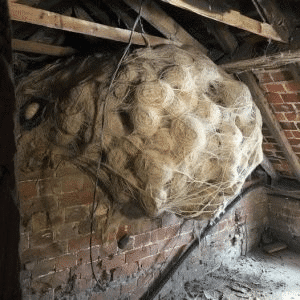
At first, James thought he was dealing with a common homeowner problem.
There were strange sounds coming from the attic. A low buzzing seemed to grow louder at certain times of day. Outside, insects appeared to move near the roofline, slipping in and out of a small opening that had gone unnoticed for years.
To James, it looked like a hornets’ nest.
That alone was enough to cause concern. No homeowner wants to discover a large nest in an attic, especially when children, pets, or family members are living in the house. Hornets can be aggressive when disturbed, and a nest hidden inside a home can create serious safety risks.
But according to the viral account, what began as a possible pest problem soon became something far more unsettling.
The story has spread widely online, but the dramatic details remain unverified. Because of that, it should be treated as an anecdotal or fictionalized homeowner mystery rather than confirmed news. Still, the situation reflects very real concerns about pest control, home maintenance, insurance coverage, and the hidden costs of owning property.
Strange Sounds in the Attic
James first noticed the problem when the house seemed noisier than usual.
At night, when everything was quiet, he heard faint movement above the ceiling. During the day, the sound became sharper — a steady buzzing that seemed to come from one section of the attic.
At first, he ignored it.
Older homes make noises. Wood shifts. Pipes knock. Wind moves through vents. Small animals sometimes pass across the roof.
But then he noticed insects near the outside wall.
They were gathering close to the attic area, disappearing into a gap under the eaves. That was when James began to suspect a nest.
For many homeowners, this is the moment panic begins. A small pest issue can feel manageable. A large nest hidden inside the structure of the home is another matter entirely.
A Backyard Discovery Raises More Questions
According to the circulating story, the first warning signs may have started even earlier.
Years before the attic discovery, landscaping work behind a row of damaged arborvitae trees reportedly uncovered an unusual hidden structure in the yard. Workers initially believed it might be related to old utilities, outdoor equipment, or an abandoned fixture from a previous owner.
But as they cleared the area, they noticed heavy insect activity around it.
The sound was described as unusually intense — not just a normal buzz, but a deep, constant vibration that made the workers uneasy. When they realized the structure appeared to contain an active hornet infestation, they stepped back immediately.
That detail may sound dramatic, but it points to something true: older properties can hide problems long before homeowners notice them.
Buried debris, rotting wood, wall cavities, sheds, attics, roof gaps, and unused outdoor structures can all become nesting areas for insects or animals. By the time activity becomes obvious, the problem may already be large.
Pest Control Is Not Always Simple
James reportedly called a pest control professional to inspect the situation.
That is usually the right first step.
Large stinging-insect nests should not be handled casually, especially when they are located inside an attic, wall, shed, or enclosed space. Professionals have protective equipment, insect identification skills, treatment tools, and experience working around hidden nests.
But in the story, the first pest control provider allegedly refused to remove the nest because of its size and location. Other companies reportedly suggested waiting until colder months, when hornet activity would decline.
For James, that answer created frustration.
Waiting meant living with fear and noise. It also meant worrying that the nest could grow, damage the structure, or create danger for the family.
This is where many homeowners face a difficult choice: pay more for specialized help, wait for safer conditions, or attempt a DIY solution.
The last option can be risky.
The Dangers of DIY Hornet Removal
Trying to remove a hornets’ nest without proper equipment can quickly become dangerous.
Hornets and wasps may swarm when they feel threatened. Multiple stings can cause severe pain, swelling, allergic reactions, or medical emergencies for sensitive individuals. In enclosed spaces like attics, escape routes may be limited, making the risk even higher.
Protective clothing helps, but it does not make a person invincible. Gaps around sleeves, collars, gloves, or pant legs can expose skin. Panic can lead to falls, especially if someone is working on a ladder, in a cramped attic, or near insulation and electrical wiring.
There is also the risk of using unsafe methods.
Some people try smoke, fire, gasoline, sprays, or improvised chemicals. These approaches can create fire hazards, toxic fumes, property damage, or insurance complications.
A pest problem is bad.
A house fire or medical emergency is worse.
The Alleged Twist Inside the Nest
The most dramatic part of the viral story claims that James attempted to deal with the nest himself after professional delays.
Wearing protective gear, he reportedly entered the attic and used smoke to calm or drive away the insects. As the nest became exposed, he allegedly discovered something unexpected hidden within or behind the structure.
The story suggests that the discovery was unsettling enough to create tension inside the family and raise questions beyond pest control.
However, the account does not provide clear, verified evidence of what was found. Different versions of similar viral posts often change the details, exaggerate the outcome, or leave the “real discovery” vague to encourage comments and clicks.
That is why readers should be cautious.
Not every viral homeowner mystery is a confirmed event. Many are built to keep people scrolling by combining fear, curiosity, and unanswered questions.
Why This Story Spread So Quickly
This kind of story is made for social media.
It begins with a relatable fear: strange noises in the attic.
It adds danger: a possible hornets’ nest.
Then it introduces mystery: something hidden inside.
Finally, it ends with a cliffhanger that pushes people to click the comments, watch a video, or share the post.
The structure is effective because it triggers several emotions at once — curiosity, fear, disgust, surprise, and concern for family safety.
But emotional storytelling is not the same as verified reporting.
Before believing or sharing a dramatic post, readers should ask basic questions. Is there a reliable source? Are names, dates, and locations confirmed? Is there an official report? Is the image real or reused from another story? Does the video match the claim? Are there multiple versions with different details?
If the answer is unclear, the story should be treated as entertainment or anecdote, not fact.
The Real Home Safety Lesson
Even if the viral twist is unverified, the practical lesson is important.
Homeowners should take attic noises seriously.
Buzzing, scratching, tapping, chewing, foul smells, stains, or visible insects near the roofline can indicate pests, wildlife, moisture damage, or structural issues. Ignoring these signs can lead to bigger expenses later.
Regular home inspections can help identify problems early. Checking roof gaps, vents, soffits, gutters, siding, insulation, and attic spaces can prevent small issues from becoming costly emergencies.
For real estate owners, this matters financially. Pest damage, water intrusion, mold, damaged insulation, roof deterioration, and electrical hazards can reduce property value and create expensive repairs.
A home is often one of the largest financial investments a person makes. Protecting it requires more than paying the mortgage. It requires maintenance, planning, and quick action when something seems wrong.
Insurance and Pest Damage
One important issue raised by stories like this is homeowners insurance.
Many people assume their policy will cover any unexpected home problem. That is not always true.
Insurance coverage depends on the policy and the cause of damage. Sudden accidental damage may be treated differently from long-term neglect, maintenance issues, or pest-related damage. Many policies limit or exclude certain pest problems because they are considered preventable through routine maintenance.
That means homeowners should review their coverage before a crisis happens.
It may be helpful to understand whether the policy covers structural damage, emergency repairs, liability claims, temporary lodging, or damage caused by removal work. Homeowners should also keep records of inspections, pest treatments, repairs, and contractor visits.
Good documentation can make a major difference if an insurance claim is ever needed.
When to Call a Professional
If you suspect a hornets’ nest in your attic, do not rush in with a flashlight and spray can.
Start by observing from a safe distance. Look for where insects are entering and exiting. Do not seal the opening while the nest is active, because trapped insects may move deeper into the home.
Call a licensed pest control professional and explain the location, size, access point, and whether anyone in the home has allergies. If one provider cannot handle the job, contact another company that specializes in stinging insects or difficult removals.
If the nest is near electrical wiring, deep inside walls, or connected to structural damage, you may also need a contractor after the insects are removed.
Safety comes first.
Saving money is important, but not at the cost of injury, fire, or major property damage.
Final Thoughts
The viral story of a man who thought he found a hornets’ nest in his attic — only to discover something more unsettling — remains unverified. The dramatic twist should be treated cautiously unless supported by credible evidence.
Still, the story highlights real concerns that homeowners should not ignore.
Strange sounds in the attic, visible insect activity, hidden nests, and older property issues can all create safety risks and unexpected costs. DIY removal may seem cheaper, but it can lead to injuries, structural damage, insurance problems, or emergency expenses.
The smartest approach is to stay calm, avoid disturbing the nest, call qualified professionals, review insurance coverage, and treat home maintenance as part of long-term financial protection.
Sometimes the scariest thing in an attic is not the mystery.
It is what happens when people ignore the warning signs.