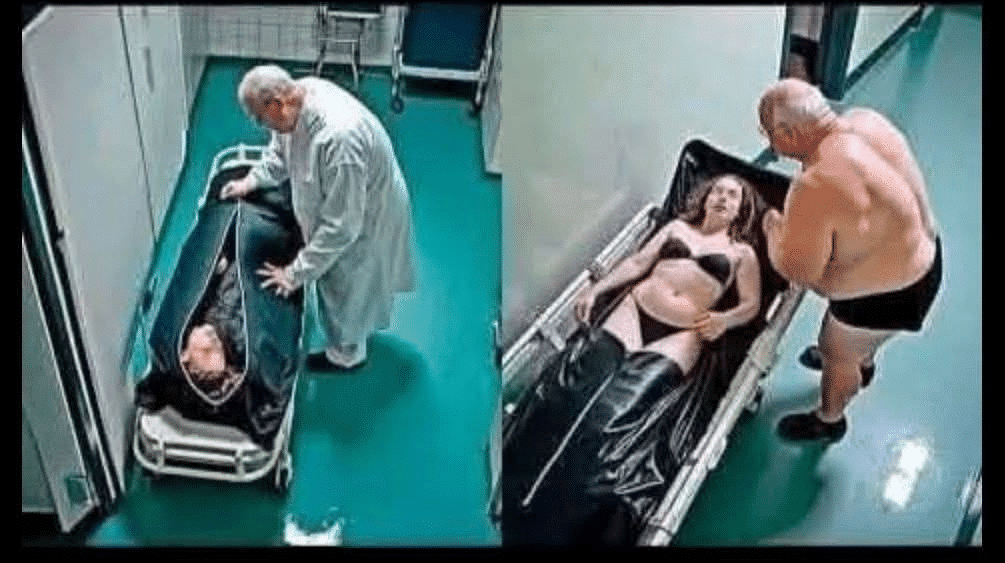
A dramatic story circulating online claims that a respected forensic doctor was caught taking advantage of his position during a sensitive investigation. According to the viral account, the doctor allegedly mishandled or altered evidence inside a forensic laboratory before realizing that internal monitoring systems had already documented his actions.
The story names a forensic pathologist, Dr. Jonathan Reeves, and describes a late-2024 scandal involving digital logs, surveillance protocols, and a major legal fallout. However, based on available search results, this specific case could not be verified through major credible news outlets or official legal sources. The main matching result appears to be a repost-style website, so the story should be treated as unverified or fictionalized rather than confirmed news.
Even so, the scenario raises a serious real-world issue: forensic science depends on trust. When evidence is handled improperly, the consequences can reach far beyond one laboratory or one professional career.
Forensic work can influence criminal trials, civil disputes, insurance claims, appeals, and the lives of victims, defendants, and families. That is why accuracy, transparency, and strict procedure are not optional. They are the foundation of justice.
Why Forensic Integrity Matters
Forensic science is used to examine evidence that may be presented in court. NIST describes forensic science as a collection of scientific methods and expertise used to investigate crimes or examine evidence for legal proceedings.
That means forensic professionals carry enormous responsibility.
Their work may help identify a suspect, confirm whether a crime occurred, exclude an innocent person, support a conviction, or reveal that an investigation needs to move in a different direction. Interpol notes that forensic data such as fingerprints and DNA can help confirm identity and presence at a crime scene, and importantly, may also help prove a suspect’s innocence.
Because of that, every piece of evidence must be handled carefully.
A mislabeled sample, broken chain of custody, altered report, missing log entry, or unexplained inconsistency can damage the credibility of an entire case.
How a Routine Audit Can Reveal Bigger Problems
In the viral version of the story, the investigation begins with a routine internal audit.
At first, the irregularities seem small. Electronic records do not perfectly match written reports. Evidence-handling steps appear inconsistent. Certain procedural details seem incomplete or out of order.
One issue by itself might be explained as human error.
But repeated issues create a pattern.
That is often when supervisors, investigators, or compliance officers take a closer look. In professional laboratories, audits are not just paperwork. They are safeguards designed to protect evidence, maintain accuracy, and prevent misconduct.
If a forensic lab handles cases connected to criminal prosecution, wrongful death claims, insurance disputes, or civil litigation, even minor procedural failures can create major financial and legal consequences.
The Alleged Turning Point
According to the unverified story, the forensic doctor had been assigned to a sensitive death investigation. The case reportedly carried serious legal implications, and the doctor’s conclusions could influence what happened next.
The viral account alleges that instead of following required procedures, he altered or mishandled key evidence.
The motive is unclear in the story. Some online versions suggest pressure, financial incentives, personal misjudgment, or an attempt to influence the investigation. None of those claims could be independently confirmed from reliable reporting.
What matters most in a responsible rewrite is this: without verified court records or official statements, these allegations should not be presented as proven fact.
But as a cautionary scenario, the lesson is clear.
When a professional entrusted with evidence violates procedure, the damage can be enormous.
The Moment Accountability Arrives
In the story, the doctor does not realize that internal monitoring systems have already captured the irregularities.
Digital logs, surveillance footage, access records, and audit trails reportedly create a trail that investigators can follow. By the time authorities confront him, the evidence against him is said to be strong enough to leave little room for denial.
Whether this specific account is fictional or based on an unconfirmed rumor, the concept is realistic: modern forensic and medical environments increasingly rely on electronic tracking systems to protect evidence and ensure accountability.
These systems matter because they help answer essential questions:
Who accessed the evidence?
When was it moved?
Was the sample altered?
Were procedures followed?
Do the reports match the digital record?
When the answers do not align, the integrity of the case may be questioned.
Legal and Financial Consequences
Evidence mishandling can create a chain reaction.
A criminal case may be delayed.
A conviction may be appealed.
A defendant may argue that the evidence is unreliable.
A victim’s family may face more years of uncertainty.
A government agency may spend taxpayer money on reviews, retrials, expert testimony, and legal defense.
Civil lawsuits, insurance claims, wrongful death cases, and personal injury disputes may also be affected if forensic findings are challenged.
That is why forensic misconduct is not just a workplace issue. It can become a legal, financial, and public-trust crisis.
For institutions, the cost may include damaged reputation, increased oversight, lawsuits, retraining, loss of accreditation, and public scrutiny.
For families, the cost can be emotional and deeply personal.
Public Trust Is Fragile
Forensic professionals often work behind the scenes, but their influence can be enormous.
Judges, juries, attorneys, police departments, insurance companies, and families may rely on their findings. If the public begins to believe that evidence can be manipulated, hidden, or mishandled, confidence in the justice system suffers.
That is why ethical standards matter so much.
The American Academy of Forensic Sciences explains that forensic sciences are used around the world to resolve civil disputes, enforce criminal laws and regulations, and protect public health.
That broad role makes integrity essential.
One person’s misconduct can cast doubt on many cases, even when other professionals have done their work honestly.
Why Viral Stories Need Careful Handling
Stories involving doctors, forensic experts, evidence tampering, arrests, or criminal investigations should be handled carefully online.
A dramatic caption may generate clicks, but if the claim is not verified, it can mislead readers and damage reputations. Real people, real institutions, and real families may be affected by false or exaggerated allegations.
That is why responsible coverage should clearly separate confirmed facts from unverified claims.
In this case, the specific story about Dr. Jonathan Reeves could not be confirmed through reliable major sources based on the available search results. Because of that, it is best presented as a cautionary ethics story rather than confirmed breaking news.
The Real Lesson
The strongest part of this story is not the shock value.
It is the reminder that trust must be protected.
Forensic science exists to help uncover truth. When done properly, it can identify victims, expose crime, support fair trials, and protect innocent people. But when procedures are ignored or evidence is compromised, the consequences can ripple across the legal system.
That is why laboratories need audits.
Courts need transparency.
Experts need ethical discipline.
And the public needs accurate reporting, not just viral claims.
Final Thoughts
The viral story of a forensic doctor allegedly caught mishandling evidence is dramatic, but the specific case remains unverified based on available credible sources.
Still, the broader message is important.
Forensic professionals hold positions of deep responsibility. Their findings can affect criminal verdicts, civil lawsuits, insurance outcomes, financial settlements, and public confidence in the justice system. When evidence is handled properly, it supports fairness. When it is mishandled, the damage can be severe.
In any profession built on truth, credibility is everything.
Once trust is broken, the consequences can be difficult — and sometimes impossible — to repair.