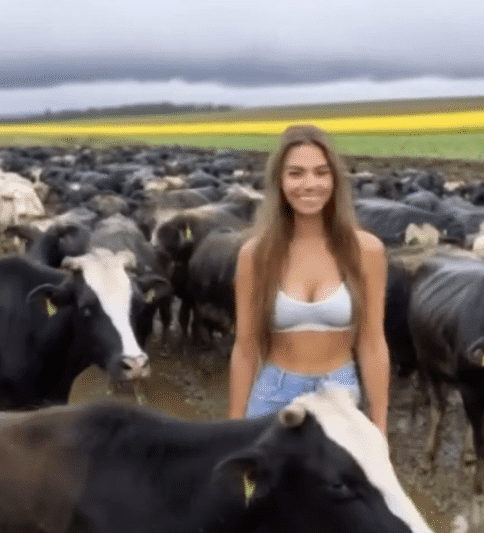
I grew up ten miles outside town on a sweet potato farm, where mornings started before sunrise and “free time” usually meant helping my parents at a roadside stand or working a booth at the county fair.
My childhood did not look like the glossy photos in magazines.
There were no luxury vacations, designer wardrobes, or weekends spent sleeping late. There were muddy boots by the door, sunburned shoulders in the summer, and hands that smelled like soil no matter how many times we washed them.
My parents were tough, honest people. They built our life from the ground up, one harvest at a time. They were not rich, but they were proud. My father could fix almost anything with wire, patience, and a stubborn refusal to quit. My mother could turn our sweet potatoes into pies so good people lined up for them every fall.
For a long time, I thought that kind of life was enough to earn respect.
Then I got a scholarship to a private high school in the city.
And suddenly, the life I had always known became the thing I was most afraid to talk about.
The Day Everything Changed
When the acceptance letter arrived, my parents cried.
My mother hugged me so tightly I could barely breathe. My father read the letter three times, then folded it carefully and placed it on the kitchen table like it was something sacred.
“This is your chance, Mele,” he said. “You earned this.”
I believed him.
I thought the scholarship meant people would see how hard I had worked. I thought walking through those polished school doors would feel like stepping into the future.
But on my first morning, I realized I had entered a world built on things I did not have.
Students arrived in shiny cars with leather seats. They carried expensive backpacks and talked casually about ski trips, private tutors, summer programs, and beach houses. Their uniforms looked crisp and perfect. Their shoes looked like they had never touched dirt.
I walked into homeroom wearing faded jeans and a jacket that still smelled faintly of the barn because I had helped feed animals before school.
I had barely sat down when I heard a girl behind me whisper.
“Ew. Do you live on a farm or something?”
Her friend laughed.
I stared at the front of the room and pretended I did not hear.
But I heard every word.
Becoming Quiet
The comments kept coming.
“What kind of shoes are those?”
“Do you even have WiFi out there?”
“Do you ride a tractor to school?”
“Do your parents actually sell vegetables?”
Most of them smiled when they said it, as if jokes could not hurt if they were wrapped in laughter. But after a while, even small comments begin to feel heavy.
So I changed.
Not all at once. Slowly.
I stopped talking about home. I stopped mentioning the farm. I stopped telling stories about harvest season, county fairs, broken tractors, or helping my mother bake pies for church fundraisers.
At school, I became quiet.
I studied hard, kept my head down, and tried to disappear into the background.
The strange thing was, back home, I had never felt small.
Back home, I was Mele.
I was the girl who could fix a flat tire faster than most adults. The girl who knew which rows needed watering before anyone asked. The girl who could wrangle chickens, count change at the farmers’ market, and sell out a produce stand before noon.
Back home, those things made me useful.
At school, I thought they made me embarrassing.
The Fundraiser That Changed Everything
Everything began to shift because of a school fundraiser.
Students were asked to bring something homemade or from their families to sell. Some brought handmade jewelry. Others brought candles, crafts, cupcakes from expensive bakeries, and gift baskets wrapped so perfectly they looked professionally designed.
I almost did not bring anything.
Then my mother looked at me across the kitchen table and said, “Why not bring your pies?”
I hesitated.
“Our pies?”
She smiled. “They’re good enough for everyone at the county fair. They’re good enough for that school.”
Our sweet potato pie recipe had been in our family for generations. Every Thanksgiving, church dinner, and neighborhood gathering ended with someone asking my mother for one more slice.
So that night, I baked six pies.
Nothing fancy.
No gold ribbon.
No expensive packaging.
Just sweet potatoes from our farm, butter, sugar, spice, and a recipe shaped by years of love.
The next morning, I placed the pies quietly on the fundraiser table and prepared myself to be ignored.
Instead, they sold out in twenty minutes.
Students who had barely spoken to me started asking where the pies came from. Teachers wanted to know if there were extras. One parent asked whether she could order two for a dinner party.
I stood there stunned.
Then Ms. Bell, the guidance counselor, walked over with a small smile.
“This pie tells a story,” she said. “You should be proud of where it comes from.”
I did not know what to say.
For months, I had been hiding the very thing that made me different.
And suddenly, that difference was what people wanted more of.
Mele’s Roots
The following Monday, I came to school with handmade flyers.
Mele’s Roots — Fresh Farm-to-Table Sweet Potato Pies Every Friday.
I expected maybe two orders.
By lunch, I had twelve.
A teacher ordered pies for the staff lounge. One student asked if I could make mini versions for a birthday party. Another jokingly offered me a designer jacket in exchange for three pies.
I said no.
The jacket was ugly anyway.
What began as a small fundraiser turned into a little business. It was not just about money, though the extra income helped with school supplies, gas, and personal expenses. It was about learning that the skills I had been ashamed of were valuable.
I knew how to grow food.
I knew how to sell.
I knew how to talk to customers.
I knew how to work hard when no one was watching.
Those were not weaknesses.
They were advantages.
Finding My Voice Again
Every Thursday evening, after homework, I baked with my parents.
Those nights became my favorite part of the week. My father would sit at the kitchen table and talk about the drought years, the times crops failed, and the financial decisions that nearly broke them. My mother would roll pie dough while telling me how she learned to stretch every dollar, manage farm expenses, and keep the family going when money was tight.
I began to understand that farming was not simple.
It required discipline, personal finance decisions, weather risk, equipment costs, insurance concerns, loan payments, real estate taxes, and constant planning. My parents were not just farmers. They were business owners, laborers, problem-solvers, and survivors.
For the first time, I started writing about them in school essays.
I wrote about the economics of small farms.
I wrote about food supply chains.
I wrote about rural families and the dignity of physical labor.
And people listened.
The same classmates who once laughed at my background began asking questions. Some wanted to visit the farm. Others wanted to know how sweet potatoes were grown. Even the girl with the perfect ponytail eventually asked for my pie recipe.
Life has a funny way of humbling people.
The Project That Made Me Proud
By senior year, I no longer tried to hide where I came from.
For my final project, I made a short documentary about our farm.
I filmed my father repairing machinery at sunrise, his hands dark with grease and dirt. I filmed my mother laughing in the kitchen while flour covered her apron. I filmed rows of sweet potatoes stretching beneath a pale morning sky. I filmed our booth at the farmers’ market, where customers greeted my parents by name.
I showed the long days.
The hard years.
The quiet beauty of growing something from the earth.
On presentation day, I was terrified.
As the film played, I stared at the floor. I could not bear to watch my classmates’ faces.
Then it ended.
For one long second, the room was silent.
Then someone clapped.
Then another.
Then the whole room filled with applause.
Some students even stood.
I looked up, shocked, and saw Ms. Bell wiping her eyes.
Izan, one of the few classmates who had always been kind, gave me a small side hug.
“Told you your story mattered,” he whispered.
And for the first time, I truly believed it.
My Roots Made Me Strong
For too long, I thought being a farmer’s daughter made me less.
Less polished.
Less wealthy.
Less impressive.
Less worthy of belonging.
But I was wrong.
Being a farmer’s daughter taught me how to work before the world was awake. It taught me patience, resilience, responsibility, and respect for people who build with their hands. It taught me that success is not always shiny. Sometimes it looks like muddy boots, tired parents, and a kitchen full of pies cooling on the counter.
My background was never something to hide.
It was the foundation that made me strong.
Final Thoughts
I used to believe I had to leave the farm behind to become someone important.
Now I know the farm was where I became myself.
The city school taught me many things, but my parents taught me the lessons that mattered most: keep going, tell the truth, honor your work, and never be ashamed of where you come from.
I am a farmer’s daughter.
That does not make me less.
It makes me grounded.
It makes me capable.
It makes me proud.