It started like an ordinary construction job.
A crew had been hired to prepare an old residential property for a new swimming pool. The plan seemed simple enough: clear the area, remove old debris, dig the required depth, and prepare the ground for installation.
The property looked worn but not unusual. There was loose soil, gravel, patches of weeds, and the remains of an old concrete shed near the back of the lot. Nothing suggested that something strange — or potentially dangerous — had been buried beneath the surface for years.
Then the excavator hit something solid.
The impact was sharp enough to make the operator stop immediately. Workers stepped closer, expecting to find a rock, a chunk of foundation, or maybe an old pipe left behind from previous construction.
But what emerged from the soil was something none of them expected.
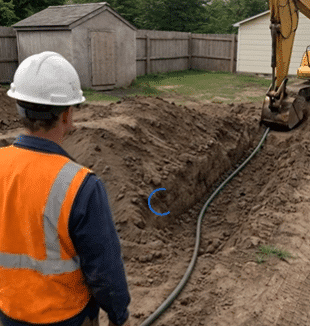
A massive wooden spool was buried underground, wrapped tightly with a thick green cable that disappeared deep into the earth.
At first, someone laughed nervously and guessed it was just old wiring.
But within minutes, everyone realized this was not an ordinary find.
The Cable Would Not Move
The crew’s first assumption was that the spool might have been abandoned construction material.
Old properties can hide all kinds of things: broken pipes, buried concrete, rusted tools, scrap metal, abandoned septic systems, disconnected utility lines, or old electrical cable. For contractors, unexpected discoveries are part of the job.
But this cable felt different.
It was unusually thick, tightly wound, and strongly anchored. When the excavator operator tried carefully to pull it free, the cable did not budge. The machine strained, the line stretched, and the workers watched uneasily as the cable held firm.
That was when the mood shifted.
No one was laughing anymore.
A buried cable that refuses to move can be dangerous. It might be connected to old utilities, underground equipment, communication systems, fuel lines, electrical infrastructure, or something even more serious.
The supervisor ordered the operator to stop immediately.
That decision may have prevented disaster.
The Crew Decides to Trace the Line
Instead of continuing with heavy machinery, the workers began carefully following the cable through the soil.
They dug slowly along its path, uncovering more of the green line as it traveled across the yard. The farther they followed it, the more uneasy they became.
The cable did not seem random.
It had a direction.
It led toward the old concrete shed near the edge of the property — a structure that most of them had dismissed as abandoned and useless.
The line disappeared beneath the shed’s foundation.
That discovery raised even more concern. If the cable had simply been scrap, it likely would not have run directly into a buried structure. Something had been connected to it. Something had been hidden.
The supervisor made another cautious decision.
The crew would not cut the line.
They would not pull it.
They would not assume it was harmless.
They would expose the area carefully and see where it led.
A Rusted Metal Casing Beneath the Concrete
Using heavy tools, the crew broke through part of the old concrete slab.
Dust rose into the air. Chunks of concrete shifted. The workers paused often, watching for signs of danger. Every few inches revealed more of the buried system.
Then they found it.
Beneath the slab was a rusted metal casing.
The green cable ran directly into it.
The object was old, weathered, and clearly not something the crew could identify safely. No one knew whether it was electrical, mechanical, chemical, military-related, or part of some forgotten industrial system.
The supervisor’s reaction was immediate.
“Everyone back,” he shouted. “Call 911.”
Within seconds, the workers moved away from the excavation site.
No one touched the casing again.
Emergency Services Secure the Property
Police and emergency response teams were called to the scene. According to the account, the area was quickly secured, and nearby residents were warned to stay away as a precaution.
That kind of response may sound dramatic, but it is exactly what should happen when workers uncover an unknown underground structure connected to a buried cable.
Emergency responders treat unidentified buried objects seriously because the risks can vary widely. The danger could involve electricity, gas, unstable structures, old industrial equipment, hazardous materials, or unexploded devices from prior land use.
Until trained specialists examine the site, no one can safely assume what the object is.
Authorities reportedly brought in specialized technicians to inspect the buried casing and determine whether it posed an immediate threat. Work on the pool project stopped completely.
That was the only responsible choice.
Why Underground Discoveries Can Be Dangerous
Many homeowners and contractors underestimate what may be hidden beneath older properties.
Land use changes over time. A peaceful backyard today may have once been part of a farm, workshop, utility corridor, storage site, military-related area, or commercial property. Records may be incomplete. Previous owners may have buried items without disclosure. Old systems may remain underground long after buildings disappear.
This is why professional excavation planning matters.
Before digging, property owners and contractors should consider utility location services, permits, site history, insurance requirements, and safety inspections. Digging blindly can lead to serious consequences, including injury, property damage, legal liability, service outages, environmental cleanup costs, and expensive insurance claims.
A backyard pool may seem like a simple home improvement project, but excavation always carries risk.
One hidden cable can change everything.
The Financial Impact of a Dangerous Find
A discovery like this can also create major financial complications.
Construction may be delayed for days, weeks, or longer. Equipment may sit unused. Contractors may need to reschedule work. Homeowners may face additional inspection fees, engineering reports, environmental testing, or cleanup costs.
If the buried structure is connected to a previous utility, old industrial use, or hazardous material, responsibility can become complicated. Property owners may need legal advice, insurance review, municipal records, and professional remediation.
Homeowners insurance may not always cover every underground discovery. Coverage depends on the policy, cause of damage, type of object found, and whether negligence or prior knowledge is involved.
That is why real estate due diligence matters before buying or developing land. Surveys, title research, permits, inspection reports, and local property records can help identify potential risks before money is invested.
In construction, the cheapest assumption can become the most expensive mistake.
The Importance of Stopping Work Immediately
The smartest decision the crew made was stopping.
When workers find something they cannot identify, continuing to dig can make the situation worse. Pulling a cable, cutting into a casing, striking metal with tools, or moving heavy equipment over an unknown object can trigger dangerous results.
The safest steps are simple:
Stop work.
Move people away.
Avoid touching the object.
Keep machinery clear.
Call emergency services or the appropriate utility authority.
Wait for trained professionals.
Those actions protect workers, homeowners, neighbors, and emergency responders. They also protect the contractor from legal and financial exposure.
A few minutes of caution can prevent a tragedy.
A Reminder for Homeowners Planning Excavation
Anyone planning a pool, fence, foundation, drainage system, landscaping project, or major backyard renovation should take underground safety seriously.
Before digging, homeowners should contact the proper local utility-marking service. Contractors should verify permits and check for buried gas, electric, water, sewer, cable, and communication lines. On older properties, extra caution may be needed if there are abandoned sheds, concrete pads, unusual metal objects, or signs of previous industrial use.
It is also wise to review insurance coverage before major excavation. Home improvement projects can affect property value, liability exposure, and risk management. A pool installation, for example, may require updates to homeowners insurance and safety planning.
Preparation may not prevent every surprise, but it can reduce risk.
A Close Call the Crew Never Forgot
By the end of the day, authorities reportedly determined that the buried system was old and had been left underground for decades. Specialists worked cautiously to make sure the site was safe before anyone returned.
The crew was shaken.
What began as a routine pool excavation had turned into an emergency response. One minute, they were digging a backyard. The next, they were standing behind police tape, wondering what they had nearly disturbed.
No one was injured.
That was the most important outcome.
But the experience left a lasting lesson: the ground beneath a property can hold secrets, and not all of them are harmless.
Final Thoughts
A construction crew expected to dig a swimming pool.
Instead, they uncovered a massive wooden spool wrapped in thick green cable, followed the line across the property, and found it connected to a rusted underground casing beneath an old concrete structure.
When they realized they could not identify what they had found, they did the right thing: they stopped work, moved away, and called 911.
This story is a powerful reminder that excavation is never just about moving dirt. Hidden utilities, abandoned infrastructure, old equipment, and unknown buried systems can create serious safety risks.
For homeowners, contractors, and property investors, the lesson is clear.
Check before you dig.
Respect what you find.
And when something underground does not look right, do not guess.
Step back and call the professionals.