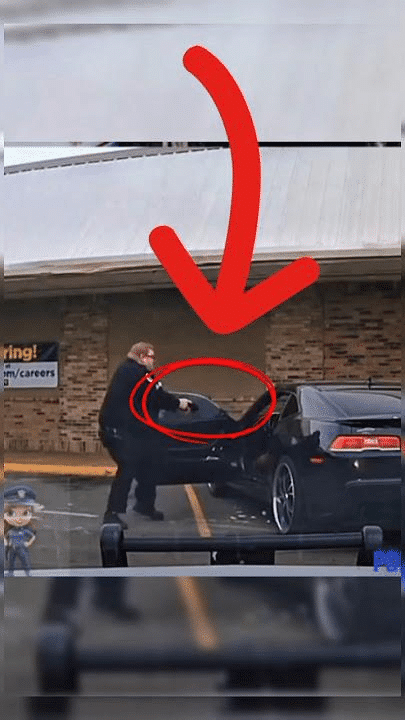
A traffic stop in Nashville turned deadly when a police officer and a 31-year-old woman exchanged gunfire in a parking lot, leaving the woman dead and the officer seriously wounded.
The incident happened on March 12, 2021, outside a Dollar General on Brick Church Pike. Metro Nashville Police Officer Josh Baker stopped a black Chevrolet Camaro that police said was connected to Demond Buchanan, a convicted felon who was wanted on multiple drug warrants. Buchanan was not in the vehicle; the driver was later identified as Nika Nicole Holbert.
What began as a law enforcement stop quickly became a violent confrontation. Body-camera and dashboard-camera footage later released by police showed the tense sequence of events that ended with both Baker and Holbert being shot.
The case drew widespread attention in Nashville and beyond, raising questions about traffic-stop procedures, searches, use of force, officer safety, and how quickly routine encounters can become life-threatening.
A Stop Connected to an Outstanding Warrant
According to police accounts cited in local reporting, Officer Baker recognized the Camaro as a vehicle associated with a wanted man. When Baker stopped the car, he initially encountered Holbert, not Buchanan. The stop took place around 9:30 a.m. in the parking lot of the Dollar General.
At first, the situation appeared controlled. Baker spoke with Holbert and continued investigating the circumstances around the vehicle. However, the encounter became more tense after he searched Holbert’s bag and reportedly found what appeared to be marijuana and a powdery substance.
That discovery shifted the tone of the stop. Baker attempted to detain Holbert while waiting for backup officers. According to the police video summary, he used verbal commands and drew a Taser before the situation escalated further.
The Moment the Encounter Turned Violent
The confrontation escalated when Holbert pulled out a firearm. Police said Baker drew his service weapon after seeing the gun and ordered her to put it down. Holbert then shot Baker, striking him in the torso below his protective vest. Baker returned fire.
Despite being wounded, Baker managed to respond as the encounter unfolded. Holbert fled in the Camaro after the shooting and later crashed nearby. Officers rendered aid until an ambulance arrived, and she was transported to a hospital, where she died later that morning.
Baker was taken to Vanderbilt Medical Center for emergency treatment and underwent surgery. Police and local reports said he was later listed in stable condition.
A Community Reacts to a Shocking Video
The release of body-camera and dash-camera footage made the incident even more widely discussed. Many viewers were struck by how quickly the stop escalated from conversation to gunfire.
Some focused on the danger officers face during traffic stops, especially when a weapon appears unexpectedly. Others questioned the decisions made during the encounter, including the search, the lack of immediate backup during a potentially high-risk stop, and the broader policies surrounding police encounters connected to warrants.
The case became part of a larger Nashville conversation about police shootings in 2021. WPLN reported that Metro Nashville police officers shot 10 people that year, seven of them fatally, making it a record-setting year for police shootings in the city.
The Human Cost on Both Sides
Beyond the legal and procedural questions, the incident left two families facing devastating consequences.
Nika Holbert lost her life. Her family was left grieving and searching for answers about how the encounter ended so violently. Officer Josh Baker survived but was seriously wounded in a moment that could have easily ended his life as well.
That reality is part of what makes cases like this so painful. A single traffic stop became a life-changing event for everyone involved: the driver, the officer, their families, witnesses, and the wider community.
These incidents also carry financial and legal consequences. Police shootings can lead to internal reviews, lawsuits, insurance claims, medical costs, workers’ compensation issues, public records requests, and policy changes. For cities, the aftermath can affect public trust, municipal budgets, legal liability, and community relations.
Why Traffic Stops Can Escalate So Quickly
Traffic stops are among the most common interactions between police and the public, but they can also be unpredictable.
For officers, the risks include not knowing who is inside the vehicle, whether weapons are present, or whether the person stopped may flee. For drivers, especially in tense encounters, fear, confusion, panic, or mistrust can intensify the situation.
That combination can create a dangerous environment where decisions happen in seconds.
The Nashville case shows how quickly a stop can shift from questioning to attempted detention to gunfire. It also shows why training, communication, backup procedures, body cameras, and clear department policies matter.
When an encounter turns deadly, every decision is examined afterward.
Investigation and Review
After the shooting, authorities reviewed the body-camera footage, dash-camera footage, and evidence from the scene. Local reporting noted that a review of Baker’s actions and the sequence of events was underway after the exchange of gunfire.
In officer-involved shootings, investigators typically examine whether the use of force complied with department policy and state law. They also review the timeline, officer commands, suspect actions, available alternatives, evidence handling, medical response, and witness statements.
These reviews are essential because the public needs transparency when a police encounter results in death or serious injury.
A Difficult Reminder
The Nashville traffic stop involving Officer Josh Baker and Nika Holbert remains a sobering example of how quickly a police encounter can become deadly.
According to police and local reports, Baker stopped a vehicle connected to a wanted man, encountered Holbert instead, attempted to detain her after finding suspected substances, and was shot before returning fire. Holbert fled, crashed nearby, and later died at a hospital. Baker underwent surgery and survived.
For the community, the case raised difficult questions about safety, procedure, accountability, and the human cost of split-second decisions.
For the families involved, it was not just a viral video or a headline.
It was a tragedy.
Final Thoughts
What began as a traffic stop outside a Nashville Dollar General ended with one woman dead and a police officer seriously wounded.
The incident shocked viewers because the escalation happened so quickly. It also reignited conversations about public safety, police training, search procedures, body-camera transparency, and how communities process deadly force incidents.
There are no simple answers in a case like this.
But one truth is clear: every traffic stop involves real people, real risks, and consequences that can last far beyond the moment itself.