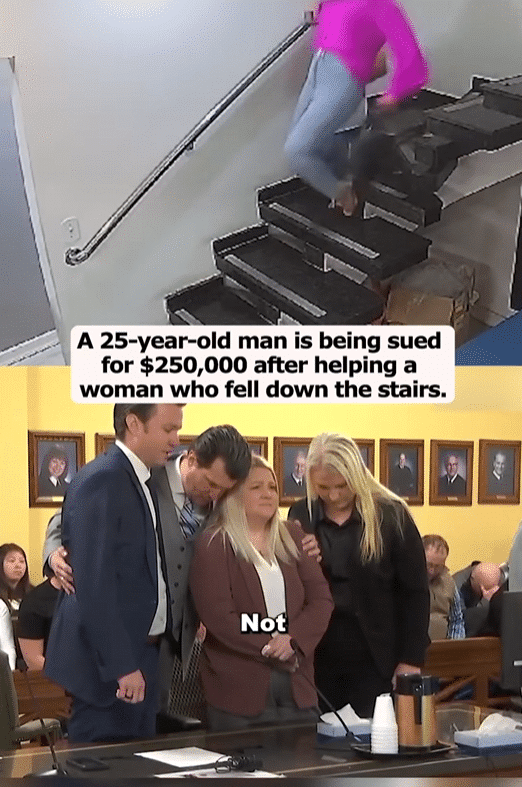
A late-night emergency inside an apartment building has turned into a legal dispute that is now gaining widespread attention. What first appeared to be a simple act of compassion has become a complicated case involving personal injury, liability, emergency response, and the limits of Good Samaritan protections.
According to the account, a 25-year-old man is facing a $250,000 lawsuit after attempting to help an injured woman he found at the bottom of a stairwell. The woman claims that although his intentions may have been good, his decision to reposition her before paramedics arrived may have worsened her injuries.
The case has sparked strong debate. Some people see the man as someone who did what any decent person would do when another human being was hurt. Others believe the lawsuit highlights an important warning: even well-meaning actions can create serious medical and legal consequences when the person helping is not trained.
What happened that night has now become more than a personal injury case. It has become a public conversation about compassion, caution, legal risk, and what ordinary people should do during an emergency.
A Late-Night Fall Inside an Apartment Building
The incident reportedly began late in the evening inside a residential apartment building. The 25-year-old man had just returned home when he heard a loud noise coming from the stairwell. Concerned that someone might be hurt, he went to investigate.
When he reached the stairs, he found a woman lying at the bottom. She appeared injured, distressed, and unable to move comfortably. The scene was alarming. In moments like that, most people have only seconds to decide what to do.
According to the account, the man immediately checked on her, spoke to her, and tried to keep her calm. He also called emergency services, recognizing that the situation required professional medical help.
While waiting for paramedics to arrive, he reportedly attempted to make the woman more comfortable by adjusting her position. At the time, the action seemed compassionate. Neighbors who later heard about the incident reportedly believed he had done the right thing by staying with her and trying to help.
But that decision would later become the center of a legal dispute.
From Rescue Attempt to Lawsuit
Emergency responders arrived and transported the woman to a hospital. Doctors reportedly determined that she had suffered several injuries, including a fractured wrist and a concussion.
At first, the situation appeared to be a frightening accident followed by a concerned bystander’s attempt to help. But several weeks later, the woman filed a lawsuit seeking $250,000 in damages.
Her claim reportedly argues that the man should not have moved or repositioned her before trained medical professionals arrived. She alleges that his actions may have aggravated her injuries or caused additional harm.
That allegation changed the public perception of the incident. What had seemed like an act of kindness became a legal battle involving questions of negligence, reasonable conduct, and emergency judgment.
For the man, the lawsuit may bring major financial stress. Legal fees, court costs, possible settlement discussions, insurance questions, and personal finance concerns can quickly become overwhelming in cases involving personal injury claims.
The Debate Over Good Samaritan Protection
Many people have responded to the case by asking one major question: should someone be sued for trying to help?
In many places, Good Samaritan laws are designed to protect people who voluntarily assist others during emergencies. These laws generally exist to encourage bystanders to act without fear that every decision could lead to a lawsuit.
However, those protections are not always unlimited. Depending on the location and circumstances, courts may consider whether the person acted reasonably, whether there was an immediate danger, whether the helper had medical training, and whether their actions could be considered careless or reckless.
That is where cases like this become complicated.
If someone calls emergency services, stays with an injured person, and offers comfort, that may be viewed as reasonable assistance. But if someone moves a person with a possible head, neck, back, or spinal injury without urgent necessity, medical experts may warn that the action could create additional risk.
This does not mean every bystander should be afraid to help. It means people need to understand the safest ways to assist during an emergency.
Why Moving an Injured Person Can Be Risky
One reason the case has drawn attention is because falls can involve injuries that are not immediately visible. A person at the bottom of a stairwell may have a concussion, broken bones, internal injuries, or possible spinal trauma.
In many emergency situations, medical professionals recommend avoiding unnecessary movement unless the injured person is in immediate danger. Examples of immediate danger might include fire, smoke, flooding, traffic, structural collapse, or another threat that makes staying in place unsafe.
If there is no urgent threat, the safest response is often to call emergency services, keep the person calm, monitor breathing and consciousness, and wait for trained responders.
That said, real-life emergencies are stressful. People do not always think like medical professionals when someone is crying in pain. The man in this story may have believed he was helping. The woman, however, claims that the help caused harm.
That disagreement is exactly what the legal process must examine.
Supporters Say He Acted With Compassion
Supporters of the man argue that he acted out of basic human decency. He heard a crash, went to check on someone, called for help, stayed at the scene, and tried to provide comfort.
They worry that lawsuits like this could discourage people from helping others. If bystanders fear being sued for making an imperfect decision under pressure, they may hesitate during emergencies.
That concern is not unrealistic. Many people already feel uncertain about what to do in a crisis. A highly publicized lawsuit can make that hesitation worse.
From this perspective, the man should not be punished for trying to help someone who was injured and alone.
Others Say Good Intentions Are Not Enough
Others see the case differently. They argue that the lawsuit is not necessarily about punishing kindness, but about determining whether the man’s actions caused additional injury.
Good intentions matter, but they do not always erase consequences. In medical emergencies, certain actions can be dangerous even when done with care. Moving someone after a fall may seem helpful, but if the person has a hidden injury, that movement could make the situation worse.
This side of the debate emphasizes the need for basic first-aid education. People should know how to respond safely before paramedics arrive. That knowledge can protect both the injured person and the bystander.
A Larger Lesson About Liability and Preparedness
This case touches on more than one apartment building emergency. It raises broader questions about liability insurance, personal injury law, medical costs, legal defense, and risk management.
Many people do not think about liability until they are facing a lawsuit. A single incident can create financial pressure involving legal fees, insurance claims, lost wages, and possible damages. That is why understanding personal liability is an important part of financial planning.
The same is true for emergency preparedness. Knowing basic first aid, understanding when not to move an injured person, and learning how to communicate with emergency dispatchers can make a major difference.
Helping others is important. Helping safely is even better.
Final Thoughts
What began as a late-night attempt to help an injured woman has become a $250,000 legal dispute. A man who believed he was acting with compassion is now facing claims that his actions may have worsened the woman’s injuries.
The truth will ultimately depend on evidence, medical findings, witness statements, and the court’s interpretation of the law.
But the larger lesson is already clear.
Emergencies are complicated. Compassion matters, but so does caution. Calling for help, staying calm, avoiding unnecessary movement, and waiting for trained responders can protect everyone involved.
This case is a reminder that doing the right thing in a crisis is not always simple.
Sometimes, the difference between help and liability comes down to one decision made in a moment of panic.