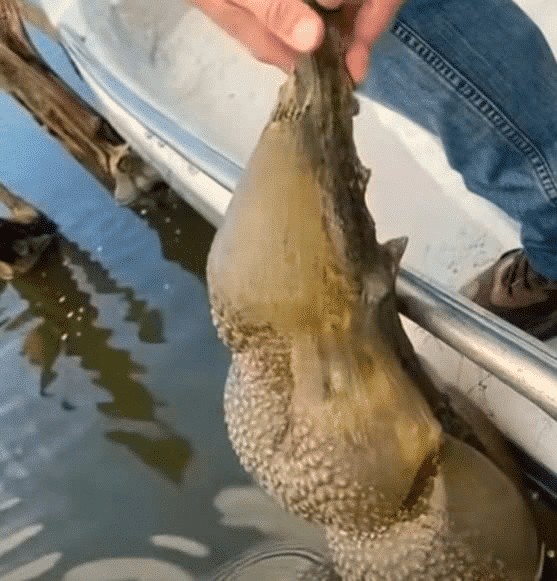
Visitors at McGee Creek Reservoir in Oklahoma were recently surprised by a strange sight beneath the water’s surface: soft, cloudy, jelly-like masses attached to submerged tree branches. At first glance, the formations looked unusual enough to spark concern. Some people described them as alien-like. Others wondered if they were pollution, invasive organisms, or something dangerous.
But wildlife experts quickly offered a reassuring explanation.
The mysterious blobs were identified as bryozoans, tiny aquatic organisms that live together in colonies. According to the Oklahoma Department of Wildlife Conservation, the jelly-like masses spotted at McGee Creek Reservoir are native, harmless to people and wildlife, and may even be a positive sign of healthy water conditions.
What first looked alarming turned out to be a fascinating example of nature’s hidden complexity.
A Strange Discovery Beneath the Surface
The sighting gained attention in March 2024, when images of the unusual formations began circulating online. The colonies appeared to hang from underwater tree limbs like translucent, gelatinous clusters. Their soft texture and cloudy appearance made them look more like science fiction props than living freshwater organisms.
It is easy to understand why people were startled. Lakes often appear calm and familiar from the surface, but beneath the water there are entire ecosystems filled with organisms many people rarely see.
In this case, the discovery became a viral moment because the blobs looked so unfamiliar. Social media users shared photos, guessed at explanations, and reacted with curiosity and confusion.
Fortunately, the truth was far less frightening than the rumors.
What Are Bryozoans?
Bryozoans are sometimes called “moss animals.” They are not plants, eggs, or pollution. They are colonies made up of many tiny animals called zooids.
Individually, zooids are extremely small and easy to miss. But when many of them clone and grow together, they form large jelly-like colonies that can become visible to the naked eye. These colonies often attach to underwater surfaces such as branches, rocks, docks, and other submerged structures.
The Oklahoma Department of Wildlife Conservation explained that these organisms filter tiny particles from the water for food and can appear in large numbers when conditions are right.
That means the strange blobs are not a warning of danger. They are part of the lake’s natural ecosystem.
Why Do They Look Like Gelatin?
One reason bryozoan colonies look so unusual is their outer layer. Experts describe the jelly-like covering as a soft shell made of chitin, a natural material also found in the outer shells of insects and some other organisms.
Underwater, that chitin layer can feel soft and flexible. If removed from water and allowed to dry, it can harden and become brittle.
This protective coating helps the colony survive and gives bryozoans their strange, almost otherworldly appearance.
In the right conditions, these colonies can grow quite large. Some may reach sizes that make them easy to spot from the shore or from a boat, especially when attached to branches near the water’s surface.
Harmless to People and Wildlife
The most important message from wildlife officials is simple: there is no reason to panic.
Bryozoans are harmless to humans and wildlife. They do not attack, sting, poison the water, or threaten swimmers. Their appearance may be strange, but their role in the ecosystem is beneficial.
In fact, they help keep freshwater environments balanced. As filter feeders, bryozoans remove tiny particles such as algae, bacteria, and organic matter from the water. This process supports water clarity and can contribute to a healthier aquatic environment.
They may also serve as food for certain fish, snails, mussels, and other aquatic life.
So while they may look unsettling at first, these “mystery blobs” are actually working quietly beneath the surface.
A Sign of Healthy Water
One of the most interesting parts of this discovery is what bryozoans may indicate about the lake itself.
Experts say bryozoans are often associated with good environmental quality and clearer water. They tend to thrive in conditions where the ecosystem can support them.
That makes their presence at McGee Creek Reservoir a positive sign rather than a threat.
For communities, lake visitors, and property owners, water quality matters. Healthy lakes support recreation, fishing, tourism, local real estate value, and outdoor businesses. Poor water quality can create costs related to cleanup, public safety, environmental management, and even insurance concerns for properties near affected areas.
In that sense, the appearance of bryozoans is more than a curiosity. It is also a reminder that freshwater ecosystems are active, complex, and worth protecting.
Ancient Creatures With a Long History
Bryozoans are not new. Fossil records show that bryozoans have existed for hundreds of millions of years, long before humans and long before dinosaurs.
That fact makes the Oklahoma discovery even more fascinating. What looked like a strange modern mystery was actually a living example of an ancient lineage that has survived through enormous changes in Earth’s environment.
Seeing bryozoans in a lake is like getting a glimpse of natural history still alive beneath the water.
They may not be flashy or familiar, but they are remarkably successful organisms. Their ability to form colonies, filter water, and adapt to freshwater environments has allowed them to persist across deep time.
From Fear to Fascination
As wildlife officials explained what the blobs were, public reaction began to shift. What started as worry turned into curiosity. Instead of asking whether the formations were dangerous, people began asking how they lived, what they did, and why they appeared in such unusual shapes.
That shift is important.
Nature often surprises us. Sometimes unfamiliar organisms look alarming simply because we do not recognize them. But learning the science behind them can turn fear into appreciation.
The bryozoans at McGee Creek Reservoir are a perfect example. They were not signs of contamination or danger. They were living colonies doing what they have done for millions of years: filtering water, supporting ecosystems, and thriving quietly out of sight.
A Reminder to Observe Before Reacting
This story also highlights the importance of responsible environmental awareness. When people encounter something unusual in nature, it is wise to avoid touching, damaging, or removing it before experts identify it.
Instead, take photos from a safe distance, note the location, and contact local wildlife or environmental agencies if there is concern.
That approach helps protect both people and ecosystems.
It also supports better public understanding. Just as careful research matters in personal finance, banking, insurance, loans, cryptocurrency, and real estate decisions, good information matters when interpreting the natural world. A quick assumption can lead to unnecessary fear, while expert guidance can reveal the truth.
Final Thoughts
The mysterious gelatinous spots in Oklahoma’s McGee Creek Reservoir may have looked strange, but they were not dangerous. Experts identified them as bryozoans—ancient, harmless, and beneficial aquatic organisms that help filter water and support healthy lake ecosystems.
What began as an unsettling discovery became a science lesson hidden beneath the surface.
The next time something unusual appears in nature, it may not be a threat at all.
It may be a reminder that the natural world is far more complex, ancient, and fascinating than it first appears.