It began like any ordinary morning.
There was no warning, no dramatic sound, and no reason to believe the day would become unforgettable. The yard was quiet, the grass was still damp, and a few fruit boxes needed to be cleaned. It was the kind of simple household task most people do without thinking twice.
But then something moved in the grass.
At first, it seemed like nothing unusual—maybe a mouse, a small insect, or a leaf shifting in the breeze. But curiosity took over. A closer look revealed something unexpected.
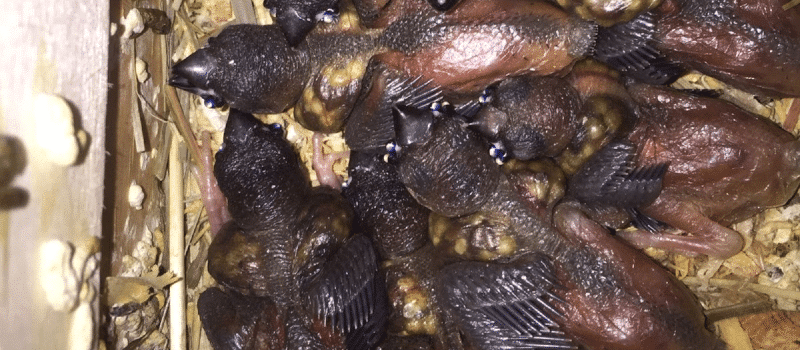
Hidden between the grass and shadows was a tiny cluster of hairless creatures, pressed tightly together, barely moving.
For a moment, everything stopped.
They were small, fragile, and completely helpless. Their bodies trembled with each shallow breath. They looked too young to survive on their own, and yet there they were, exposed in the yard with no mother in sight.
No one knew what they were.
No one knew how long they had been there.
But one thing was clear: they needed help.
A Strange Discovery in the Grass
Finding newborn animals can be confusing and emotional. The first instinct is often to help immediately, especially when they look abandoned or vulnerable. But in many cases, the safest choice is to wait and see whether the mother returns.
That is what happened here.
For a while, the tiny creatures were left undisturbed as the area was watched carefully. There was still hope that their mother might come back. Many wild animals leave their young briefly while searching for food, and human interference can sometimes do more harm than good.
But time passed.
The yard stayed silent.
No adult animal appeared.
The tiny creatures remained huddled together, growing colder and weaker.
Eventually, the decision became unavoidable. If they stayed there much longer, they might not survive.
So they were gently gathered, wrapped in warmth, and brought inside.
An Unexpected Responsibility Begins
Inside the home, a small safe space was prepared. Soft bedding was arranged, and warmth was provided to help replace what they had lost. Their bodies were so fragile that every movement had to be careful.
The first days were filled with uncertainty.
Without knowing exactly what they were, caring for them was difficult. Feeding had to be done slowly and gently. Their breathing had to be checked often. Even the smallest sign of improvement felt important.
At that stage, survival was not guaranteed.
But gradually, they began to respond.
Their breathing became steadier. Their tiny mouths opened for food. Their bodies grew stronger. The fear that they might not make it slowly turned into cautious hope.
What had started as a shocking discovery became a daily routine of care, patience, and observation.
Something About Them Felt Different
As the days passed, an unusual feeling began to grow.
The tiny creatures were no longer just silent, helpless newborns. They seemed alert in a way that was hard to explain. Even before their eyes fully opened, they reacted to sounds, movement, and presence.
There was a sense of awareness.
It may have been instinct. It may have been the natural development of young animals. But to the person caring for them, it felt like something deeper.
Each one began to show a different personality. One seemed bold, always moving first when food appeared. Another was quieter and more cautious. A third reacted quickly to sound, as if trying to understand the world before it could even see clearly.
Their growth became fascinating to watch.
Day by day, the mystery surrounding them slowly began to fade.
Their Eyes Open and the Truth Becomes Clear
Eventually, their eyes opened.
That was when everything changed.
Their dark, curious gazes made them seem even more alive and aware. They watched the room, responded to movement, and seemed to recognize the rhythm of feeding and care.
Then their bodies began changing.
Small feather-like growths appeared. Their shape became more defined. Their movements became quicker and more coordinated. What had once looked like tiny unknown creatures now began to resemble something familiar.
They were not mice.
They were not strange insects.
They were baby birds.
More specifically, they were swallows.
The realization was emotional. These fragile creatures found helpless in the grass were not meant for cages, boxes, or quiet rooms. They were built for the sky. They belonged to open air, high branches, and long journeys guided by instinct.
Caring for Wild Birds Requires Caution
This kind of story is touching, but it also carries an important reminder. Wild baby birds often need specialized care, and the best option is usually to contact a licensed wildlife rehabilitator whenever possible.
Well-meaning people can make mistakes without realizing it. Baby birds have specific dietary needs, temperature requirements, and developmental stages. Feeding the wrong food or handling them too much can cause harm. In many areas, wildlife care is also regulated by law.
In this story, the intention was compassion, and the birds survived. But for readers, the safest takeaway is clear: if you find helpless wildlife, observe first, avoid unnecessary handling, keep pets away, and contact a wildlife rescue or animal professional for guidance.
Just as families make careful decisions about health insurance, home safety, personal finance, real estate maintenance, and emergency planning, caring for vulnerable animals requires knowledge and responsibility.
Good intentions matter.
But informed action matters too.
A Bond Forms Through Care
As the swallows grew, caring for them became more than a task. It became a bond.
There were early mornings, careful feedings, small worries, and moments of relief. Every bit of progress felt personal. A stronger movement, a wider stretch of the wings, a louder call—each one showed they were getting closer to the life they were meant to live.
But with that progress came a difficult truth.
They could not stay forever.
Wild birds are not pets. Even when they are raised with care, their place is outside, where they can fly, migrate, hunt, and live freely.
The more their wings developed, the clearer it became: the goal was never to keep them.
The goal was to help them survive long enough to leave.
The Hardest Goodbye
The day finally came.
Outside, under the open sky, the box was placed gently on the ground. The air was quiet, and the moment felt heavier than expected.
One swallow stepped forward first. It moved carefully, unsure at first, then climbed onto a hand. For a brief moment, it paused.
Then it leapt.
Its wings beat quickly, uncertain at first, then stronger. It rose into the air.
Another followed.
Then another.
Within moments, the tiny helpless creatures once found in the grass were flying.
It was beautiful.
And heartbreaking.
Letting go can be difficult, even when it is the right thing to do. After days and weeks of care, the silence they left behind felt enormous. But their freedom was the reward.
They were exactly where they belonged.
A Farewell That Felt Like Thanks
Just when it seemed the goodbye was complete, something unexpected happened.
The swallows circled back.
They flew above the yard, dipping and gliding through the air as if testing their new strength. For a moment, it felt almost like they were returning to say goodbye.
Maybe it was instinct.
Maybe it was coincidence.
But to the person who had cared for them, it felt like gratitude.
The same creatures that had once fit helplessly in the palm of a hand were now moving freely beneath the sky.
That image stayed forever.
The Lesson Hidden in the Yard
This story resonates because it begins with fear and uncertainty but ends with freedom.
At first, the tiny creatures looked strange and even unsettling. They were hairless, fragile, and difficult to identify. But with patience and care, the mystery became something beautiful.
That is often how life works.
Sometimes the things that frighten or confuse us at first become opportunities for compassion. Sometimes helping means holding on. Other times, it means letting go.
The swallows were never meant to belong to a person.
They were meant to belong to the sky.
Final Thoughts
What began as a faint movement in the grass became a life-changing experience.
A few tiny, helpless creatures were found alone in the yard. They were warmed, fed, protected, and watched over until the truth finally emerged: they were swallows, fragile at first, but destined for flight.
Their story is a reminder that compassion can begin in the smallest moments.
A pause.
A closer look.
A choice to help.
And sometimes, the most meaningful reward is watching something you saved fly away.