In a country that often speaks proudly about freedom, second chances, and personal transformation, one issue continues to raise painful questions: should a child ever be sentenced to spend the rest of life in prison with no chance of parole?
Juvenile life without parole remains one of the most debated punishments in the American justice system. It is a sentence that does not simply punish a young person for a crime. It declares, often before that child has fully grown into adulthood, that they are beyond rehabilitation forever.
For victims and their families, violent crime leaves wounds that may never fully heal. Their pain must never be dismissed or minimized. Accountability matters. Public safety matters. But the question at the center of this debate is whether accountability for children should permanently erase the possibility of growth, remorse, and redemption.
Advocacy groups, legal experts, and civil rights organizations have argued for years that sentencing children to die in prison conflicts with what science, law, and human experience tell us about youth development. The Equal Justice Initiative has documented cases involving children as young as 13 and 14 who were sentenced to life imprisonment without parole in the United States.
Children Are Not Simply Smaller Adults
One of the strongest arguments against juvenile life without parole comes from developmental science. Teenagers and children are still growing emotionally, socially, and neurologically. Their ability to control impulses, think through consequences, resist peer pressure, and make long-term decisions is not the same as that of fully mature adults.
Research summarized by the National Conference of State Legislatures notes that brain development continues into the mid-to-late twenties, and that the still-developing prefrontal cortex affects self-control, risk-taking, and peer influence.
That does not mean young people cannot be responsible for harm. It does mean their age, maturity, trauma history, environment, and capacity for change should matter when courts decide punishment.
Many children who receive extreme sentences have lived through poverty, abuse, neglect, unstable housing, community violence, or untreated mental health challenges. Some were principal actors in serious crimes. Others played secondary roles in events that ended tragically. In either case, critics argue that justice should examine the whole child, not only the worst moment of that child’s life.
The Supreme Court Changed the Legal Landscape
The legal debate over juvenile life without parole changed significantly in 2012. In Miller v. Alabama, the U.S. Supreme Court ruled that mandatory life-without-parole sentences for juveniles violate the Eighth Amendment’s ban on cruel and unusual punishment. The Court did not completely ban juvenile life without parole, but it made clear that children cannot automatically receive that punishment without consideration of youth and its related circumstances.
In 2016, the Court went further in Montgomery v. Louisiana, ruling that the Miller decision applied retroactively. That opened the door for many people who had been sentenced as children to seek review of their cases.
However, the law remains complicated. In 2021, Jones v. Mississippi held that a sentencing court is not required to make a separate finding that a juvenile is permanently incorrigible before imposing life without parole, as long as the court has discretion to consider youth. Legal scholars and advocates have continued to debate how much protection that leaves for children facing the harshest sentences.
The Human Cost Behind the Sentence
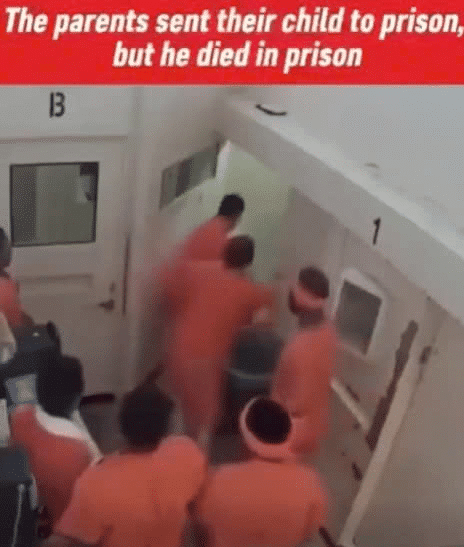
A life-without-parole sentence is sometimes described as “death by incarceration.” For a child, it can mean entering prison before high school is finished and leaving only after death.
That reality affects more than the person sentenced. Families may lose contact over time. Parents age and die. Siblings move on. Children grow into adults behind walls, often carrying shame, grief, trauma, and isolation. Some may spend decades trying to prove they have changed, even when the law offers no meaningful pathway to release.
The phrase “a lonely death in prison” captures one of the deepest fears surrounding these sentences. It asks whether society should allow a person who committed a terrible act as a child to grow old and die behind bars without ever having a chance to show transformation.
For families of victims, the pain is also lifelong. Many live with loss, anger, and trauma that no sentence can repair. A fair system must honor that suffering while also asking whether permanent condemnation of children is truly justice.
Race, Poverty, and Unequal Outcomes
The debate also intersects with race and poverty. The Equal Justice Initiative has reported that children of color made up a large share of those age 14 or younger serving life-without-parole sentences.
Economic inequality also plays a major role. Children from low-income families may have less access to strong legal defense, expert witnesses, mental health evaluations, private investigators, and family resources. In serious criminal cases, the quality of legal representation can shape the outcome dramatically.
This is where the issue connects with broader concerns about personal finance, public spending, and community investment. States spend enormous amounts on incarceration, while many at-risk children lack early access to education, counseling, housing stability, health care, and family support. Reform advocates argue that investing earlier in prevention could reduce harm more effectively than relying only on extreme punishment after tragedy occurs.
Reform Is Moving, But Unevenly
Since the Supreme Court’s major juvenile sentencing decisions, many states have changed their laws. Some have banned juvenile life without parole entirely. Others still allow it in certain cases. The Campaign for the Fair Sentencing of Youth tracks where juvenile life without parole has been banned and where it remains a sentencing option, showing that reform has progressed but remains unfinished across the country.
Supporters of harsh sentencing argue that some crimes are so severe that life without parole must remain available, even for minors. They believe victims deserve finality and that public safety should be the highest priority.
Opponents respond that parole eligibility is not the same as automatic release. A parole hearing simply allows a person to be evaluated after many years. It gives the system a chance to ask whether the person has accepted responsibility, changed behavior, completed education, shown remorse, and become safe enough to reenter society.
Accountability and Mercy Can Exist Together
The juvenile justice debate is often presented as a choice between victims and offenders, but many reform advocates reject that framing. They argue that accountability and mercy are not opposites.
A child who causes serious harm should face serious consequences. But consequences can include rehabilitation, education, therapy, restitution, long-term supervision, and later review. The question is not whether harm matters. The question is whether a child should ever be declared permanently hopeless.
A justice system that allows review after decades does not erase the crime. It recognizes that people, especially children, can grow into someone different from who they were at their worst moment.
Final Thoughts
Juvenile life without parole forces America to confront a difficult moral question: is justice only about punishment, or should it also leave room for transformation?
Children can commit serious harm. Victims deserve dignity, truth, and protection. Communities deserve safety. But children are also still developing, still changing, and still capable of becoming more than the worst thing they have done.
A fair system should protect the public while recognizing the science of youth, the reality of trauma, and the possibility of redemption. If America believes in second chances, then even its justice system must ask whether a child should ever be sentenced to die in prison without hope.