In a small village near Montpellier, Julien Lefèvre was known as a quiet, hardworking man. At 36, he had built his life with strong hands, patience, and a reputation for kindness. As a stonemason, he spent his days shaping rock, mixing cement, and restoring old homes. His clothes were often covered in dust, and his hands carried the marks of years of labor.
But nothing he had ever built drew more attention than the life he chose to build with Élodie Marchand.
Élodie had once been admired throughout the region. She was a talented fine arts teacher, graceful, intelligent, and full of dreams. She had even been a finalist in a regional beauty pageant, a young woman many believed had a bright future ahead of her.
Then, three years earlier, everything changed.
A terrible accident on the A9 motorway left Élodie paralyzed. She survived, but she lost the ability to walk. In the months that followed, her world became smaller. Her classroom, social life, and confidence all seemed to slip away at once.
Many people saw only what she had lost.
Julien saw the woman who was still there.
A Love Many People Did Not Understand
When Julien announced that he intended to marry Élodie, the village reacted with disbelief.
Some people whispered in shops and cafés. Others spoke more openly, questioning his decision as if love needed public approval. They called him foolish. They said he was throwing away his future. Some even claimed he had spent his life savings for a woman who could not give him the life they believed he deserved.
Julien heard the rumors.
He simply chose not to answer them.
To him, Élodie was not a burden. She was not a tragedy. She was not a symbol of sacrifice.
She was the woman he loved.
During their engagement photo session, he held her hand gently and leaned close enough for only her to hear.
“Even if you can’t walk anymore, I’ll always be beside you,” he told her. “Together, we will find another way forward.”
For Élodie, those words reached a part of her heart she thought had gone silent after the accident. For the first time in years, she cried not from pain, but from hope.
Her Mother’s Fear
Élodie’s mother, Madame Marchand, was not easily convinced.
She was a protective woman, deeply religious and deeply afraid. She loved her daughter, but fear often shaped the way she spoke. She worried that Julien would one day regret the marriage. She worried that Élodie would suffer again if he grew tired of caring for her.
“My daughter,” she said one day, “think carefully. You may not be able to give him the life he expects. He deserves more.”
Élodie listened quietly.
Then she answered with calm strength.
“He is not looking for perfection, Mama. He wants my heart.”
Those words ended the argument, though not the concern. Over time, Élodie’s family slowly accepted what Julien had already proven: he was not acting out of pity. He was choosing her with full awareness of the life ahead.
A Wedding Filled With Lavender and Tears
One Sunday in June, inside the small Romanesque church of Saint-Clément, Julien and Élodie exchanged vows.
The church was decorated with lavender garlands. A local violinist played softly as sunlight filtered through the old windows. The ceremony was not extravagant, but it carried a sincerity that made everyone quiet.
Élodie wore white lace, her hands trembling slightly as Julien stood beside her. He looked at her not with pity, but with pride.
When they promised to love each other in sickness and in health, the words felt heavier than usual. They were not simply repeating tradition. They understood the cost of commitment.
And still, they said yes.
The House Julien Built for Her
Julien’s love did not end at the altar.
Before the wedding, he had spent €75,000 — savings from ten years of hard construction work — to renovate their home for Élodie’s needs. It was not a flashy investment. It was not about luxury. It was about dignity, safety, and independence.
He widened the doorways so her wheelchair could move freely. He replaced difficult steps with ramps. He installed a walk-in shower. He lowered certain shelves and adjusted the kitchen space. Most importantly, he built a bright painting studio where sunlight poured through the windows.
Élodie had once believed her life as an artist was over.
Julien wanted to prove it was not.
One evening, with plaster still on his hands, he looked around the unfinished room and said, “I want you to feel that this house belongs to you.”
Élodie kissed him through tears.
For the first time since the accident, she allowed herself to imagine tomorrow.
The Wedding Night Secret
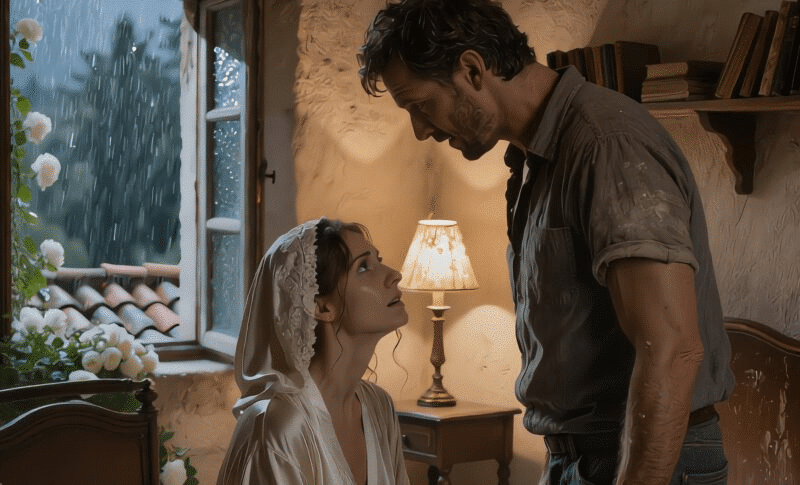
That night, rain fell softly over the red-tiled roof of their home. The room smelled faintly of waxed wood and jasmine. After the long celebration, Julien helped Élodie settle into bed with the same tenderness he had shown throughout their relationship.
He was nervous, but happy.
Then, in a quiet moment, he noticed something he had never seen before — a faint mark on her body, almost hidden. It was not the scar itself that unsettled him, but the emotion that passed across Élodie’s face when she realized he had seen it.
Julien paused.
“What is it?” he asked gently.
Élodie’s eyes filled with tears.
For a long moment, she said nothing. Then her voice broke as she finally revealed the truth she had been carrying alone.
She was pregnant.
Julien froze.
The words seemed impossible at first. Doctors had told Élodie that pregnancy would be extremely unlikely and medically complicated after her accident. She had been afraid to believe it herself, afraid to tell anyone, and especially afraid to tell Julien.
Not because she doubted his kindness.
Because she feared the risk.
A Truth That Brought Fear and Hope
Élodie explained that she had only recently learned the truth. The pregnancy was fragile, and doctors had warned her that the months ahead could be difficult. Her body had already endured so much. There would be risks, careful monitoring, and decisions no couple ever wants to face so early in marriage.
She had wanted to tell Julien before the wedding.
But fear stopped her.
She feared he would feel trapped. She feared he would think she had hidden something unforgivable. She feared the pregnancy might not survive and that speaking of it too soon would make the pain worse.
Julien sat in silence, trying to absorb everything.
Then he reached for her hands.
He did not ask why she had not told him sooner. He did not accuse her. He did not speak of burden, risk, or regret.
Instead, he said the words she needed most:
“You are not alone.”
Love Under Pressure
From that night forward, their marriage changed — not because love disappeared, but because it deepened.
Julien accompanied Élodie to every medical appointment. He learned about the risks, the care she needed, and the careful planning required for both mother and child. He adjusted his work schedule, saved money more carefully, and prepared their home for a future neither of them had dared to imagine.
Élodie’s mother, once doubtful of the marriage, slowly softened. Her fear did not vanish, but it changed shape. She began helping more, praying more, and looking at Julien with new respect.
The village, too, began to change its tone.
The same people who had once whispered that Julien was foolish now watched him push Élodie through the market, carry groceries, adjust her blanket in the cold, and speak to her with the same devotion as before.
This was not pity.
This was partnership.
A Child No One Expected
Months passed with worry, hope, and careful medical care.
Élodie returned to painting, filling her studio with color again. Her canvases changed. Where there had once been shadows and grief, there were now soft blues, gold light, open windows, and small hands reaching upward.
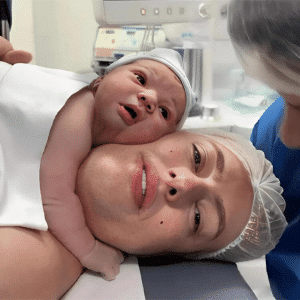
Then, one winter morning, their son was born.
He was small and fragile, but alive.
Julien held him first with trembling hands, overwhelmed by a love so powerful he could barely speak. Then he placed the baby gently beside Élodie.
She looked at her child, then at her husband, and understood that her life had not ended on the motorway three years earlier.
It had changed.
And somehow, against every prediction, it had also begun again.
A Story Beyond Judgment
In time, the village stopped calling Julien foolish.
People began to understand what he had known from the beginning: love is not measured by convenience. It is not proven only when life is easy, bodies are perfect, or the future is guaranteed.
True love is built through choice.
It is choosing someone when others doubt them. Choosing patience when fear is easier. Choosing dignity when the world offers judgment. Choosing to build a home, a future, and a family from whatever life leaves behind.
Julien’s €75,000 renovation was more than a financial investment. It was a declaration that Élodie deserved comfort, independence, beauty, and hope.
And Élodie’s secret, once feared, became the beginning of a life neither of them expected.
Their story reminds us that love is not about perfection.
It is about standing beside someone and saying, again and again:
We will find another way forward.