Airports are built around routine. Bags move through scanners, passengers wait in lines, announcements echo overhead, and security officers watch carefully for anything unusual. Most of the time, the process is simple and uneventful.
But one morning, during an ordinary baggage inspection, a security officer noticed something on the X-ray screen that made him pause.
The suitcase in front of him did not look like the others.
Inside were dozens of small objects, each one similar in size and carefully arranged. They were not tossed in casually like clothes or souvenirs. They were packed with unusual precision, individually wrapped and placed as if each one mattered.
The officer leaned closer to the screen.
After years of airport security work, he had seen strange items before — electronics, tools, antiques, food, collectibles, and objects passengers forgot to declare. But this suitcase felt different.
He called his supervisor over.
Together, they studied the image.
Whatever was inside needed to be inspected.
A Grandmother Asked to Step Aside
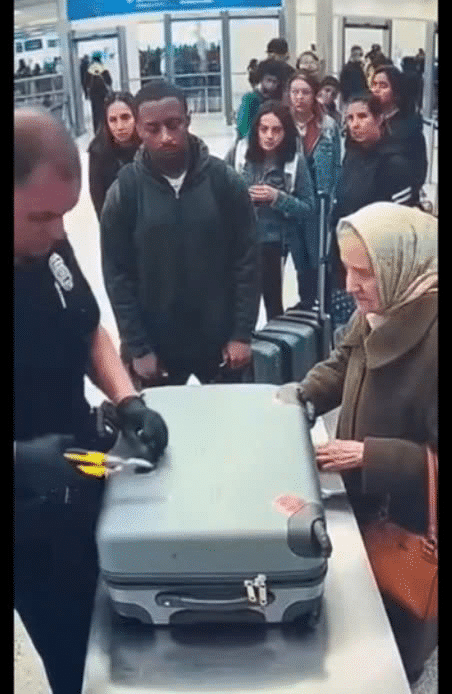
The suitcase belonged to an elderly woman traveling with her family. She appeared gentle, tired, and slightly nervous as the officers asked her to step out of the line for a manual inspection.
At first, she tried to explain.
“They’re just gifts for my grandchildren,” she said softly.
Her voice carried more worry than defiance. She did not seem angry, only anxious. But in an airport, security officers cannot rely on appearances or explanations alone. If something unusual appears on a scanner, they are required to inspect it.
The grandmother’s nervous reaction only made the officers more cautious.
She repeated that there was nothing dangerous inside. Just small presents. Handmade items. Keepsakes.
Still, the suitcase had to be opened.
Nearby passengers slowed down, watching the scene unfold. Some looked curious. Others seemed concerned. The officers remained professional, but the air around the inspection table grew tense.
The grandmother held her hands together as the suitcase was placed flat and unlocked.
The Suitcase Opens
As the zipper moved, the mood shifted.
Inside the suitcase were dozens of small packages, each one wrapped carefully and tied with colorful ribbon. Every package had a handwritten note attached to it.
Some notes read:
“For your courage.”
“A little joy for you.”
“Remember this moment.”
The officers exchanged glances.
The items did not look like ordinary souvenirs. They looked personal, almost ceremonial. The care put into each package was obvious, but that did not explain why the X-ray image had appeared so unusual.
One officer gently picked up a package and asked permission to unwrap it.
The grandmother nodded.
When he opened it, everyone nearby fell silent.
Inside was a small figurine.
It was beautifully made, delicate, and incredibly detailed. The sculpture appeared to show a child in motion — laughing, reaching, alive with expression. The surface was pale, smooth, and polished.
For a moment, the officer froze.
The material looked almost like ivory.
A Serious Concern
That possibility changed everything.
Ivory is heavily restricted in many places because of international wildlife protection laws. Transporting ivory without proper documentation can lead to serious legal consequences, especially at airports and border checkpoints.
The officer carefully examined the figurine without jumping to conclusions. The grandmother watched his face, understanding immediately what he was thinking.
“They’re not ivory,” she said. “They’re resin. I made them myself.”
The officer looked up.
She explained that she was an artist. For years, she had created small handmade figurines as keepsakes for her family. Each sculpture represented a memory — a birthday, a childhood habit, a moment of bravery, a gesture, a smile, or a story she did not want her grandchildren to forget.
The pieces were not expensive antiques.
They were not illegal materials.
They were memories shaped by hand.
But because of their appearance, security still had to verify the claim.
Specialists Are Called In
The officers handled the figurine carefully and contacted specialists to examine the material. The grandmother waited quietly, her worry still visible.
For her, the suitcase did not contain suspicious objects. It contained months, possibly years, of work. Each piece had been created with patience and love. The thought of them being damaged, confiscated, or misunderstood clearly frightened her.
The officers understood the emotional weight, but they also had a responsibility to follow procedure.
The test was performed.
Seconds felt longer than they should have.
Then the result came back.
The figurines were not ivory.
They were resin.
Completely legal.
Completely safe.
The tension in the room dissolved almost instantly.
Suspicion Turns Into Respect
Once the material was confirmed, the officers’ expressions changed. What had started as a serious security concern became something unexpectedly moving.
They looked again at the tiny sculptures, this time not as suspicious items, but as artwork.
Each figurine had personality. Some showed children playing. Others captured quiet moments — a child reading, a child holding flowers, a child laughing with arms raised. Every detail suggested that the grandmother had not simply made decorations. She had preserved pieces of her family’s life.
The officers carefully rewrapped each item, making sure the ribbons and notes were placed back exactly as they had been.
The grandmother thanked them, still emotional but relieved.
One officer apologized for the worry the inspection had caused, while also explaining that the check had been necessary. The grandmother nodded. She understood.
Then she said something that stayed with everyone who heard it.
“I make them to preserve memories,” she said. “The smallest moments are the ones we forget too quickly.”
More Than Gifts
That sentence changed how everyone saw the suitcase.
It was not just luggage.
It was a grandmother’s love, packed carefully for a journey. It was time, patience, and memory wrapped in paper and ribbon. It was proof that gifts do not have to be expensive to be priceless.
In a busy airport, where people are often rushed, stressed, and focused only on reaching the next gate, that moment slowed everything down.
The officers had expected a security issue.
Instead, they found a story.
A grandmother had spent years turning family memories into small sculptures so her grandchildren could hold pieces of their childhood in their hands. She was not hiding danger. She was protecting love.
A Reminder Hidden in a Suitcase
The incident became a quiet reminder that appearances can be misleading.
On an X-ray screen, the objects looked suspicious. In the suitcase, they looked unusual. At first glance, they raised serious questions.
But once the truth was known, they became something beautiful.
Airport security exists for a reason, and officers must investigate anything that appears concerning. But this experience also showed the human side of travel — the stories people carry, the memories packed between clothing, and the emotions hidden inside ordinary bags.
The grandmother continued on her journey, her suitcase safely repacked and her gifts intact.
This time, the officers watched her leave with admiration.
Because inside that suitcase was not a crime.
It was not a threat.
It was a collection of love, shaped by hand, wrapped with care, and carried across the world for the children she loved most.