What happened at the Cincinnati Zoo on May 28, 2016, was more than a shocking accident. It became a moment that millions of people around the world would watch, discuss, mourn, and debate for years.
A normal day at the zoo changed in seconds when a three-year-old boy slipped past a protective barrier and fell into the gorilla enclosure. Inside that enclosure was Harambe, a 17-year-old western lowland gorilla weighing roughly 440 pounds.
The situation immediately became terrifying.
Visitors nearby screamed as they realized a small child was inside the habitat with one of the most powerful animals on earth. Zoo staff were alerted quickly, and the crowd watched in fear as Harambe moved toward the boy.
The encounter lasted only minutes, but those minutes became the center of a global conversation about animal welfare, public safety, zoo security, and the heartbreaking decisions that sometimes happen during emergencies.
A Terrifying Fall Into the Enclosure
For families visiting the zoo that day, the scene began like any other weekend outing. Parents walked with children, visitors stopped at exhibits, and guests gathered near the gorilla habitat to watch the animals.
Then the unthinkable happened.
The young boy managed to get beyond the barrier and fell down into the enclosure. The drop alone created immediate concern, but the greater danger was what could happen next.
Harambe approached the child.
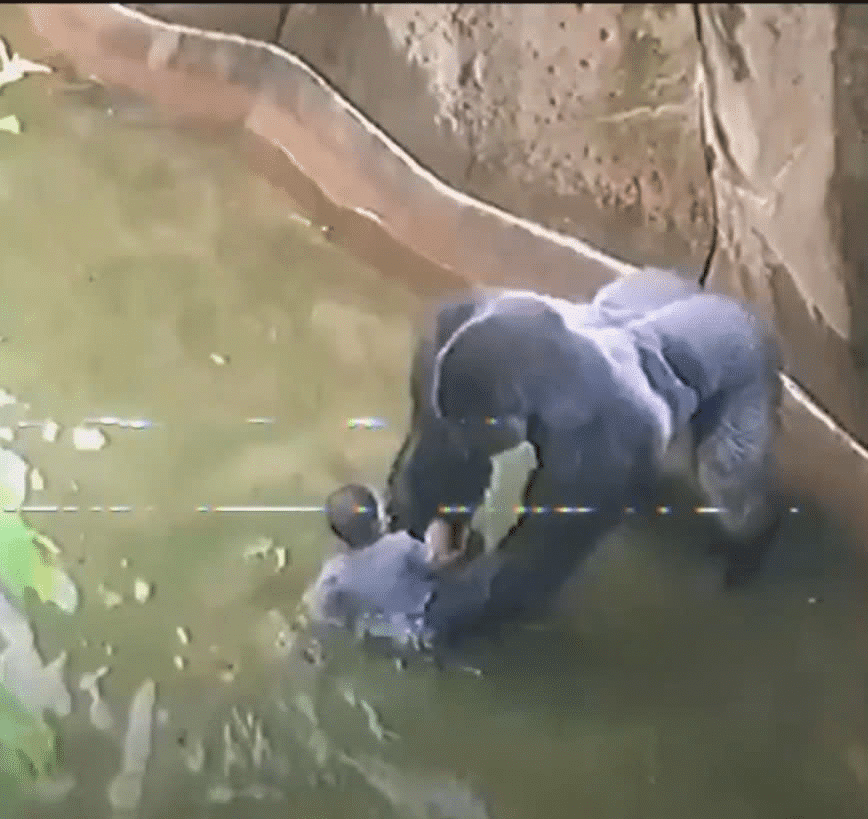
Video footage from the incident showed moments that many people interpreted in different ways. At times, Harambe appeared calm. He stood near the child, looked around, and seemed aware of the chaos above him. Some viewers later believed the gorilla may have been trying to protect the boy or respond to the panic from the crowd.
But other moments were far more alarming. Harambe dragged the child through shallow water, and the speed and strength of those movements made zoo officials fear the child could be seriously injured or killed at any moment.
That uncertainty made the situation extremely dangerous.
Why the Zoo Made a Difficult Decision
Zoo officials were forced to act quickly. They had to make a decision under extreme pressure, with a child’s life at risk and very little time to weigh every possible option.
The choice they made was devastating.
Harambe was shot and killed.
The child survived.
Afterward, zoo officials explained that they did not use a tranquilizer because it would not have worked instantly. Sedatives can take several minutes to affect a large animal, and during that time Harambe could have panicked, moved suddenly, or unintentionally harmed the child.
Even if Harambe had no intention of hurting the boy, his size and strength made the situation life-threatening. A gorilla does not need to be aggressive to cause fatal injury. One sudden movement, one fall, or one moment of confusion could have ended differently.
That reality was at the center of the zoo’s decision.
Still, for many people, the outcome was heartbreaking.
The World Reacted Immediately
Once video of the incident spread online, the reaction was enormous.
People around the world began discussing what happened. Some supported the zoo’s decision, arguing that saving the child had to come first. In their view, the staff faced an impossible situation and acted to prevent a human tragedy.
Others were furious. They believed Harambe should not have died because of a human mistake. Many argued that the barrier should have been more secure, that the child should never have been able to enter the enclosure, and that an endangered animal paid the ultimate price for a failure he did not cause.
The internet turned Harambe’s name into a symbol. For some, he represented grief and injustice. For others, he became part of online culture in ways that sometimes overshadowed the seriousness of the event.
But beneath the memes, arguments, and viral reactions was a real loss.
Harambe was a living animal. Zoo staff knew him, cared for him, and mourned him. The child and his family also endured a terrifying event that could have ended in unimaginable tragedy.
A Debate About Zoos and Responsibility
Harambe’s death raised difficult questions that still matter today.
Should animals in captivity suffer the consequences of human error? How can zoos better protect both visitors and animals? Are barriers strong enough? Are emergency protocols clear enough? Should highly intelligent animals like gorillas be kept in public exhibits at all?
Animal rights advocates argued that Harambe’s death showed the risks of keeping wild animals in captivity. Gorillas are intelligent, emotional, powerful creatures with complex social lives. Many people felt the tragedy proved that even well-managed zoos can never fully remove the dangers created when humans and wild animals are placed so close together.
Supporters of modern zoos offered a different perspective. They pointed to conservation, research, education, and breeding programs that help protect endangered species. Western lowland gorillas face threats in the wild, including habitat loss, disease, and illegal hunting. From this view, responsible zoos can play a role in protecting species and educating the public.
The truth is complicated.
Zoos can provide conservation value, but they also carry serious responsibility. When animals are kept in human-controlled spaces, the safety of both visitors and animals depends on design, training, supervision, emergency planning, and constant review.
Harambe’s story forced many institutions to take a harder look at those responsibilities.
Safety Changes After the Incident
After the tragedy, the Cincinnati Zoo strengthened the barrier around the gorilla enclosure. Other zoos also reviewed their safety systems, emergency response plans, and visitor protection measures.
Barriers, viewing areas, signs, staff training, and response protocols became part of a larger conversation about preventing similar incidents. For many families, the story was also a reminder of how quickly children can move and how important close supervision is in public spaces.
But responsibility does not belong to one side alone.
Zoos must design exhibits that account for human behavior, including mistakes. Visitors must also respect barriers, follow rules, and understand that wild animals are not entertainment props. Even when animals appear calm or familiar, they remain powerful and unpredictable.
Harambe’s Legacy
Years later, Harambe’s name still carries emotional weight.
For some, he is remembered as a tragic symbol of animal captivity and human error. For others, the incident remains an example of an impossible emergency decision made to save a child’s life. Many people continue to feel sadness because the situation had no truly happy ending.
A child survived, which matters deeply.
But Harambe died, and that loss cannot be ignored.
His story became unforgettable because it sits at the intersection of fear, grief, responsibility, and moral conflict. It reminds us that the relationship between humans and wildlife is never simple. When we create spaces where people can observe powerful animals up close, we take on a serious duty to protect everyone involved.
Harambe’s final moments were painful to witness, but they continue to teach an important lesson.
Safety matters.
Animal welfare matters.
Human responsibility matters.
And sometimes, one tragic moment can force the world to ask questions it should have been asking all along.