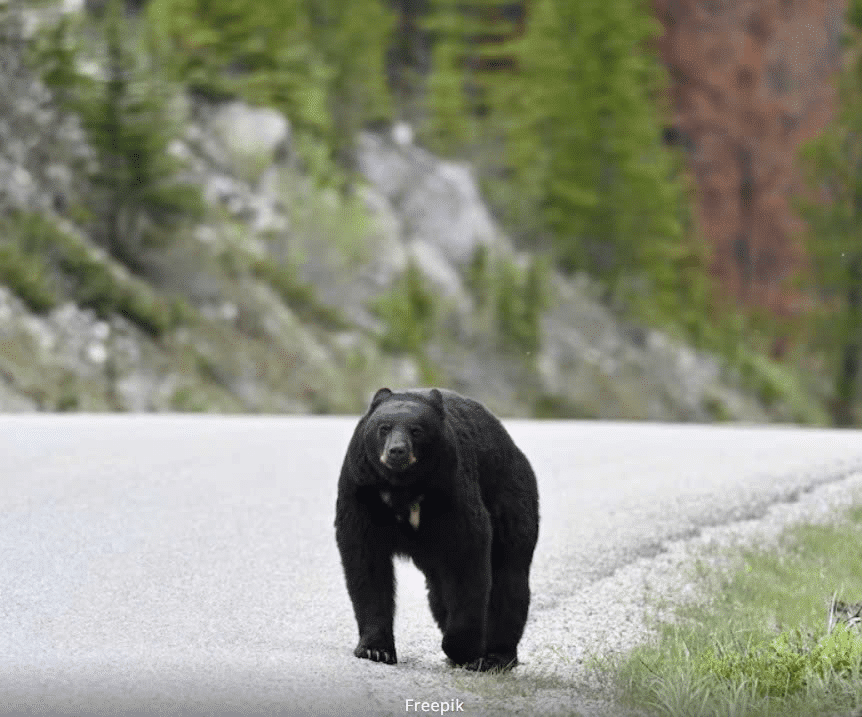
An early morning drive along a remote highway became an unforgettable experience for one driver after they noticed a bear trapped in a tight net near the side of the road. What first appeared to be a dark shape near the shoulder quickly turned into a frightening and emotional scene: a large wild animal, exhausted and tangled, struggling to break free as cars continued passing by.
According to the account, the highway ran beside a dense forest, where shadows still covered much of the roadside in the early morning light. The driver noticed movement near the shoulder and slowed down, realizing within moments that the figure was not debris or a fallen branch. It was a bear, and it appeared to be caught in a net that had wrapped tightly around its front legs and shoulders.
The animal was clearly distressed. It released deep, tired growls while trying to move, but the net restricted its strength and left it vulnerable. For any passerby, the situation was alarming. A trapped bear is still a powerful wild animal, and approaching one can be extremely dangerous. Yet watching the animal suffer while traffic moved past was something the driver could not ignore.
Passing Cars Kept Moving
As the bear remained trapped near the road, several vehicles reportedly passed the scene without stopping. Some drivers honked. Others slowed down long enough to record videos from inside their vehicles before continuing on their way.
The moment highlighted a difficult reality of modern life: many people are quick to capture dramatic events on camera, but far fewer are willing to get involved. In dangerous situations, caution is understandable. Still, the driver felt that doing nothing was not an option.
Instead of driving away, they pulled over as safely as possible. They switched on their hazard lights and placed a warning triangle behind the vehicle to alert other drivers. With gloves and a cutting tool in hand, they slowly approached the trapped bear.
It was a risky decision. Wildlife experts often warn that injured or frightened animals can react unpredictably. A bear, even when tired or restrained, can cause serious injury in seconds. Any rescue involving a wild animal should ideally be handled by trained professionals. However, in that moment, the driver believed the bear needed immediate help before the situation became worse.
A Careful Approach Toward a Frightened Animal
The driver moved slowly and spoke in a calm voice, hoping not to frighten the bear further. The animal continued to growl, but it did not charge or lunge. Its body language appeared tense and exhausted, as if it had already spent a long time struggling against the net.
Every step toward the bear required caution. The driver had to stay close enough to cut the net but far enough to avoid sudden movement from the animal. One wrong motion could have escalated the situation.
The net was wrapped tightly around the bear’s shoulders and front legs, making each cut delicate. The driver worked through the knots carefully, trying not to pull the material deeper into the animal’s fur or skin. The bear growled throughout the rescue, but it remained still enough for the driver to continue.
The tension of the moment was overwhelming. Cars passed in the background, the forest stood quiet nearby, and the bear’s breathing grew heavy as the final sections of the net began to loosen.
The Net Finally Fell Away
After several careful cuts, the last part of the net gave way. The material dropped to the ground, and the bear was finally free.
For a brief moment, nothing happened.
The driver stood frozen, expecting the bear to run, panic, or possibly attack. After all, a wild animal that has just escaped danger may react out of fear. The driver braced for the worst, knowing there was no way to predict what the bear would do next.
But instead of lunging forward, the bear paused.
According to the story, it looked directly at the person who had freed it. The moment was silent and intense. There was no sudden aggression, no roar, and no immediate rush toward the forest. The bear simply stood there, as if taking in what had happened.
Then, slowly, it backed away.
For a few seconds, the bear appeared to maintain eye contact with the driver. Then it turned and disappeared into the trees, returning to the forest where it belonged.
A Moment That Felt Like Understanding
The driver was left stunned. What had begun as a frightening roadside emergency ended with an unexpected moment of stillness between a human and a wild animal.
Stories like this often capture public attention because they touch something deeper than the rescue itself. They remind people that compassion can appear in unexpected places, even in moments filled with fear. They also show how quickly an ordinary day can become a life-changing experience.
Still, the situation also carries an important safety lesson. Anyone who encounters an injured or trapped wild animal should contact local wildlife authorities, animal control, or emergency services whenever possible. Wild animals can behave unpredictably, especially when they are scared, wounded, or cornered. Personal safety should always come first.
At the same time, this account raises broader concerns about wildlife protection, illegal trapping, and human activity near natural habitats. Nets, traps, and discarded materials can create serious dangers for animals. Conservation programs, roadside safety awareness, responsible land management, and environmental protection efforts all play a role in reducing these risks.
The Hidden Costs of Roadside Emergencies
Unexpected incidents like this can also bring real-life financial concerns. Drivers who stop during emergencies may face risks related to vehicle damage, medical expenses, liability questions, or roadside accidents. Having proper auto insurance, health insurance, emergency savings, and roadside assistance coverage can help protect families when unusual situations happen without warning.
For communities near forested areas, wildlife encounters are part of a larger conversation about safety and preparedness. Local governments, environmental agencies, and conservation groups often work to reduce conflict between humans and animals. These efforts may include better signage, wildlife crossings, rescue response teams, and education campaigns for drivers.
Financial investment in wildlife conservation is not just about protecting animals. It also helps protect people, roads, property, and local communities.
A Rescue the Driver Will Never Forget
The driver reportedly walked away unharmed, but the experience left a lasting emotional impact. Seeing a powerful animal trapped, choosing to help, and then watching it return peacefully to the forest created a memory that would be difficult to forget.
In a world where many people pass by moments of suffering, this story stands out because one person chose action over hesitation. The decision was dangerous, and it is not something everyone should attempt without professional help. But the compassion behind it is what makes the story resonate.
Somewhere beyond that highway, the bear continued into the forest, free once again. And for the driver, what started as a normal morning became a powerful reminder that courage is sometimes found in the quiet choice to stop, care, and help when no one else does.