A deeply disturbing case from Wakefield, England, has continued to draw public attention years after it first shocked the community.
At the center of the case was Liam Deane, a 22-year-old father who admitted killing his two-day-old daughter, Luna, in 2017. Deane was sentenced to life in prison with a minimum term of 10 years after the court heard that he attacked the newborn when she would not stop crying. Reports at the time said Luna suffered catastrophic brain injuries and later died in intensive care.
But the tragedy did not end with Deane’s conviction.
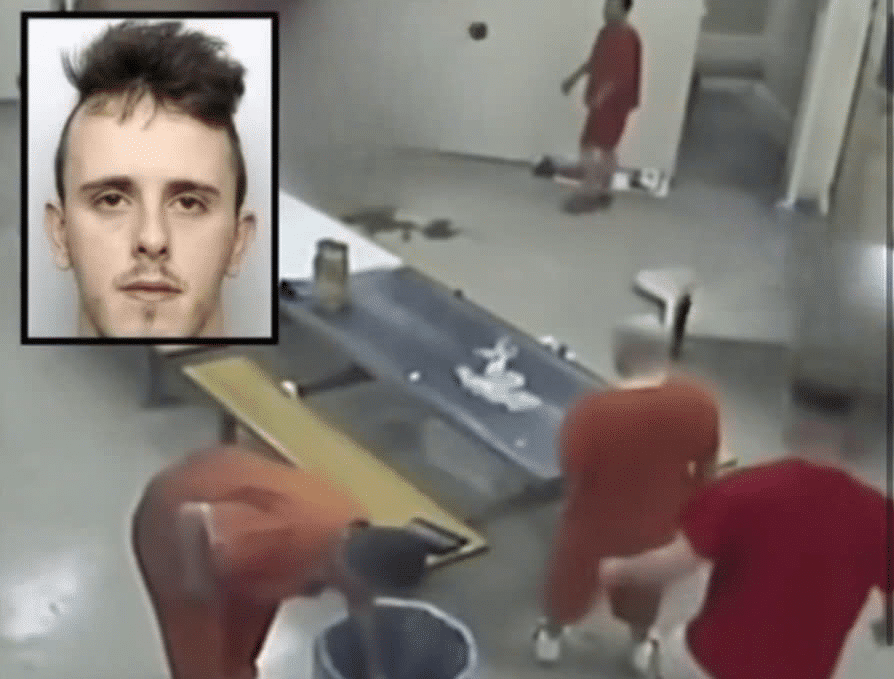
Just weeks after being jailed, Deane was found dead inside HMP Leeds. Another prisoner, John Westland, was later convicted of murdering him and was sentenced to life in prison with a minimum term of 19 years. ITV reported that Westland used glass from a broken aftershave bottle in the fatal prison attack.
The case remains painful because it contains multiple layers of loss: the death of a newborn child, the destruction of a family, the failure of a young parent to protect his baby, and a later prison killing that raised questions about safety, punishment, and whether violence can ever be called justice.
A Newborn’s Life Cut Short
Luna was only two days old.
At an age when a baby is completely dependent on adults for safety, comfort, feeding, warmth, and protection, she suffered injuries that ended her life. According to reports, Deane was caring for Luna while the baby’s mother slept. He later admitted responsibility for the attack, which prosecutors said involved shaking, squeezing, and striking the infant.
The details are difficult to read, and they should be handled with care. This was not simply a “viral crime story.” It was the death of a real child.
For Luna’s family, the loss was permanent. For the wider community, the case became a heartbreaking reminder of how vulnerable newborns are and how quickly frustration, exhaustion, or emotional instability can become dangerous when a caregiver loses control.
New parents often face sleepless nights, financial pressure, stress, anxiety, and overwhelming responsibility. None of those challenges excuses violence. But they do show why early support, parenting education, mental health resources, and safe crisis planning matter so much.
When a caregiver feels they are reaching a breaking point, the safest response is to place the baby somewhere secure, step away briefly, and call for help from a trusted person or emergency service.
A baby’s crying is never a reason for harm.
The Court’s Response
Deane’s guilty plea led to a life sentence.
The court’s decision reflected the seriousness of the crime and the vulnerability of the victim. Luna had no ability to defend herself, escape, or seek help. The legal system treated her death as a grave act of violence, not a parenting mistake.
Cases involving the death of a child often leave the public asking how such a thing could happen. Neighbors may say they saw no warning signs. Family members may struggle with guilt. Communities may wonder whether someone should have noticed distress earlier.
But sometimes the most dangerous moments happen behind closed doors, in private spaces where stress, anger, and isolation build quietly.
That is why prevention must be part of the conversation.
Healthcare providers, family members, social workers, community organizations, and friends can all play a role in checking on new parents — not with judgment, but with support. That support can include mental health care, parenting classes, emergency childcare assistance, financial counseling, and practical help with exhaustion.
A Prison Killing Adds Another Layer of Tragedy
After Deane was sentenced, he was sent to prison. Not long afterward, he was found dead in his cell at HMP Leeds. John Westland, his cellmate, was later found guilty of murder.
Some viral versions of the story frame Deane’s death as a “brutal reckoning,” as though the prison killing was a form of justice.
That framing is dangerous.
A lawful sentence is punishment determined by a court. A prison killing is not justice. It is another crime.
ITV reported that Judge Rodney Jameson QC said Deane’s family was entitled to expect that he could serve his sentence without having his life taken by his cellmate. The judge also noted that Deane never had the chance to atone for his crime.
That does not minimize what Deane did to Luna. Her death remains the central tragedy. But the rule of law matters even when the person harmed or killed in prison committed a terrible crime.
If prisons cannot keep people alive while they serve their sentences, society faces a serious problem.
Why Prison Safety Matters
Prisons are meant to carry out lawful sentences, protect the public, and maintain order. They are not supposed to become places where inmates decide who deserves to live or die.
When prisoners are attacked or killed behind bars, it raises difficult questions.
Was the person properly assessed for risk?
Should they have been separated from certain inmates?
Were staff aware of threats?
Did the prison have enough staffing and supervision?
Were warning signs missed?
These questions are not about sympathy for crimes. They are about whether the justice system is functioning as it should.
Prison violence can lead to criminal trials, public investigations, lawsuits, insurance costs, government accountability reviews, and broader concerns about safety for staff and inmates. It also affects families, even when the person killed had committed a serious offense.
A justice system that allows revenge killings inside prisons risks becoming unstable and morally inconsistent.
The Mental Health Conversation
The original case also sparked discussion about mental health, parenting stress, and the hidden struggles some caregivers face.
That conversation must be handled carefully. Mental health challenges do not automatically lead to violence, and most people experiencing stress, depression, or anxiety never harm anyone. At the same time, untreated crisis, isolation, exhaustion, anger, substance abuse, or lack of support can increase risk in vulnerable households.
New parents should be encouraged to ask for help early.
There is no shame in saying, “I am overwhelmed.”
There is no shame in needing sleep, counseling, financial guidance, family support, or medical advice.
The danger comes when people suffer silently until a moment of frustration becomes irreversible.
Communities can help by treating parenting support as essential, not optional. Just as families plan for health insurance, rent, mortgage payments, childcare costs, savings, and emergency funds, they also need emotional support plans.
A safe home is not built only with money.
It is built with stability, patience, accountability, and help when pressure becomes too much.
Remembering the Real Victim
In stories like this, public attention often shifts toward the offender, the prison killing, or the dramatic details of revenge.
But Luna should remain at the center.
She was a newborn baby whose life had barely begun. She deserved safety, gentleness, and protection. Her death should not be used only as fuel for outrage or violent fantasies.
A responsible discussion should focus on what her case teaches: infants are fragile, caregiver stress must be taken seriously, and violence against children must never be excused or minimized.
It should also remind people that child protection requires more than punishment after tragedy happens. It requires prevention before harm occurs.
Final Thoughts
The case of Liam Deane and baby Luna remains heartbreaking.
Deane admitted killing his two-day-old daughter and was sentenced to life in prison. Weeks later, he was murdered by his cellmate, John Westland, who also received a life sentence.
The story continues to circulate online because it triggers strong emotions. Many people feel anger when they hear about violence against a child. That anger is understandable.
But justice is not revenge.
The death of Luna required accountability through the legal system. The later killing of Deane in prison was not a correction of injustice — it was another act of violence.
The most important lesson is not that brutality answers brutality.
It is that children need protection, parents need support before crisis turns dangerous, and the justice system must remain accountable even when dealing with people convicted of terrible crimes.
Luna’s life mattered.
And any conversation about this case should begin and end with that truth.