What started as a young man’s impulsive search for excitement quickly turned into a courtroom case that changed the direction of his future.
According to the account, he did not think of himself as a criminal when the night began. He did not believe he was planning a major offense. In his mind, it was supposed to be temporary — a quick drive, a thrill, a moment of adrenaline before returning the vehicle and walking away as if nothing had happened.
But the law did not see it that way.
Once he took the vehicle without permission, drove recklessly through public streets, ignored traffic laws, and allegedly fled from police, the situation became far more serious than a “joyride.”
By the time he stood before a judge, the question was no longer whether he meant to keep the car forever.
The question was how much danger his choices created for everyone else.
A Late-Night Decision With Lasting Consequences
The incident reportedly began late at night in a quiet neighborhood. Most homes were dark. The streets were calm. It was the kind of moment when one bad decision can feel hidden from the rest of the world.
According to investigators, the young man noticed a vehicle that had been left accessible, with keys easy to reach.
He had a choice.
He could walk away.
Instead, he got inside.
At first, he allegedly told himself it was harmless. Maybe he planned to return it. Maybe he believed no one would notice. Maybe he convinced himself that because he did not intend to permanently steal the vehicle, the consequences would not be serious.
That kind of thinking is dangerous.
The law often looks beyond what someone claims they intended. It also considers actions, risk, damage, and public safety.
Once the engine started, the situation began moving toward consequences he could not control.
The Drive Escalated Quickly
What may have begun as a short, quiet drive reportedly became reckless within minutes.
Witnesses later described the vehicle speeding through public roads, swerving unpredictably, and forcing other drivers to react suddenly. Even if the streets were not crowded, the danger was real.
A speeding vehicle can become deadly in seconds.
A parked car, a pedestrian, a cyclist, a family crossing the street, or another driver entering an intersection can all become part of a tragedy before anyone has time to react.
Investigators said the driver ignored traffic rules and continued pushing the vehicle harder. What he may have viewed as excitement looked very different to everyone else on the road.
To nearby drivers, it was not entertainment.
It was a threat.
Police Lights Changed Everything
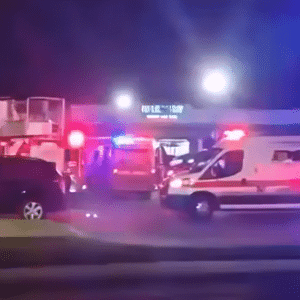
Then police lights appeared behind him.
That moment became one of the most important turning points in the case.
According to the account, the young driver hesitated. For a brief moment, he may have considered stopping. If he had pulled over, the consequences would still have been serious, but the situation may have remained more controlled.
Instead, panic took over.
He accelerated.
That single decision changed the legal picture dramatically.
What had already been an unauthorized vehicle incident became a possible case involving reckless driving, fleeing law enforcement, and endangering the public. Once a person refuses to stop for police, prosecutors often view the conduct as more dangerous because it increases the chance of a crash, injury, or death.
A bad decision became a chain of bad decisions.
And every new choice made the outcome worse.
The Chase Ended in a Crash
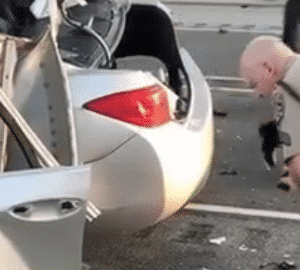
The pursuit reportedly did not last long, but it lasted long enough to end in damage.
Witnesses described the sound of tires screeching before the vehicle crashed, leaving debris scattered across the roadway. Fortunately, no lives were lost. No pedestrians or nearby drivers were reported to have suffered major injuries.
But investigators emphasized an important point: the outcome could easily have been much worse.
That matters in court.
Judges and prosecutors do not only consider what did happen. They may also consider what could reasonably have happened because of the risk created by a defendant’s actions.
A crash without major injuries is still serious.
A stolen or unauthorized vehicle damaged in a crash can create financial consequences for the owner, insurance claims, repair bills, higher premiums, legal fees, and emotional stress. For the young driver, it could also mean restitution, fines, probation, loss of driving privileges, and a criminal record affecting future employment, housing, loans, and personal finance stability.
The thrill was temporary.
The consequences were not.
In Court, Intent Was Not Enough
During court proceedings, the defense reportedly argued that the young man never intended to permanently steal the vehicle. They described the incident as poor judgment, immaturity, and a reckless mistake rather than a planned crime.
That argument may have mattered.
Intent can be an important part of legal analysis. There is a difference between taking a vehicle with the goal of keeping it and taking it temporarily without permission.
But prosecutors focused on what happened after the vehicle was taken.
They argued that the driver’s actions created serious danger. Witnesses described reckless movement through public streets. Police said he refused to stop. The crash showed how quickly the situation had spun out of control.
In the courtroom, the phrase “just a joyride” was not enough to erase the risk.
The Judge Sends a Clear Message
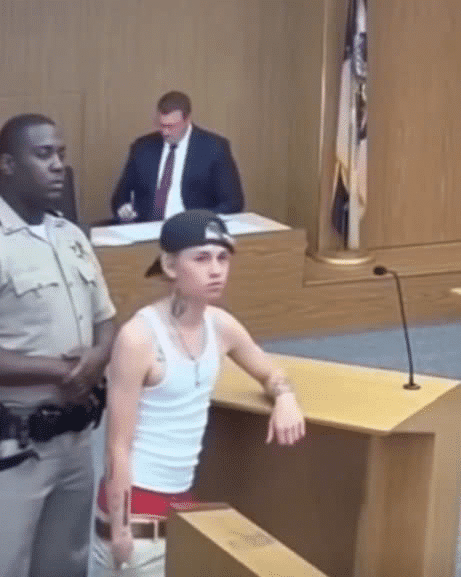
When sentencing arrived, the judge reportedly acknowledged that the young man may not have understood the full seriousness of his actions when the night began.
But the court also made clear that poor judgment does not cancel accountability.
According to the account, the judge said the incident was not a harmless mistake. It was a chain of reckless choices that endangered lives.
That message is important.
The justice system often struggles to balance punishment, rehabilitation, and public safety, especially when young offenders are involved. A person’s age and lack of prior experience may be considered, but so may the danger created by their conduct.
In this case, the judge appeared to focus on the fact that the driver had more than one opportunity to stop.
He could have walked away before taking the vehicle.
He could have driven safely.
He could have pulled over when police appeared.
Instead, each decision moved the situation closer to disaster.
Why “Joyrides” Are Not Harmless
Some people hear the word “joyride” and think of something minor. The word can make the act sound childish or temporary, as if the vehicle was borrowed without permission rather than taken illegally.
But for vehicle owners, there is nothing harmless about it.
A car may be one of a family’s most important financial assets. It may be needed for work, medical appointments, school, childcare, or daily survival. When a vehicle is taken and crashed, the owner may face insurance deductibles, repair delays, lost income, rental car costs, and banking or loan complications if the vehicle is financed.
For the public, reckless driving can be even more serious. One wrong turn can injure innocent people who had nothing to do with the driver’s decision.
That is why courts often treat these cases seriously.
It is not only about the car.
It is about the danger created along the way.
A Larger Lesson for Young People
This story has sparked discussion because it reflects a broader issue: the gap between impulse and consequence.
Movies, viral videos, and social media sometimes make reckless behavior look exciting. Speeding, running from police, stealing cars, or performing dangerous stunts may be edited into thrilling clips online. But real life does not cut away before the aftermath.
Real life includes court dates.
Medical bills.
Insurance claims.
Criminal records.
Probation.
Lost scholarships.
Damaged reputations.
Families sitting in courtrooms wondering how one night changed everything.
For young people especially, the lesson is clear: a temporary thrill can create permanent consequences.
Accountability and Second Chances
The case also raises a difficult question: was the sentence justice, or was it too harsh?
People may disagree.
Some will argue that a young person deserves a chance to learn from a mistake, especially if no one was seriously injured. Others will argue that the sentence needed to be strong because innocent lives were placed at risk.
Both concerns matter.
A fair justice system should hold people accountable while still allowing room for rehabilitation. Consequences should be serious enough to protect the public and teach responsibility, but they should also recognize the possibility of growth.
The young man’s future may now depend on what he does next.
He cannot undo the night.
But he can decide whether it defines him forever.
Final Thoughts
He thought it was just a joyride.
The judge disagreed.
What began as a few minutes of excitement became a serious legal case involving unauthorized vehicle use, reckless driving, police pursuit, and a crash that could have ended in tragedy.
The story is a reminder that intentions matter, but actions matter too. A person may not plan to hurt anyone, but reckless decisions can still put lives at risk.
One night.
One vehicle.
One moment of panic.
That was all it took to change everything.