For 64-year-old farmer Thomas Rayner, most mornings began the same way. He would rise early, drink his coffee while the sky was still pale, and walk the edges of his cornfield to check the land he had cared for most of his life.
The fields had always been predictable in their own quiet way. Corn grew. Soil shifted. Weather changed. Equipment broke. Bills arrived. Like many farmers, Thomas understood the balance between hard work, patience, and financial planning. Farming was not only a way of life; it was also a business shaped by crop insurance, equipment loans, fuel prices, banking decisions, and the unpredictable behavior of nature.
But one morning, while inspecting the far edge of his property, Thomas noticed something that made him stop in his tracks.
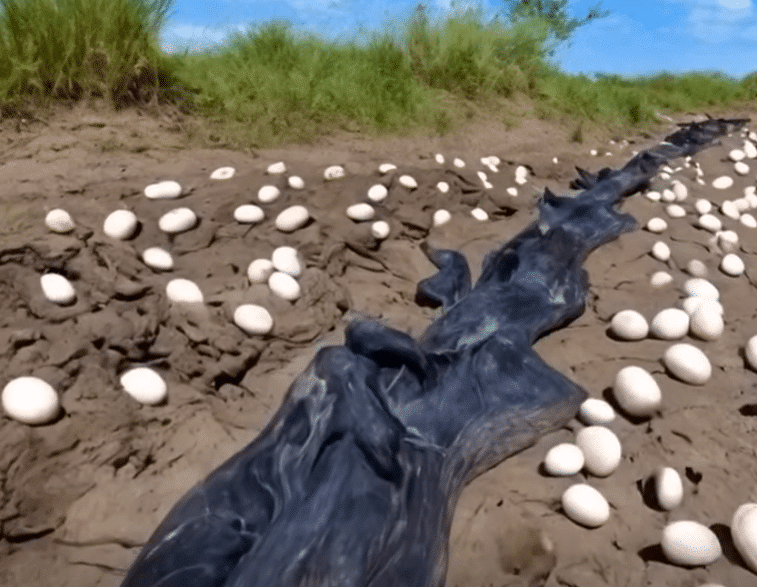
Scattered between the rows of crops were dozens of pale, unfamiliar objects.
At first, he thought they were stones.
Then he looked closer.
They were eggs.
And there were hundreds of them.
A Strange Discovery in the Crops
Thomas had spent decades working the land. He had seen animal tracks, bird nests, snakes, insects, and all kinds of unexpected things hidden among the crops. But this was different.
The eggs were not tucked into a nest. They were spread across the field in clusters, resting low in the soil between the rows. They were pale, smooth, and unlike anything he recognized from chickens, ducks, wild turkeys, or other common birds in the area.
His first thought was concern.
What animal had left them there? Were they abandoned? Were they dangerous? Had a predator disturbed a nest and scattered them? Or was this something connected to a species he had never seen on his farm before?
According to the story, Thomas carefully picked up a few of the eggs and carried them back to the house to show his wife.
He expected confusion.
That was exactly what he got.
The Family Tries to Understand What They Found
Thomas and his wife examined the eggs closely at the kitchen table. They were warm to the touch, and some appeared to tremble faintly, as though something inside was still alive.
The couple did not know what to do.
Destroying them felt wrong. Leaving them exposed in the field also felt dangerous. A sudden temperature drop, predators, farm equipment, or even a heavy rainstorm could easily ruin whatever life was growing inside.
Their daughters soon became involved too. What began as a mystery quickly became a family concern.
After discussing it, they decided to move the eggs into a safer place temporarily. They created a warm shelter inside the barn using hay and straw, placing the eggs carefully where they would be protected from cold air, animals, and accidental damage.
It was not a perfect solution, but it was the best they knew how to do in the moment.
And then they waited.
The Eggs Begin to Move
Over the next several days, the family watched the eggs closely.
At first, nothing happened.
Then small changes began.
Some eggs shifted slightly. Others seemed to vibrate. Tiny cracks appeared on the shells, thin as hairline scratches at first, then wider and more visible.
The family became more anxious with every hour.
Thomas had expected to find pests, broken shells, or perhaps nothing at all. Instead, he found himself standing in a barn with his family, watching life push its way into the world.
Then the first egg opened.
A tiny creature emerged, damp, fragile, and unsteady.
Then another.
And another.
Soon, the barn was filled with the soft sounds of hatchlings.
What Came Out Left the Farmer Emotional
According to the account, the creatures that emerged were small birds with soft white feathers and bright markings that became more noticeable as they dried. They were delicate, helpless, and strikingly beautiful.
Thomas stood silently as he watched them.
For a man who had spent most of his life surrounded by nature, the moment still overwhelmed him. He had seen calves born, chicks hatch, storms destroy crops, and new growth rise from damaged soil. But this felt different.
These eggs had appeared without warning in his field. He had not known what they were. He had not known whether they would survive.
And now, one by one, they were alive.
The sight reportedly brought him to tears.
It was not just the beauty of the birds that moved him. It was the feeling that something extraordinary had entered an ordinary day without permission or explanation.
Sometimes nature does that.
It interrupts routine and reminds people that the world is still capable of wonder.
A Reminder to Contact Wildlife Experts
While this story is emotional, it also carries an important lesson. When people find unfamiliar eggs, nests, or baby animals, the safest choice is usually to contact local wildlife experts, animal rescue groups, or conservation authorities as soon as possible.
Well-meaning people may accidentally harm wildlife by moving eggs, changing temperature conditions, feeding young animals incorrectly, or separating them from parents that may still be nearby. In many places, wild birds and their eggs are protected by law, and handling them without guidance may not be allowed.
If eggs are discovered in a field, garden, attic, barn, or construction area, it is best to observe from a safe distance, keep pets away, avoid touching them, and ask professionals for help.
Compassion is powerful, but informed compassion is safer.
In Thomas’s story, the family acted out of care. Still, the situation shows why wildlife education matters, especially in rural areas where farms and natural habitats often overlap.
When Farming and Wildlife Collide
Farmers often live close to the natural world. Their land may support crops, livestock, pollinators, birds, small mammals, reptiles, and countless insects. That connection can be beautiful, but it can also create challenges.
Wildlife may nest in fields. Birds may appear during planting or harvest. Animals may be displaced by weather, development, or changes in food sources. Farmers must balance protecting their crops with respecting the ecosystems around them.
That balance can also involve real financial decisions.
Crop damage, property repairs, equipment breakdowns, conservation rules, land management, insurance claims, and agricultural loans all affect a farm’s stability. A discovery like hundreds of eggs in a field may seem like a simple curiosity online, but for a farmer, it can raise practical questions about timing, safety, and responsibility.
Thomas’s decision to pause and protect the eggs showed patience at a time when many people might have chosen convenience.
The Hatchlings Find a Safer Future
According to the story, the Rayner family cared for the hatchlings for several weeks before contacting wildlife specialists and local shelters for guidance. As the birds grew stronger, most were reportedly transferred to a safer environment where trained caregivers could monitor them properly.
That was the right step.
Young birds require specific care, food, temperature, and space as they develop. Wildlife professionals can help identify the species, determine whether the birds can be released, and make sure they are not unintentionally harmed by human handling.
The family reportedly kept two birds after forming a close bond with them, though in real-life wildlife situations, keeping wild birds should only happen when legally permitted and recommended by experts.
Still, the emotional heart of the story remained the same: a family found something fragile, protected it, and learned from it.
Why the Story Touched So Many People
The story spread online because it includes something people love: mystery, suspense, and a surprising emotional ending.
At first, the eggs seemed strange and unsettling. No one knew what they were. Then, slowly, fear turned into curiosity. Curiosity turned into care. And care turned into joy when the eggs hatched.
That transformation is what makes the story memorable.
It reminds readers that not every mystery has to end in fear. Sometimes the unknown contains beauty. Sometimes an ordinary field can become the setting for an unforgettable moment.
For Thomas and his family, the eggs were more than a discovery.
They were a reminder that life can still surprise us, even after decades of routine.
Final Thoughts
Thomas Rayner walked into his cornfield expecting another normal morning. Instead, he found hundreds of strange eggs hidden among his crops.
He did not understand what they were. He did not know where they came from. But he chose to protect them.
Days later, when the eggs began to hatch, the mystery turned into something beautiful. Tiny birds emerged, fragile and alive, transforming confusion into wonder.
The farmer who thought he had seen everything stood in his barn and cried.
Not because of fear.
Because sometimes life gives people a moment so unexpected, so delicate, and so full of meaning that there is nothing else to do.
Sometimes the greatest discoveries are not measured in money, property, or harvest.
Sometimes they are found quietly in the field, waiting to hatch.