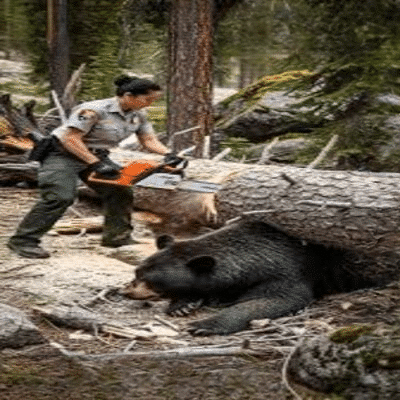
A routine day in the forest reportedly turned into a tense wildlife rescue after a park ranger discovered a massive bear trapped beneath a fallen tree. According to the account, a powerful storm had moved through the area, knocking down heavy branches and large trees. One of those trees pinned the bear to the ground, leaving the animal unable to free itself.
For anyone who has seen a bear in the wild, the idea of approaching one is terrifying. Bears are strong, fast, and unpredictable, especially when frightened or injured. But in this case, the animal was trapped, exhausted, and vulnerable.
The ranger faced a difficult challenge: help the bear without putting people at risk or causing the animal further harm.
What followed was a careful rescue that has since drawn attention online, not only because of the size of the bear, but because of the calm, disciplined effort needed to save it.
A Distress Call in the Forest
The incident reportedly began after a storm swept through the area, leaving parts of the forest damaged. Fallen trees can create major hazards for hikers, campers, park staff, and wildlife. Trails may be blocked, visibility can be limited, and animals may become trapped or injured in places where they are difficult to reach.
When the call came in about a bear pinned beneath a tree, the situation was serious from the start.
A trapped bear is not like a trapped pet. Even if the animal appears calm, it may react defensively once people approach. Pain, fear, and confusion can make any wild animal dangerous. That means rescuers must think carefully before taking action.
When the ranger arrived, the bear was reportedly still alive and conscious. The tree had pinned it down, but there were no immediate signs that the animal had suffered fatal injuries. Still, time mattered. The longer the bear remained trapped, the greater the risk of dehydration, exhaustion, muscle damage, or panic.
A Rescue That Required Patience
According to the story, the ranger did not rush in recklessly. Instead, the rescue was handled slowly and carefully.
That kind of restraint is important. A dramatic rescue may look simple in a short video, but real wildlife response requires planning. Rescuers must consider the animal’s size, the weight of the tree, the terrain, escape routes, and the safety of anyone nearby.
The ranger reportedly used ropes, tools, and careful positioning to begin lifting or shifting the fallen tree. Every movement had to be controlled. If the tree moved too quickly, it could injure the bear further. If the bear suddenly broke free before the area was clear, it could charge in fear.
In moments like this, experience matters.
Wildlife professionals and park rangers are trained to read animal behavior, manage risk, and protect both humans and animals. Their work is not only about bravery. It is about judgment.
The Bear’s Calm Response Surprises Viewers
One of the most striking parts of the account is that the bear reportedly remained unusually calm during the rescue. That may have been because it was tired, trapped, or simply unable to move much.
Still, calm does not mean safe.
A bear can shift from stillness to explosive movement in seconds. This is why wildlife experts warn the public never to approach an injured or trapped wild animal. Even a well-intentioned attempt to help can end badly without proper equipment and training.
In this case, the ranger reportedly gave the animal space whenever possible and worked with caution. That approach may have helped prevent the bear from panicking.
After several tense minutes, the tree was moved enough for the animal to free itself.
The bear slowly rose, gathered its strength, and then moved back toward the forest.
For those watching, it was a powerful moment: a wild animal that had been helpless beneath a fallen tree was once again able to return to its natural habitat.
Why Wildlife Rescues Matter
Stories like this remind people that wild animals can be dangerous, but they are also vulnerable to accidents, storms, habitat disruption, and human activity.
Bears are often portrayed as fierce predators, but they are living creatures trying to survive. They search for food, shelter, safety, and territory. Like any animal, they can become trapped, injured, or disoriented.
Park rangers, conservation officers, and wildlife rescue teams play an important role in these moments. They help protect animals while also protecting people who live, work, or travel near wild habitats.
Their work can involve search and rescue, trail safety, wildlife monitoring, habitat protection, emergency response, public education, and conflict prevention. It also requires funding, equipment, training, insurance coverage, and strong support from local communities.
Wildlife protection is not only an emotional issue. It is also a practical responsibility.
A Reminder for the Public: Do Not Approach Wild Animals
While the story is inspiring, it also comes with a serious safety message.
If you ever see a bear or other large wild animal trapped, injured, or distressed, do not try to rescue it yourself. Call local wildlife authorities, park officials, animal control, or emergency services. Keep a safe distance, stay quiet, and avoid crowding the animal.
A frightened bear may not understand that a person is trying to help. It may see humans as a threat and react defensively.
This is especially important for hikers, campers, photographers, and tourists. Getting close for a video or social media post can put everyone in danger, including the animal. Crowds can increase stress and make rescue work harder.
Responsible wildlife viewing means respecting distance.
The Role of Storms and Habitat Change
The reported rescue also highlights how quickly natural conditions can become dangerous. Strong storms can change a forest in minutes. Trees fall, rivers rise, trails wash out, and animals may be forced into unfamiliar areas.
For homeowners and communities near forested land, storm damage also raises practical concerns. Fallen trees can damage roofs, vehicles, fences, and utility lines. Property owners may need homeowners insurance, emergency savings, repair loans, or contractor services after severe weather.
For wildlife, the risks are different but just as real. A fallen tree can block movement, destroy shelter, or trap an animal in a vulnerable position.
This is why park maintenance, habitat monitoring, and emergency preparedness matter. Healthy ecosystems still face danger, but prepared teams can respond faster when something goes wrong.
Community Reaction and Online Attention
The rescue reportedly gained attention after video of the moment circulated online. Viewers were stunned by the bear’s size and impressed by the ranger’s courage.
Many praised the careful response, calling it an example of compassion in action. Others used the story to highlight the importance of wildlife conservation and the difficult work park rangers do every day.
That public reaction shows why animal rescue stories connect so strongly with people. They remind us that compassion can cross the boundary between humans and wildlife.
The ranger did not save the bear because it was tame.
The ranger helped because the animal was suffering.
That distinction matters.
Conservation Is About Coexistence
As human development expands into natural spaces, encounters between people and wildlife are becoming more common in many areas. Roads, homes, farms, resorts, and recreational spaces can overlap with animal habitats.
This makes coexistence more important than ever.
Good conservation does not mean treating wild animals like pets. It means protecting their space, reducing unnecessary conflict, responding responsibly to emergencies, and helping the public understand how to behave in wild areas.
Bears need room to live without being harassed, fed, chased, or filmed at unsafe distances. People need clear rules and safe practices when entering bear country.
Both can be true at the same time.
Final Thoughts
The reported rescue of a giant bear trapped beneath a fallen tree is a powerful reminder of how unpredictable nature can be. A storm, a fallen trunk, and one unlucky moment left a powerful animal helpless on the forest floor.
But a trained ranger responded with patience, courage, and care.
The bear was freed.
The ranger stayed safe.
And the animal was able to return to the woods where it belonged.
Stories like this remind us that compassion is not weakness. It is responsibility. When people respect wildlife, support conservation, and allow trained professionals to do their work, lives can be saved.
Sometimes heroism is not loud.
Sometimes it looks like a ranger in the forest, carefully lifting a fallen tree so a trapped bear can walk free again.