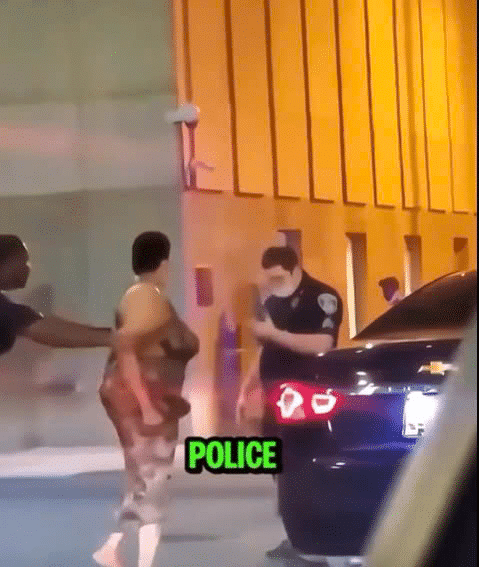
A short video showing a woman striking a police officer has spread rapidly across social media, drawing millions of views and sparking heated discussion about public behavior, law enforcement restraint, and the legal consequences of a single emotional moment.
The footage appears to show a tense confrontation between the woman and an officer. In the clip, the woman is seen shouting before physically striking the officer. What caught the attention of many viewers was not only her action, but also the officer’s response.
He did not strike back.
He did not appear to escalate the situation.
Instead, he remained composed, controlled the encounter, and followed procedure as the situation unfolded.
While viral clips often show only a few seconds of a larger event, the video has become a powerful example of how quickly a public confrontation can turn into a serious legal matter.
The Moment That Went Viral
The clip began circulating across major social media platforms, where viewers quickly reacted to what they saw. Many focused on the woman’s decision to hit the officer, calling it reckless and unnecessary. Others pointed to the officer’s calm response, saying his restraint helped prevent the situation from becoming more dangerous.
In high-stress public encounters, emotions can rise quickly. Shouting, confusion, fear, and anger may all happen at once. But when physical contact is made with a law enforcement officer, the situation often moves from a verbal dispute into a criminal case.
That appears to be what happened here.
According to the account, the woman was taken into custody at the scene shortly after the incident. Authorities reportedly pursued charges that may include assault on a police officer and disorderly conduct.
Those are not minor allegations. If convicted, a person can face fines, probation, court costs, possible jail time, and a criminal record that may affect employment, housing, banking opportunities, loans, insurance rates, and long-term personal finance stability.
Why Assaulting an Officer Is Treated Seriously
In many jurisdictions, assaulting a police officer is treated more seriously than a simple public disturbance. The law generally recognizes that officers are performing official duties and that physical attacks during those duties can create risk for the officer, nearby civilians, and the person involved in the confrontation.
Even a brief strike can lead to serious consequences.
A person may claim they acted out of fear, confusion, frustration, or emotional distress. The court may consider the full context, including what happened before the video began. But the visible act itself can still carry legal weight.
This is why legal experts often warn people to remain calm during police encounters, even when they believe they are being treated unfairly. Complaints, legal challenges, and civil rights claims should be handled through proper channels. Physical confrontation can make the situation worse immediately and legally.
The Officer’s Restraint Becomes a Major Talking Point
One of the reasons this video gained attention is because of the officer’s reaction.
Instead of responding with force in the moment, he appeared to remain controlled. That restraint mattered. In tense situations, a split-second reaction can determine whether an encounter ends safely or spirals into something much more serious.
Law enforcement officers are often trained in de-escalation, situational awareness, and controlled response. While not every real-world situation is handled perfectly, this particular clip led many viewers to praise the officer’s composure.
For the public, it also served as a reminder that staying calm under pressure is not just a personal quality. In high-responsibility roles—whether in policing, banking, insurance, healthcare, law, real estate, or emergency response—professionalism can protect people from greater harm.
Social Media Reacts Quickly
As the video spread, online reactions became divided.
Some viewers strongly supported the officer and argued that the woman should face legal consequences. They saw the clip as a clear example of unacceptable behavior toward law enforcement.
Others urged caution, reminding people that short videos do not always show the full story. They questioned what happened before the recording began and whether the situation had been escalating for some time.
Both reactions reflect a larger issue with viral content: people often form strong opinions based on limited footage. A 10-second clip can shape public perception before investigators, courts, or witnesses have provided a complete account.
That does not mean the video is meaningless. It may be important evidence. But it should be viewed as one piece of a broader situation.
The Legal Process Comes Next
After the arrest, the next step is the legal process. The woman has the right to legal representation, to present her side, and to challenge the evidence against her. Prosecutors must prove the charges according to the law, and the court will consider video footage, officer reports, witness statements, and any other available evidence.
Depending on the jurisdiction and circumstances, possible outcomes could include dismissal, plea negotiations, fines, probation, community service, or jail time.
The case may also have personal consequences beyond the courtroom. A criminal charge can affect employment applications, professional licensing, rental housing, credit-related decisions, and family finances. Legal defense costs alone can place stress on a household budget.
One impulsive moment can become a long-term problem.
A Broader Lesson About Public Encounters
This incident offers an important reminder for anyone involved in a stressful public confrontation: words and actions matter, especially when cameras are present.
Today, nearly every public encounter can be recorded and shared worldwide within minutes. That means a moment of anger can quickly become a viral video, a legal case, and a permanent online record.
People should know their rights, but they should also understand how to protect themselves legally. Staying calm, avoiding physical contact, asking clear questions, and documenting concerns through proper channels can make a major difference.
If someone believes an officer acted improperly, the safest response is not physical retaliation. It is to gather information, request identification when appropriate, speak with an attorney, file a complaint, or pursue legal remedies after the encounter.
Final Thoughts
The viral video of a woman striking a police officer has become more than just a shocking social media clip. It has sparked a wider conversation about restraint, accountability, public behavior, and the consequences of acting impulsively during tense moments.
The officer’s calm response drew praise from many viewers, while the woman’s arrest shows how quickly a confrontation can turn into a serious legal matter.
The full outcome will depend on the legal process.
But the lesson is already clear: one moment of anger can carry consequences far beyond the few seconds captured on camera.