For most delivery drivers, every shift brings a different challenge. Some days involve heavy traffic, bad weather, confusing addresses, locked gates, long driveways, or customers waiting anxiously for important packages.
But sometimes, the most unexpected obstacle is not a road closure or a late delivery window.
Sometimes it is a bear.
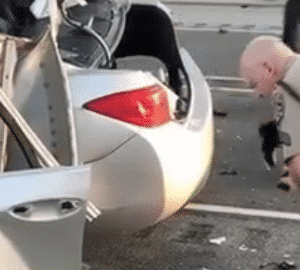
In a memorable moment reportedly caught on camera, a delivery driver approached a home expecting to complete a routine drop-off. At first, everything appeared normal. A package needed to be delivered, the driver moved toward the property, and the stop seemed like one more task in a busy day.
Then the driver noticed movement nearby.
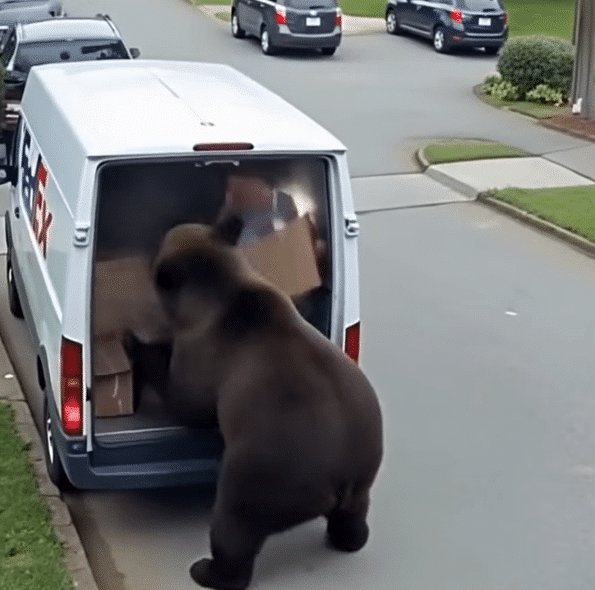
A large bear had appeared close to the delivery area.
At first, it seemed like the animal might be interested in the package itself. But as the situation unfolded, the real reason became clear: the bear was not focused on cardboard.
It was following the smell of something inside.
A Routine Delivery Takes a Wild Turn
Delivery work can look simple from the outside, but drivers know every stop is different. They move from one home to the next, often under pressure to complete routes quickly while keeping packages safe and following company safety rules.
Most surprises are minor.
A loose dog barks from the yard. A cat sits on the porch and refuses to move. A driveway is blocked. A customer’s gate code does not work. A rainstorm soaks every label in sight.
But wildlife adds a different level of uncertainty.
According to the account, the driver was nearing the porch when the bear entered the scene. Its size alone was enough to make the moment tense. Bears are powerful animals, and even a curious bear can become dangerous if it feels threatened, startled, or cornered.
The driver made the right choice by keeping distance.
No package is worth risking personal safety.
Why the Bear Was Interested
At first glance, viewers may have assumed the bear was trying to steal the delivery. The idea of a bear taking a package is funny enough to go viral, especially when captured on a doorbell camera.
But the animal was likely not interested in the box as an object.
It was interested in smell.
Bears have an extraordinary sense of smell and are naturally drawn to food odors. If a package contains groceries, pet food, snacks, scented products, or anything that smells edible, a bear may investigate. Even food residue in nearby trash cans, bird feeders, barbecue grills, compost bins, or delivery bags can attract wildlife.
That may be why the bear approached the porch area. The package itself was just a container. The scent was the real invitation.
This is an important reminder for homeowners, especially in neighborhoods near forests, mountains, parks, or other bear habitats. Items left outside can attract animals even when people do not expect it.
Delivery Drivers Face More Animal Encounters Than People Realize
Many drivers have stories about animals on their routes. Some are funny. Some are sweet. Some are frightening.
Cats may follow drivers up walkways or sit on packages like they own them. Friendly dogs may run out wagging their tails, eager for attention. Protective dogs may bark, charge fences, or block access to a porch.
Even smaller animals can create surprises. Raccoons may dig through bins. Deer may stand in driveways. Turkeys can become surprisingly bold. Geese may chase anyone who gets too close.
But a bear is in a different category.
A bear encounter requires calm thinking, space, and caution. Drivers should never try to scare, feed, film up close, or approach a bear. The safest option is to retreat slowly, return to the vehicle when possible, and report the situation according to company policy or local wildlife guidance.
Why Wildlife Comes Close to Homes
Bears and other wild animals usually approach residential areas for practical reasons. They are not trying to create viral videos. They are searching for food.
Residential neighborhoods can unintentionally provide easy meals through trash, outdoor pet food, birdseed, fruit trees, compost piles, unsecured sheds, and deliveries containing edible items.
Once a bear learns that homes or porches may offer food, it may return. That creates risk for residents, pets, delivery workers, and the bear itself.
Wildlife experts often warn that “a fed bear is a dead bear” because animals that become too comfortable around people may later be considered dangerous and removed or euthanized. Preventing access to food is one of the best ways to protect both humans and wildlife.
Home safety and wildlife safety are connected.
What Homeowners Can Do
People living in bear country can reduce risk by being careful with outdoor food sources.
Trash should be secured in bear-resistant containers when possible. Pet food should be kept indoors. Bird feeders may need to be removed during active bear seasons. Grills should be cleaned after use. Compost should be managed carefully. Fruit that falls from trees should be picked up quickly.
Packages containing food or scented products should not sit outside longer than necessary. Homeowners can use delivery instructions, locked boxes, garage drop-off services, or scheduled deliveries when available.
These steps may seem small, but they can prevent a bear from associating a home with food.
They may also help protect personal property, reduce insurance concerns, and avoid damage to porches, doors, vehicles, fences, or outdoor storage areas.
What Drivers Should Remember
For delivery workers, animal encounters are part of the job, but safety must come first.
If a bear or other large wild animal is near a delivery location, the driver should not attempt to complete the delivery at close range. The safest response is to create distance, avoid sudden movements, and return to the vehicle if possible.
Drivers should not run unless they are already safely able to do so, as sudden movement can sometimes trigger animal reactions. They should not block the animal’s escape route or attempt to retrieve a package while the animal is nearby.
Companies should also provide clear training for animal encounters, including dogs, wildlife, and aggressive pets. This protects workers and reduces liability for employers, homeowners, and delivery services.
Workplace safety is not only about warehouses and vehicles. It extends all the way to the front porch.
Why the Video Captured So Much Attention
The reason this story spread online is simple: it turns an ordinary delivery into something unforgettable.
People are used to seeing packages appear on porches. They are not used to seeing a bear investigate them.
There is humor in the unexpected image, but there is also tension. Viewers understand that the situation could have become dangerous if the driver had moved closer or if the bear had felt threatened.
That combination of surprise, danger, and curiosity makes animal videos spread quickly. They show how unpredictable daily life can be, even during something as routine as dropping off a package.
A Reminder About Respecting Wildlife
The bear in this story was not a villain. It was behaving like a wild animal responding to scent and opportunity.
That distinction matters.
Wild animals do not understand property lines, delivery schedules, or human expectations. They follow instincts shaped by survival. When human spaces contain food smells, animals may investigate.
The responsibility belongs to people to reduce temptation, secure attractants, and respond safely when wildlife appears.
Respect means keeping distance.
Respect means not feeding animals.
Respect means allowing trained professionals to handle situations that become unsafe.
Final Thoughts
What began as a normal delivery reportedly became a memorable wildlife encounter when a bear appeared near a package on a front porch.
At first, it looked like the animal wanted the box.
But the real attraction was likely what it smelled inside — food, pet supplies, or another scent strong enough to catch its attention.
The driver wisely kept a safe distance, and the bear eventually moved on.
The story is funny at first glance, but it also carries a serious reminder: in areas where wildlife lives nearby, everyday items can attract powerful animals.
Sometimes it is not the package that matters.
It is what is hidden inside.