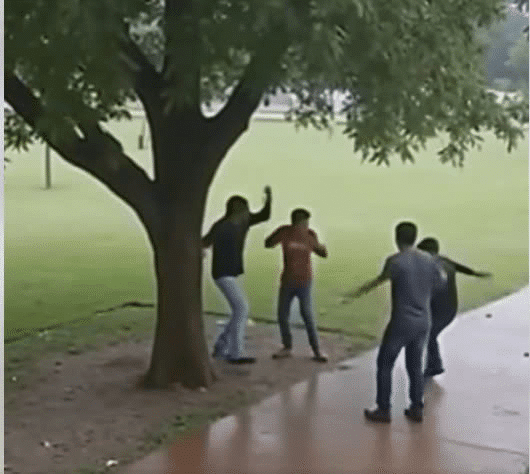
A frightening video from Gurugram, India, shows the terrifying moment four men were struck by lightning while standing under a tree during a storm. The incident happened in March 2021 at Vatika Signature Villas in Sector 82, according to local reporting from The Times of India. The men had reportedly taken shelter under the tree when a bolt of lightning hit it, causing all four to collapse almost instantly.
The footage later spread widely online, shocking viewers who watched the men fall to the ground within seconds. For many people, the video was difficult to process. One moment, the men appeared to be standing together, waiting out the weather. The next, a bright flash hit the tree and the group dropped to the ground.
Thankfully, reports said the victims survived the initial strike. However, the injuries were serious. The Times of India reported that the four men sustained burn injuries, with one of them placed on ventilator support while the others were described as stable at the time.
What happened in that park is not only a dramatic viral moment. It is also a public safety lesson that can save lives.
A Sudden Strike During a Storm
According to the report, the lightning strike happened around 4:30 p.m. during overcast weather in Gurugram. The men were identified as horticulture workers and a supervisor connected to the residential society where the incident occurred.
Like many people caught outside during a storm, they appeared to have chosen the tree as shelter. It is a common mistake. When rain begins suddenly, people often run toward the nearest tree to stay dry.
But during lightning, a tree can become one of the worst places to stand.
Lightning tends to strike tall objects, especially when they are isolated or rise above the surrounding area. When a bolt hits a tree, the electrical current can travel down the trunk, through the ground, and into anyone standing nearby. That means a person does not have to be directly hit by lightning to suffer life-threatening injuries.
In this case, the men were close enough to the struck tree to be knocked down by the electrical surge.
Why Standing Under a Tree Is So Dangerous
Many people underestimate lightning because it happens quickly and often feels random. But the danger is very real.
The U.S. National Weather Service warns that no outdoor place is safe when thunderstorms are nearby. It specifically advises people never to shelter under an isolated tree and to move immediately to a substantial building or a fully enclosed metal-topped vehicle when thunder is heard.
The CDC also advises people to stay away from tall structures such as trees and telephone poles during thunderstorms because lightning tends to strike the tallest object in an area.
A tree may seem protective because it blocks rain, but it does not protect against electricity. In fact, it can increase danger by becoming the path lightning uses to reach the ground.
That is why the Gurugram footage struck so many viewers: it showed, in a matter of seconds, how a familiar habit can become life-threatening.
The Aftermath and Emergency Response
After the strike, people nearby rushed to help. Emergency responders were called, and the injured men were taken for medical treatment. Reports said they suffered burns and electrical shock-related injuries. One victim’s condition was more serious, while the others were stable at the time of reporting.
Lightning injuries can vary widely. Some victims experience burns, heart rhythm problems, nerve damage, hearing or vision issues, confusion, muscle pain, or loss of consciousness. Even if a person appears to recover quickly, medical evaluation is important because internal effects may not be obvious right away.
This is why fast emergency response matters. In severe cases, CPR and immediate medical care can make the difference between life and death.
For families, incidents like this can also bring unexpected financial pressure. Emergency care, hospitalization, health insurance claims, lost wages, travel costs, and long-term recovery expenses can create serious personal finance challenges. For outdoor workers, proper workplace safety policies and insurance coverage are especially important during severe weather.
A Viral Video With a Bigger Message
The video spread because it was shocking. But its value goes beyond shock.
It showed a real danger that many people still misunderstand.
When storms arrive, people often think any shelter is better than none. They may stand under trees, near metal fences, beside poles, under small sheds, or in open fields. But some of those choices can increase the risk of being struck or injured by ground current.
The safest option is to get inside a substantial building with wiring and plumbing or inside a fully enclosed vehicle with the windows up. The National Weather Service also advises staying in safe shelter for at least 30 minutes after the last sound of thunder.
That “30-minute” rule is important because lightning can strike even after rain seems to be slowing or the storm appears to be moving away.
Important Lightning Safety Tips
The Gurugram incident is a reminder to take thunderstorms seriously. When thunder is close enough to hear, lightning is close enough to be dangerous.
During a storm, people should avoid trees, open fields, hilltops, water, metal fences, poles, and other objects that conduct electricity. They should also avoid standing in groups outdoors, because a single strike can injure multiple people at once.
Indoors, safety still matters. NOAA advises avoiding corded phones, computers, electrical equipment, and plumbing during thunderstorms, and staying sheltered until at least 30 minutes after the final thunder.
For parks, schools, housing societies, construction sites, sports facilities, and outdoor workplaces, severe weather plans should be clear. Workers and visitors need to know where to go before a storm arrives. Signage, alerts, emergency drills, insurance planning, and responsible facility management can all help reduce risk.
Why Outdoor Workers Face Extra Risk
The victims in the Gurugram incident were reportedly horticulture workers and a supervisor. Outdoor workers are often more exposed to lightning because their jobs may keep them outside during changing weather.
Gardeners, construction workers, delivery drivers, farmers, security staff, maintenance teams, and park workers all need clear storm-safety procedures. Employers should monitor weather alerts, pause outdoor work when thunderstorms approach, and provide safe shelter options.
This is not only a matter of compassion. It is also a workplace safety and liability issue.
A preventable weather-related injury can lead to medical costs, workers’ compensation claims, insurance disputes, legal expenses, and long-term financial hardship for victims and their families.
Severe weather planning should be treated as seriously as any other workplace safety requirement.
A Community Reminder After a Close Call
The Gurugram lightning strike shocked the community because it happened in a familiar setting: a park inside a residential area. It was not on a remote mountain, in an open desert, or during an extreme adventure. It happened where people live and work.
That makes the lesson even more urgent.
Lightning safety is not only for hikers or campers. It is for anyone who walks outside during a storm, waits under a tree, plays sports, works in a garden, rides a bike, or stands in a parking lot when thunder begins.
The men in the video survived, but the footage shows how close the outcome could have been to tragedy.
Final Thoughts
The viral video of four men being struck by lightning under a tree in Gurugram is frightening because it captures danger in its most sudden form.
One moment, they were standing beneath a tree for shelter.
Seconds later, all four were on the ground.
Their survival was fortunate, but the incident remains a serious warning: trees are not safe shelters during thunderstorms. When thunder starts, the safest decision is to get indoors or into a fully enclosed vehicle as quickly as possible.
A storm can change everything in an instant.
Knowing where not to stand can save your life.