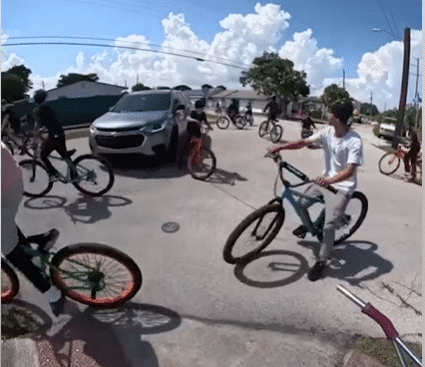
A short video showing an undercover officer knocking a teenage biker to the ground has sparked intense debate online, with many viewers questioning whether the force used in the encounter was necessary.
The footage, which spread quickly across social media, appears to show a group of teenagers riding bikes in a busy urban area before one teen is confronted by an officer. According to the circulating account, the officer was working undercover and had been responding to complaints about reckless biking in the area.
What happened next turned a street-level encounter into a viral controversy.
In the video, the officer appears to move toward the teen and force him off the bike, sending him to the pavement. Bystanders can be heard reacting with shock as the situation unfolds. Within hours, the clip was being shared widely, with people demanding answers from the police department involved.
Because short videos rarely show the full context, investigators will need to review what happened before, during, and after the moment captured on camera. Still, the footage has already raised serious concerns about use of force, especially when the person involved is a minor.
The Moment That Sparked the Debate
The incident reportedly began when several teens were riding bikes through a public area. Witnesses claimed the officer approached one teenager after concerns were raised about unsafe or reckless riding.
Bike-related complaints are not unusual in crowded cities. Officers may respond when riders are accused of weaving through traffic, blocking pedestrians, damaging property, or creating safety risks. But even when enforcement is justified, the way officers respond matters.
That is the heart of the public debate.
Many viewers argue that knocking a teen to the ground appeared excessive, especially if the teen was unarmed and not posing an immediate threat. Others say the public should wait for the full investigation before drawing conclusions, noting that viral clips can leave out important details.
The video has become another example of how quickly a single recorded moment can shape public perception.
Why People Are Calling for Accountability
A major concern in the online reaction is the age of the person involved. When law enforcement encounters minors, the expectations around judgment, restraint, and de-escalation are especially high.
Teenagers may make poor decisions. They may be impulsive, emotional, or slow to comply. But they are still young people, and physical force can carry serious consequences. A fall from a bike can cause head injuries, broken bones, dental trauma, or long-term medical issues.
For families, an incident like this can also create major financial strain. Emergency care, health insurance claims, legal fees, missed work, and possible civil liability can quickly become part of the aftermath.
That is why many people online are asking whether there were safer options available.
Could the officer have used verbal commands?
Could backup have been called?
Could the teen have been stopped without being knocked down?
Was the response proportional to the alleged behavior?
Those are the questions an internal review must address.
The Officer’s Side of the Situation
According to the circulating account, local law enforcement said the officer had been investigating complaints about reckless biking and was attempting to stop the teen for questioning. The department reportedly stated that the video is being reviewed as part of an internal investigation.
Officers often work in unpredictable environments. A situation that appears simple from a distance may feel different to someone responsible for public safety. If a rider is moving through traffic or refusing commands, officers may believe quick action is needed to prevent injury.
However, police authority does not remove the need for restraint. Force must be reasonable, necessary, and consistent with policy. When a minor is involved, departments face even more pressure to prove that the response was appropriate.
The investigation will need to consider the full timeline, witness statements, body-camera footage if available, bystander video, officer reports, and whether department policy was followed.
Social Media Reacts Within Minutes
Once the video began circulating, reactions came quickly.
Many viewers expressed anger, saying the officer’s actions looked aggressive and unnecessary. Some called for disciplinary action, arguing that public trust is damaged when young people are treated harshly during nonviolent encounters.
Others urged caution, saying the video may not show what happened before the shove. They argued that reckless biking can create real safety risks for pedestrians, drivers, and the riders themselves.
Both reactions reflect a larger truth about viral videos: people often form opinions before all evidence is available.
A few seconds of footage can be powerful, but it is not always complete. At the same time, video evidence can reveal conduct that deserves serious review. The challenge is to take the footage seriously without ignoring due process.
Why De-Escalation Matters
This incident has renewed discussion about de-escalation training, especially in encounters involving young people.
De-escalation does not mean officers ignore unsafe behavior. It means they use communication, distance, time, backup, and calm commands whenever possible to reduce the need for physical force.
In many situations, a controlled approach can protect everyone involved. It can prevent injuries, reduce legal risk, lower insurance and liability costs for municipalities, and preserve community trust.
When force is used too quickly, the consequences can spread far beyond the scene. The teen may be injured. The officer may face discipline. The department may face public criticism or legal claims. Taxpayers may ultimately absorb financial costs through lawsuits or settlements.
That is why accountability is not only a moral issue. It is also a public safety and financial responsibility issue.
The Community Wants Answers
Community members and activists are now calling for transparency. They want the department to release more information, explain the officer’s role, and clarify whether the teen was charged, injured, or taken for medical evaluation.
Parents are also paying attention. For many families, the video raises a frightening question: how would their own child be treated in a similar situation?
Trust between police and the public depends on more than enforcement. It depends on fairness, communication, and the belief that officers will use authority responsibly.
When a viral video appears to show a young person being handled roughly, that trust can be damaged quickly.
Rebuilding it requires more than a short statement. It requires a clear investigation, honest answers, and appropriate action if policy was violated.
What Happens Next
The next step is the official review.
Investigators will likely examine all available footage, interview the officer, speak with witnesses, review complaints from the area, and determine whether the teen’s behavior justified the officer’s actions. If the officer violated policy, possible consequences could include retraining, suspension, reassignment, discipline, or other legal action depending on the findings.
The teen and his family may also seek legal advice, especially if injuries occurred. In cases involving alleged excessive force, attorneys may examine medical records, video evidence, police reports, and potential civil rights issues.
Until the investigation is complete, the full outcome remains uncertain.
But the public reaction shows that many people believe the incident deserves serious scrutiny.
A Larger Conversation About Policing and Youth
Beyond this single video, the case has become part of a broader conversation about how law enforcement interacts with teenagers.
Young people need boundaries and accountability, especially when public safety is involved. But they also need to be treated with care, maturity, and proportionality. A teenager riding recklessly may need correction. That does not automatically mean a violent-looking takedown is the right response.
Communities want safe streets.
They also want safe policing.
Those goals should not be in conflict.
Final Thoughts
The viral video of an undercover officer knocking a teen biker to the ground has sparked outrage because it raises difficult questions about force, accountability, and the treatment of young people in public spaces.
The officer may have been responding to legitimate safety complaints. The teen may have been part of behavior that needed to be addressed. But the method used in the clip is now under public scrutiny.
The investigation will determine whether the officer acted within policy.
For now, the video serves as a reminder that every encounter between police and the public matters. A few seconds can change a young person’s life, damage public trust, and create consequences that extend far beyond the street where it happened.
Accountability, restraint, and transparency are not optional.
They are essential.