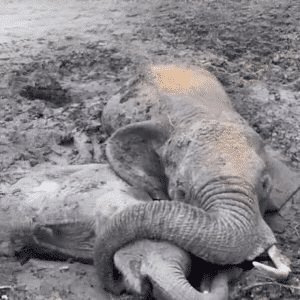
In the harsh heat of Kenya’s wilderness, a mother elephant and her calf became trapped in a deep mud pit while searching for water. For two exhausting days, they struggled against the heavy mud, weakened by dehydration, heat, and the growing danger of being unable to escape.
The rescue, documented by the Sheldrick Wildlife Trust, unfolded in September 2022 after Kenya Wildlife Service and Wildlife Works reported that a mother elephant and her baby had become trapped in a muddy dam. The incident happened during a difficult dry period, when animals were desperately searching for water and sometimes became caught in dangerous mud instead.
What followed was a dramatic and emotional rescue that showed both the strength of elephants and the importance of fast, coordinated conservation work.
A Search for Water Turns Dangerous
For elephants living in dry landscapes, water is survival. During drought conditions, herds may travel long distances to find reliable water sources. But when dams and watering holes begin to dry, the remaining mud can become deadly.
That appears to be what happened in this case.
The mother elephant likely approached what looked like a possible source of water. But instead of firm ground, she stepped into thick mud that trapped her under her own weight. Her calf, staying close as young elephants naturally do, became trapped as well.
Once stuck, escape became nearly impossible.
Mud can act like cement around an animal’s legs, especially for large animals such as elephants. The more they struggle, the more exhausted they become. Under the sun, dehydration can quickly make the situation life-threatening.
For two days, the mother and calf remained trapped.
A Mother’s Instinct Never Fades
Even while exhausted, the mother elephant reportedly continued trying to protect her calf. Elephants are known for their deep social bonds, especially between mothers and young calves. A mother elephant will often use her body, trunk, and strength to shield her baby from danger.
In this case, the mud limited everything she could do.
She could not walk away.
She could not lift herself free.
She could not lead her calf back to the safety of the herd.
Still, she stayed close, trying to protect the baby despite her own weakening condition.
This is one reason elephant rescues are so emotionally powerful. They reveal behaviors that feel deeply familiar: fear, protection, loyalty, and the drive to keep a child alive.
Rescuers Rush to the Scene
The calf’s cries eventually helped draw attention to the emergency. Teams from the Kenya Wildlife Service, Wildlife Works, and the Sheldrick Wildlife Trust responded, knowing that the situation was urgent. The Sheldrick Wildlife Trust confirmed that KWS and Wildlife Works reported the trapped pair, prompting a rescue operation.
When rescuers arrived, they faced a difficult challenge.
A trapped elephant is frightened, powerful, and dangerous to approach. Even when exhausted, a mother elephant may react defensively if she believes her calf is threatened. For that reason, rescue teams must work carefully with veterinarians, equipment, and experienced handlers.
The mother had to be safely sedated so the team could reach the calf and begin the extraction without causing panic or further injury.
The Calf Is Pulled Free
Once the mother was safely immobilized, rescuers focused on the calf. The baby was covered in mud, weak from the ordeal, and struggling to stand. Every minute mattered.
Using ropes and coordinated teamwork, the rescuers slowly pulled the calf from the mud. The moment brought visible relief, but the rescue was not finished.
Young elephants are deeply bonded to their mothers. Even after being freed, the calf reportedly tried to remain close, drawn back toward the mother who had protected it through the ordeal.
That made the next stage even more urgent.
The mother also needed to be freed.
Freeing the Mother Was the Hardest Part
Pulling a full-grown elephant from deep mud is a major operation. The mud grips the body and legs with enormous force, and rescuers must avoid injuring the animal during the extraction.
The team used ropes, vehicles, and careful coordination to slowly release her from the pit. It was physically demanding work, requiring patience and precision.
Finally, after a difficult effort, the mother was freed.
As she recovered, the most emotional moment came when she was reunited with her calf. After two days trapped in mud, the pair could finally touch again. For rescuers and witnesses, that reunion made every hour of work worthwhile.
Recovery and Reunion
After the rescue, the elephants were monitored to make sure they could recover safely. Dehydration, exhaustion, and stress can remain dangerous even after an animal is freed.
With time, rest, and care, the mother regained enough strength to move again. The pair was eventually able to return toward their herd, where they could rejoin the social structure that elephants depend on.
The dangerous mud pit was also addressed to help prevent other animals from becoming trapped. This is an important part of wildlife rescue: saving one animal is urgent, but preventing the next emergency is equally important.
Why These Rescues Matter
This rescue highlights the vital role of conservation organizations and local wildlife authorities. The Sheldrick Wildlife Trust works with the Kenya Wildlife Service and other partners on elephant protection, veterinary response, anti-poaching efforts, aerial patrols, and emergency rescues across Kenya.
Wildlife rescue is not simple. It requires trained teams, veterinary medicine, vehicles, fuel, equipment, insurance, funding, logistics, and long-term planning. Just like responsible financial planning in banking, real estate, or personal finance, conservation work depends on preparation before crisis strikes.
When an elephant is trapped, injured, or orphaned, every delay can be costly.
That is why public support, responsible tourism, community cooperation, and strong conservation funding all matter.
A Bigger Story About Drought and Habitat Pressure
The rescue also points to a larger environmental challenge. As dry conditions intensify, water sources shrink and wildlife may be forced into riskier areas. Drying dams can become traps. Human expansion can reduce safe migration routes. Competition for water can increase conflict between wildlife and communities.
Elephants need space, water, and protection. When their habitat becomes more difficult to navigate, emergencies like this become more likely.
Conservation is not only about rescuing animals after disaster happens. It is also about protecting habitats, reducing human-wildlife conflict, and making sure animals have safe access to water.
The Emotional Intelligence of Elephants
Elephants are widely admired not only for their size and strength, but also for their emotional depth. They form strong family bonds, communicate across distances, protect calves, comfort one another, and appear to grieve losses within their groups.
That is why the image of a mother trapped beside her calf touched so many people.
It was not just a wildlife emergency.
It was a story of a mother refusing to abandon her baby, even while her own strength faded.
Final Thoughts
For two days, a mother elephant and her calf were trapped in deep mud under Kenya’s unforgiving sun. Exhausted and dehydrated, they were running out of time.
Then rescuers arrived.
Through teamwork, veterinary care, and determination, both elephants were pulled free and given another chance at life. The rescue became a powerful reminder of what compassion can accomplish when people act quickly and work together.
It also reminds us that wildlife protection is not abstract. It happens in real places, under real pressure, with real lives at stake.
A mother and her calf survived because someone heard their cries—and because others refused to give up.