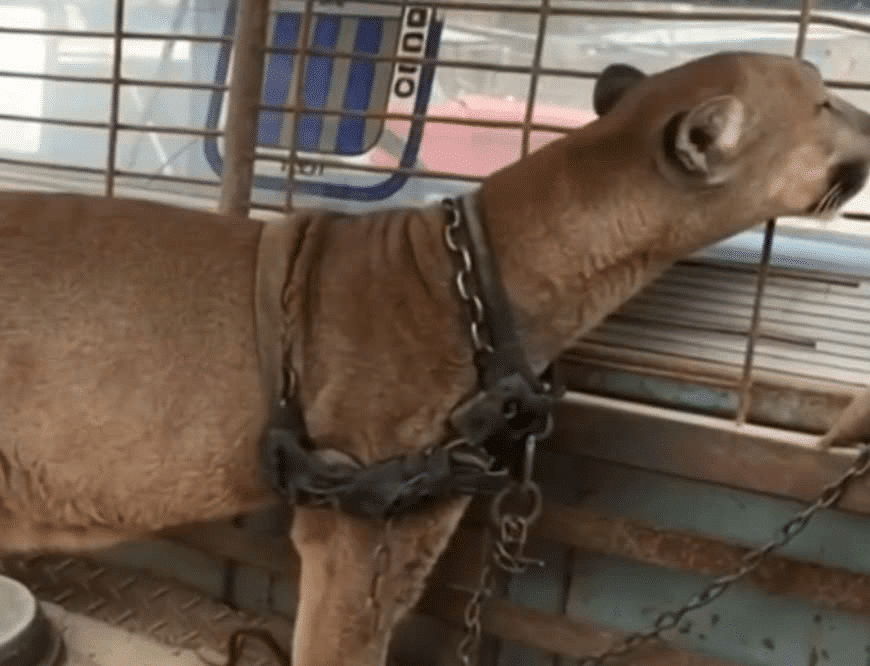
For more than two decades, a mountain lion named Mufasa lived in conditions no wild animal should ever experience. Instead of roaming through forested land, resting under trees, or moving freely through a natural environment, he spent much of his life chained to the back of a pickup truck as part of a traveling circus in Peru.
His story is both heartbreaking and unforgettable.
Mufasa was rescued by Animal Defenders International during its “Operation Spirit of Freedom,” a major effort to remove wild animals from circuses in Peru after the country banned their use in traveling performances. When rescuers found him, he had reportedly spent about 20 years chained among circus equipment, confined to a life of stress, restriction, and neglect.
For people who saw the footage of his rescue, the most emotional moment was not dramatic or loud. It was simple.
When the chains were finally removed, Mufasa stretched.
After years of being restrained, that single movement said more than words ever could.
A Life Stolen by Captivity
Mountain lions are powerful, solitary animals built for movement. In the wild, they travel across large territories, climb, hunt, rest in quiet spaces, and respond to the rhythms of their environment. A life chained to a vehicle is the opposite of everything natural to them.
Mufasa was believed to have been taken from the wild as a cub and forced into the exotic animal trade. From that point on, his world became smaller and smaller. He had no true freedom, no natural habitat, and no chance to live as a mountain lion should.
For years, he was reportedly kept in the back of a circus pickup truck, surrounded by metal equipment and constant movement. There was no forest floor beneath his paws. No quiet shelter. No open space where he could choose where to rest.
His life became one of survival.
Stories like Mufasa’s show why animal welfare laws matter. They also remind the public that entertainment built on animal suffering carries a hidden cost. Behind the bright lights of illegal performances, animals may live in pain, fear, and confinement.
The Rescue Operation That Changed Everything
Animal Defenders International discovered Mufasa during a wider rescue mission in Peru. The organization worked with authorities to enforce laws banning wild animals in circuses and to remove animals kept in illegal or harmful conditions.
The rescue was not easy. Reports described a tense situation involving resistance from circus operators before officials were able to secure Mufasa’s release. After years of captivity, he was finally cut free from the chains that had controlled his life.
The images of that moment spread around the world.
Mufasa did not roar in triumph. He did not leap dramatically into freedom. He simply stretched his body, slowly and deeply, as if discovering movement again.
That quiet reaction became one of the most powerful parts of his story.
Recovery After Years of Neglect
After his rescue, Mufasa was taken to ADI’s Spirit of Freedom rescue center near Lima, where he received veterinary care and began a careful recovery process. According to reports, he was underweight, nervous around people, and showed the physical effects of long-term neglect.
Caregivers focused on helping him heal both physically and emotionally. His diet was improved. His health was monitored. He was given time and space to adjust to a life without chains.
Recovery for a captive wild animal is not instant. Years of confinement can damage the body and mind. Animals may struggle with stress, fear, weakness, and unfamiliar surroundings. For Mufasa, every improvement mattered.
A better appetite.
A healthier coat.
A calmer response to caregivers.
A small sign of trust.
Each step showed that even after years of suffering, healing was still possible.
Why He Could Not Return Fully to the Wild
Many people hoped Mufasa would be released into open wilderness. But for animals raised or kept in captivity for most of their lives, full release is often not possible.
Mufasa had spent too many years away from the wild. He had not developed the survival skills needed to hunt, avoid threats, establish territory, or live independently. Releasing him without protection could have placed him in danger.
Instead, rescuers gave him the safest version of freedom available: a protected sanctuary environment where he could live with dignity, space, and natural surroundings.
Mufasa was eventually moved to the Taricaya Ecological Reserve in the Amazon region, where he could experience grass, trees, fresh air, and quiet for the first time in decades.
It was not the life he should have had from the beginning.
But it was far better than chains.
His First Steps Into a New Life
When Mufasa arrived at his new home, he moved carefully. After so many years of restriction, every step into the natural environment seemed meaningful.
He could smell the trees.
He could feel the ground beneath his paws.
He could choose where to walk and where to rest.
For an animal that had spent most of his life confined to a truck, those simple freedoms were profound.
The moment touched viewers because it revealed something universal: every living being deserves dignity. Freedom is not only about distance or space. It is about choice. It is about the ability to move, rest, breathe, and exist without constant restraint.
A Story With a Bittersweet Ending
Mufasa’s rescue gave him something precious, but his years in captivity had already taken a heavy toll. Animal Defenders International later reported that Mufasa passed away in December 2015, only a few months after experiencing freedom. The organization stated that his life in the circus had damaged his health.
That detail makes his story even more emotional.
Mufasa did not get decades of peace after his rescue. But he did get to spend his final months without chains. He experienced care, space, and a natural setting instead of confinement in the back of a truck.
His freedom came late.
But it still mattered.
Why Mufasa’s Story Still Matters
Mufasa became more than one rescued animal. He became a symbol of the need to enforce wildlife protection laws and end the exploitation of wild animals in entertainment.
His story helped draw attention to illegal circuses, exotic animal trafficking, and the importance of supporting legitimate rescue organizations. ADI’s wider operation in Peru and Colombia rescued many animals, including lions, a tiger, a spectacled bear, and Mufasa the mountain lion.
Animal rescue work also requires serious funding, planning, transportation, veterinary care, legal coordination, insurance, and long-term sanctuary support. Just like responsible financial planning in business, banking, or real estate, animal welfare work depends on resources, accountability, and long-term commitment.
Rescuing an animal is only the beginning. Providing lifelong care is the bigger responsibility.
A Lesson About Compassion and Responsibility
Mufasa’s life reminds us that cruelty can continue for years when people look away. But it also shows what can happen when organizations, authorities, and supporters refuse to ignore suffering.
His story asks the public to think carefully about entertainment involving wild animals. It encourages people to support ethical sanctuaries, avoid shows that exploit animals, and pay attention to the laws that protect wildlife.
No animal should spend its life chained for human amusement.
No wild creature should be reduced to a prop.
Mufasa deserved freedom from the start.
Final Thoughts
After 20 years in chains, Mufasa finally felt the ground beneath his paws without restraint. His first stretch after being freed became a quiet but unforgettable image of survival, pain, and dignity.
His story did not erase the years he lost.
But it gave meaning to the fight for animals still trapped in similar conditions.
Mufasa’s freedom came late, and his time in peace was brief. Yet those final months proved something powerful: even after years of suffering, compassion can still change the ending.
He was once chained to a truck.
He died free.