Just after midnight, an emergency dispatcher received a call that immediately felt different. The voice on the line was not loud or panicked in the usual way. It was small, trembling, and barely above a whisper.
“Please… come quick. There’s someone in my room.”
According to the account, the caller was a young girl who had woken up terrified inside her bedroom. The house appeared quiet. Nothing obvious seemed out of place. But the child was certain that someone was nearby.
When officers arrived at the home, the girl’s parents were embarrassed and apologetic. They explained that their daughter had a vivid imagination and sometimes woke from bad dreams. They believed the call may have been caused by fear, confusion, or a nightmare.
But one officer noticed something that made him pause.
The child did not seem like she was pretending.
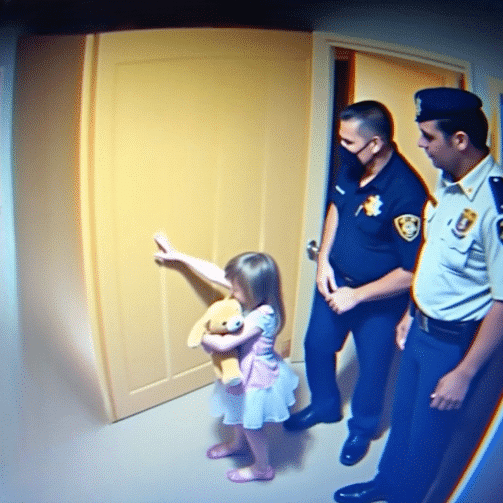
She was shaking. She clutched her favorite toy tightly. Her eyes kept moving toward one part of the room, as if she knew exactly where the danger was.
Instead of dismissing her fear, the officer decided to look closer.
That decision changed everything.
A Child’s Fear That Felt Too Real to Ignore
Parents often struggle to know when a child’s fear is imagination and when it is something more. Children may hear noises at night, see shadows, or become frightened after dreams. Most of the time, there is no danger.
But in this case, the girl’s reaction seemed different.
She was not simply saying she had seen a monster. She was quietly insisting that someone was in her room. When asked where the person was, she hesitated, then pointed toward a specific area near her closet and wall vent.
At first, the room appeared normal.
There were clothes in the closet, toys nearby, and the ordinary signs of a child’s bedroom. Nothing seemed disturbed. The parents began to relax, believing the officers would confirm there was no threat.
Then one of the officers heard something.
A faint, hollow sound came from behind the wall.
It was not the usual creak of a house settling. It did not sound like plumbing or wind moving through vents. It sounded deliberate.
The officer stopped and listened again.
A Hidden Opening Behind the Wall
The officers moved items away from the closet and checked the wall more carefully. That was when they noticed something unusual: a narrow seam that had been almost invisible at first glance.
Using tools, they carefully opened the section.
Behind it was a concealed passageway.
Flashlights cut through the darkness, revealing a narrow crawlspace between the walls. Dust had been disturbed. Scratches marked parts of the floor. The space was tight, but it was large enough for a person to move through.
Then the officers made a discovery that horrified everyone in the home.
A man was hiding inside.
The suspect was immediately taken into custody. According to the account, police found personal items inside the hidden space, including food wrappers, a flashlight, and other belongings suggesting he had spent time there without the family knowing.
The child had been right.
Someone had been inside the home all along.
The Family Realizes How Close They Came to Dismissing Her
Once the man was removed from the hidden space, the atmosphere in the house changed completely. What had begun as a possible misunderstanding became a terrifying reality.
The parents were shaken. They had believed their daughter was frightened by a dream. Instead, she had recognized a real danger that the adults had missed.
That realization was painful.
Many parents try to reassure children when they are afraid, especially at night. It is natural to say, “There is nothing there,” or “You were just dreaming.” But this story shows why adults should still take repeated or specific fears seriously.
Children may not always explain danger clearly. They may not have the vocabulary to describe what they hear or see. But fear that is focused, persistent, and tied to a specific location should not be ignored.
In this case, the little girl’s instincts may have protected the entire family.
A Terrifying Home Security Lesson
The idea that someone could hide inside a home is deeply unsettling. While situations like this are rare, they raise important questions about home security and property maintenance.
Homes often have areas that are easy to overlook: crawlspaces, attics, basements, vents, utility closets, garage storage areas, and access panels. In older homes especially, hidden spaces may exist because of renovations, structural gaps, or unfinished areas that homeowners rarely inspect.
A safe home is not only about locked doors and windows. It is also about knowing the structure of the property and checking places that may not be visible during daily life.
For families, this can also connect to broader financial planning. Homeowners may need to think about security systems, insurance coverage, repair costs, real estate inspections, and emergency preparedness. A hidden vulnerability in a house can create not only emotional trauma but also major personal finance concerns.
Why Modern Security Measures Matter
After stories like this, many homeowners begin reconsidering their security setup. Basic precautions can make a meaningful difference.
Motion-sensitive lights, door and window sensors, indoor cameras in common areas, smart locks, and professional alarm monitoring may help detect unusual activity. Regular inspections of attics, crawlspaces, vents, and exterior access points can also reveal problems before they become dangerous.
For renters, it is important to ask landlords about locks, maintenance history, shared access points, and any unusual spaces in the unit. For homeowners, a professional inspection can be especially useful after buying a property or completing renovations.
Security investments can feel expensive, but they may prevent larger risks later. Just as people plan for health insurance, mortgage payments, banking needs, emergency savings, and home repairs, security should be part of responsible household planning.
Police Praise the Child’s Courage
After the suspect was removed, officers reportedly praised the little girl for calling 911 and speaking up even though she was scared.
That part of the story matters.
Children should be taught that if they feel unsafe, they can ask for help. They should know how to call emergency services, state their address, and stay as calm as possible. These lessons do not have to frighten children. They can be taught gently, like fire safety or knowing what to do if they get separated in public.
The girl’s call may have sounded small, but it carried life-changing importance.
Her voice brought police to the home.
Her fear pointed them toward the right place.
Her courage helped uncover the truth.
A Reminder to Trust Instincts
This story resonates with so many parents because it touches one of their deepest fears: the possibility of danger inside the place that should feel safest.
The home is supposed to be a refuge. A child’s bedroom is supposed to be peaceful. A crib, a stuffed toy, a nightlight, and familiar walls should represent comfort.
But safety requires attention.
Sometimes the first warning is not an alarm. Sometimes it is not a broken window or a missing item. Sometimes it is a child saying, “Something is wrong.”
Adults do not need to panic over every nighttime fear. But they should listen carefully, ask calm questions, and investigate when a child seems truly distressed.
Final Thoughts
What began as a whispered 911 call became a terrifying discovery hidden inside the walls of a family home. The young girl’s parents first believed she had imagined something after a bad dream. But police trusted her fear enough to keep looking.
That choice revealed a hidden space, signs of someone living inside, and a suspect hiding where no one expected.
The family was left shaken, but safe.
The lesson is powerful: never dismiss a child’s fear too quickly, especially when they are specific, persistent, and visibly terrified.
Sometimes the smallest voice in the house carries the most important warning.
And sometimes listening can make all the difference.