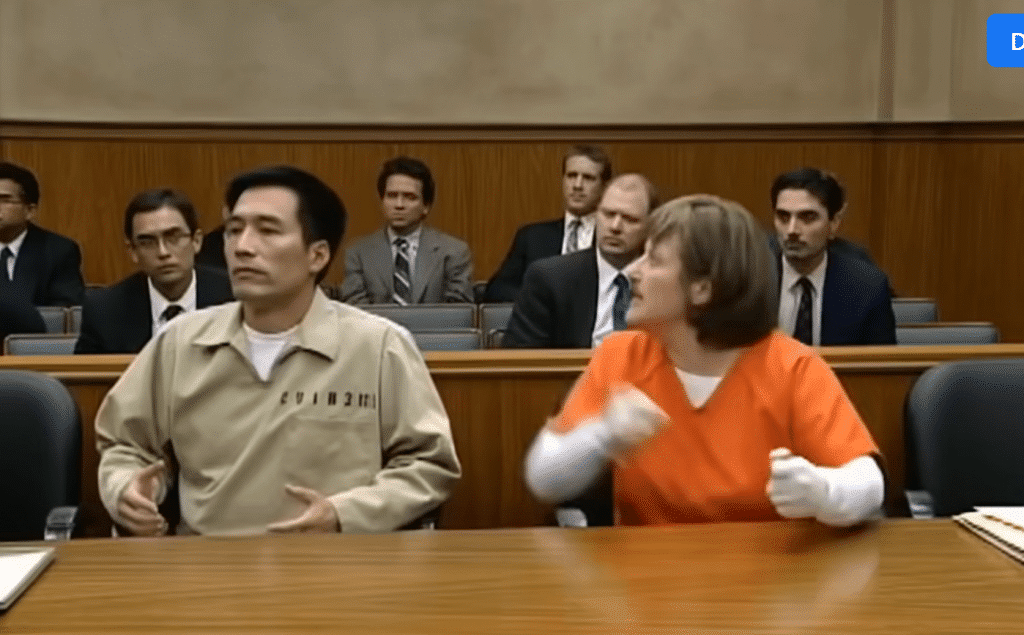
A violent incident inside California’s correctional system has renewed public concern about prison safety, inmate supervision, and the challenges of managing high-risk individuals behind bars. The case, connected to Corcoran State Prison, has drawn attention not only because of the severity of the reported attack but also because of the larger questions it raises about institutional accountability.
While some online headlines have framed unrelated courtroom violence in a sensational way, the details provided in this account focus on a serious prison incident involving inmate violence, correctional oversight, and the need for stronger safety measures inside high-security facilities.
Corcoran State Prison, located in California’s Central Valley, is known as a maximum-security institution that houses some of the state’s most dangerous offenders. Facilities like this are designed to operate under strict supervision, with policies meant to protect inmates, correctional officers, medical staff, and the broader public.
However, when a serious assault occurs inside such a controlled environment, it raises difficult questions. Were proper housing decisions made? Were warning signs missed? Was supervision adequate? And could the incident have been prevented with stronger procedures?
A High-Security Facility Under Scrutiny
According to the provided account, the incident involved a brutal altercation between two inmates sharing a cell. One inmate suffered severe injuries, prompting officials to review what happened and how the situation escalated.
Authorities identified Jaime Osuna, who was already serving a life sentence, as a central figure in the case. His history of violent behavior and documented concerns surrounding mental health have become key parts of the broader discussion.
In a maximum-security prison, inmate classification is supposed to help determine where individuals are housed, who they may share a cell with, and what level of monitoring they require. When a high-risk inmate is placed in close quarters with another person, the decision can carry serious consequences.
This is why classification systems matter. They are not just paperwork. They are part of the safety infrastructure of a prison.
Questions About Cell Assignments and Supervision
After the incident, correctional officials reportedly began reviewing several critical areas, including nighttime supervision, cell assignment procedures, and whether staff had access to enough information about behavioral risks.
These questions are important because prisons operate on systems of control, documentation, and risk assessment. If those systems fail, the consequences can be devastating.
A single housing decision can affect safety, legal exposure, insurance liability, staffing demands, medical costs, and long-term institutional trust. Just as risk management is essential in banking, real estate, loans, and personal finance, it is also essential in correctional environments where every decision can carry life-or-death consequences.
For correctional facilities, the goal must be more than reacting after violence occurs. The stronger approach is prevention: identifying risks early, separating incompatible inmates, improving supervision, and ensuring that staff have the tools needed to intervene before a crisis unfolds.
The Challenge of Managing High-Risk Inmates
One of the most difficult issues in the prison system is how to manage individuals with repeated violent behavior or serious mental health concerns. Traditional prison discipline may not be enough when an inmate displays extreme aggression, instability, or unpredictable behavior.
Correctional institutions must balance two responsibilities at once. They must enforce security and accountability while also addressing mental health needs that may contribute to dangerous behavior.
That balance is not easy.
Some inmates require intensive monitoring. Others may need specialized mental health treatment, separate housing, or structured behavioral programs. Without proper support and oversight, dangerous situations can develop inside cells, housing units, or common areas before staff are able to respond.
This case has renewed concern that high-risk inmates may not always be managed with the level of care and supervision required.
Mental Health in the Prison System
Mental health remains one of the most urgent challenges facing correctional institutions across the United States. Many incarcerated individuals live with untreated or undertreated mental illness, trauma, substance abuse histories, or behavioral disorders.
When prisons do not have enough mental health professionals, therapy programs, crisis intervention tools, or psychiatric care, the entire facility becomes more difficult to manage. Staff may be forced to handle situations that require clinical expertise, while inmates may deteriorate without consistent treatment.
Experts and reform advocates often argue that improving mental health care inside prisons is not only a humanitarian issue. It is also a public safety issue.
Better mental health services can reduce violence, improve staff safety, lower emergency medical costs, and help correctional facilities operate more effectively. In the long run, these investments may also reduce legal claims, workers’ compensation costs, and financial pressure on state prison budgets.
Staff Training and Institutional Accountability
Correctional officers are often the first people expected to respond when violence breaks out. Their work is stressful, dangerous, and emotionally demanding. That is why training and staffing levels matter.
Officers need practical training in de-escalation, crisis response, mental health awareness, emergency communication, and recognizing behavioral warning signs. They also need enough staffing support to monitor housing units properly.
When prisons are understaffed, even strong policies can fail in practice. Officers may be stretched too thin, response times may slow, and dangerous behavior may go unnoticed until it is too late.
Accountability also matters. After a major incident, officials must determine whether policies were followed, whether procedures were outdated, and whether leadership failed to address known risks. Transparency can help rebuild public trust and protect both inmates and staff in the future.
Broader Issues Facing U.S. Prisons
The Corcoran incident reflects broader problems seen across the American correctional system. Overcrowding, staffing shortages, aging facilities, mental health gaps, and limited rehabilitation resources all contribute to unsafe conditions.
These issues also carry major financial consequences. States spend significant public funds on incarceration, medical care, legal defense, prison insurance matters, facility maintenance, and emergency response. When violence occurs, costs can rise even further through lawsuits, investigations, medical treatment, and policy reviews.
For taxpayers and policymakers, the question becomes clear: is the system investing enough in prevention, or is it paying more after tragedies occur?
A Push for Reform
The incident has strengthened calls for meaningful reform. Advocates are urging correctional leaders to improve inmate classification, increase mental health staffing, upgrade surveillance systems, and create stronger protocols for housing high-risk inmates.
Technology may also play a role. Better camera coverage, improved incident reporting systems, and data-based risk assessment tools could help identify dangerous patterns earlier. However, technology alone is not enough. Real reform requires trained staff, adequate funding, responsible leadership, and a commitment to safety.
Final Thoughts
The reported incident at Corcoran State Prison is more than a story about one violent altercation. It is a warning about the complexity of managing high-risk inmates inside maximum-security facilities.
Prisons are expected to punish, contain, supervise, and, when possible, rehabilitate. But they must also protect human life. When violence erupts inside a controlled institution, the public has a right to ask whether the system did everything it could to prevent it.
The case highlights the urgent need for stronger oversight, better mental health care, improved staff support, and more effective safety policies.
Whether this moment leads to lasting reform remains uncertain. But one thing is clear: prison safety cannot depend on reaction alone. It must begin with prevention, accountability, and a system willing to confront its weaknesses before another tragedy occurs.