The rain had been pouring when two small kittens were discovered curled beside overflowing trash bins. Barely three months old, they were soaked to the skin, shivering, and so weak they could hardly lift their heads. Their thin bodies pressed together for warmth that the cold night kept stealing away. From a distance, they looked almost lifeless, blending into the shadows of the alley.
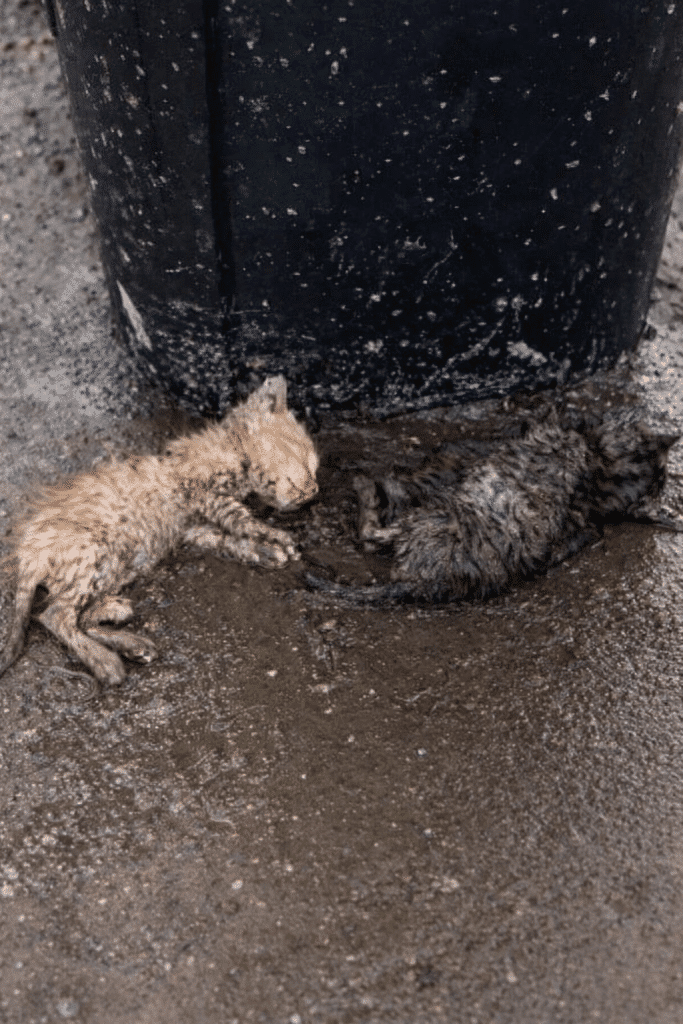
A woman passing by noticed something was wrong and stopped to look closer. What she saw made her heart sink. The kittens were exhausted, covered in dirt, and marked with small wounds from life on the streets. Without hesitation, she gathered them into her arms and carried them home, shielding them from the rain as best she could. That moment became the turning point they desperately needed.
Once inside, the focus was on warmth and stability. The kittens were cold to the touch, their bodies trembling even as exhaustion weighed them down. She prepared warm water and gently bathed them, washing away mud and grime while slowly raising their body temperature. Every movement was calm and careful, meant to soothe rather than startle.
Video:
Passed out next to the trash can, the two poor exhausted kittens cried out weakly for help
After the bath, she wrapped them in soft towels and used a hair dryer set to warm air to fully dry their fur. The sound didn’t frighten them; they were too tired to resist. Slowly, their shivering eased. For the first time in days, they were no longer fighting the cold.
Medical care followed immediately. Both kittens showed signs of fever and dehydration, so she gave them appropriate medication and offered warm milk mixed with added nutrients. At first, they drank only small amounts, but frequent feedings helped restore their strength. Once fed, they were placed in a quiet, warm space where they could finally rest.
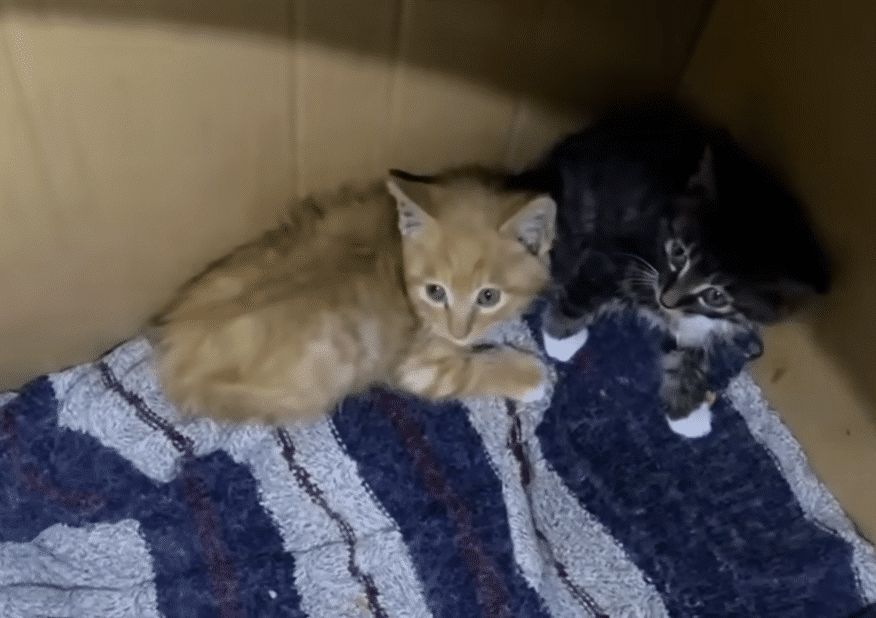
The first few hours were critical. The kittens slept deeply, their breathing gradually becoming steadier. When they woke, there were subtle but hopeful signs of improvement. They shifted on their own, responded to movement, and no longer seemed completely withdrawn. Though still fragile, they were holding on.
Over the next several days, steady care made a visible difference. Regular meals, warmth, and rest allowed their bodies to recover. Digestive problems appeared early on, likely caused by hunger and exposure, but with careful attention and proper nutrition, those issues slowly resolved.
As their physical condition improved, their behavior began to change as well. At first, they remained cautious, flinching at sudden sounds and pulling back from touch. Life on the streets had taught them to expect danger. Instead of forcing contact, their caregiver allowed trust to build naturally.
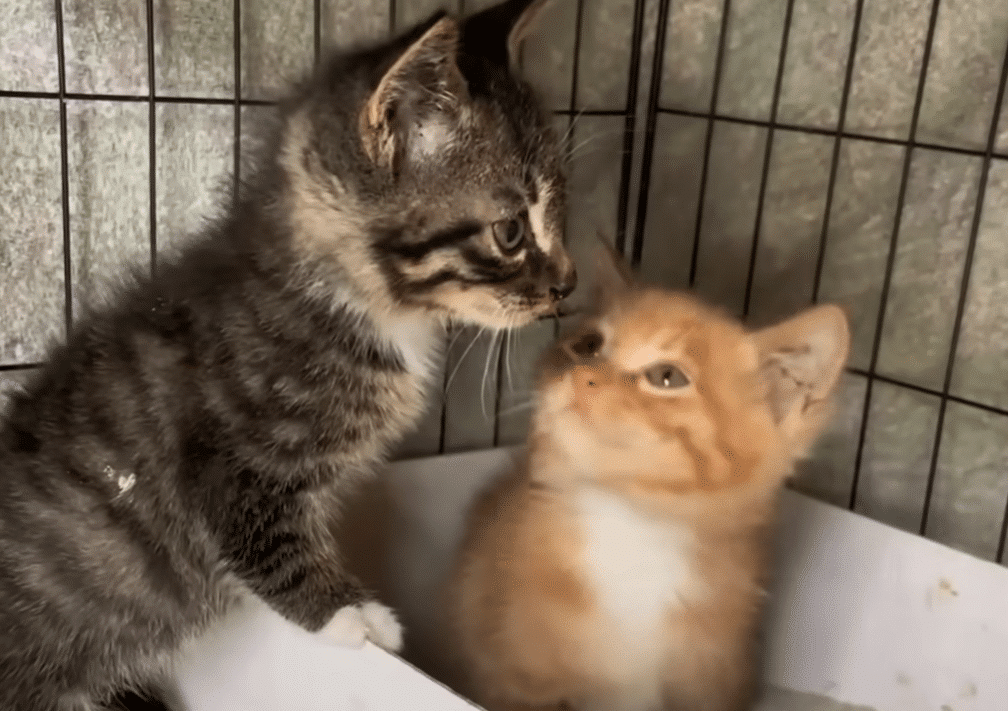
Little by little, they grew braver. One kitten edged closer during feeding time, brushing against her hand before retreating. The other followed soon after. These small moments marked the beginning of trust. The kittens were learning that hands could offer safety instead of harm.
Within eighteen days, the transformation was clear. Both kittens had recovered from their illnesses, their coats grew cleaner and softer, and their bodies began to fill out. They no longer hid when approached. Instead, they followed their caregiver, slept peacefully, and showed curiosity about their surroundings.
Two months after that rainy night, the kittens were nearly unrecognizable. From weak, trembling strays, they had grown into healthy young cats weighing nearly two kilograms each. Their days were filled with play, exploration, and affection. What once began beside trash bins in the rain had become a life of warmth, stability, and love—a future they finally had the chance to enjoy.