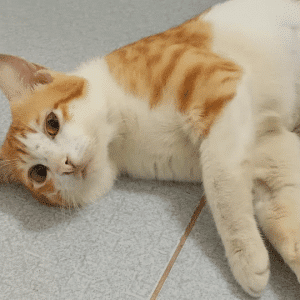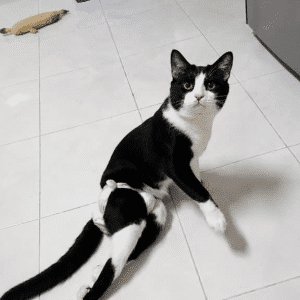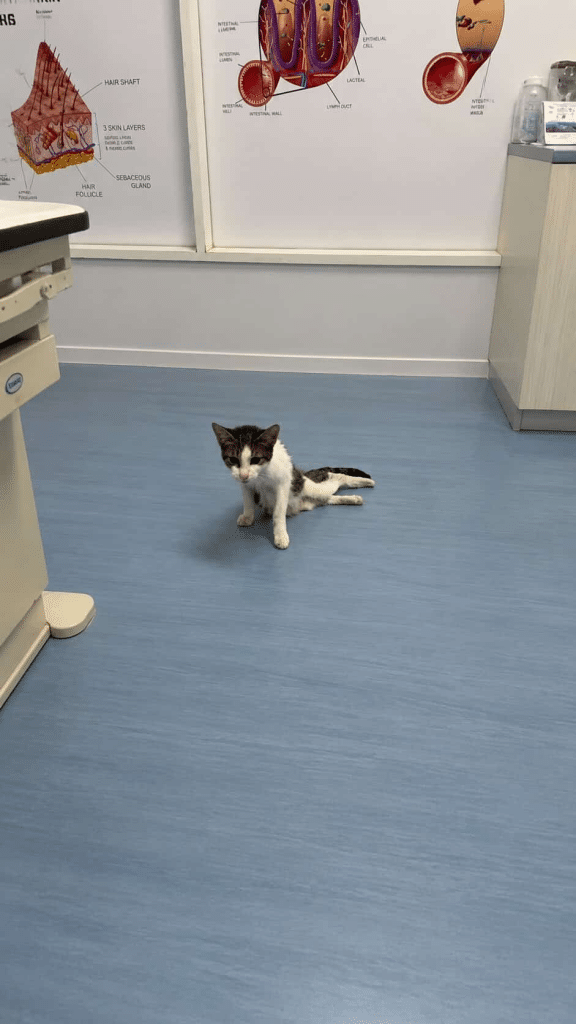
In the beginning, even standing seemed impossible.
The small cat’s back legs remained motionless behind him, unable to support his body.
Whenever he wanted to move, he had to pull himself forward slowly using only his front legs, dragging the rest of his body behind him with exhausting effort.
Simple movements became daily struggles.
Crossing a room.
Reaching a food bowl.
Trying to balance without falling.
For many animals living with paralysis, the future can feel painfully uncertain.
But the people caring for this cat refused to give up on him.
A Recovery Journey Built On Patience
Instead of accepting paralysis as the end of his mobility forever, rehabilitation specialist Taylor began creating a careful physical therapy routine designed specifically for him.
Nothing happened quickly.
Every exercise required patience.
Every improvement came slowly.
Every tiny movement mattered.
The first step focused on preserving flexibility in his legs and joints through passive range-of-motion therapy.
Taylor gently bent and stretched the cat’s legs by hand each day to help prevent stiffness and muscle loss.
At first, the cat simply lay quietly during the exercises.
But even then, something important was happening beneath the surface.
VIDEO: Paralyzed Rescue Cat Takes His First Steps Again Through Physical Therapy And Determination
Searching For Small Signs Of Hope
As therapy continued, Taylor introduced sensory stimulation exercises.
Gentle touches against the paw pads.
Soft scratches beneath the feet.
Small movements designed to encourage neurological responses.
The goal was simple:
Help the body remember.
At times, progress felt almost invisible.
Days passed with little change.
But then came tiny moments that suddenly meant everything.
A slight twitch in the leg.
A faint tail movement.
A brief attempt to push against the ground.
Small victories —
but powerful ones.
Because for a paralyzed animal, even the smallest response can become the beginning of something bigger.
Learning To Stand Again
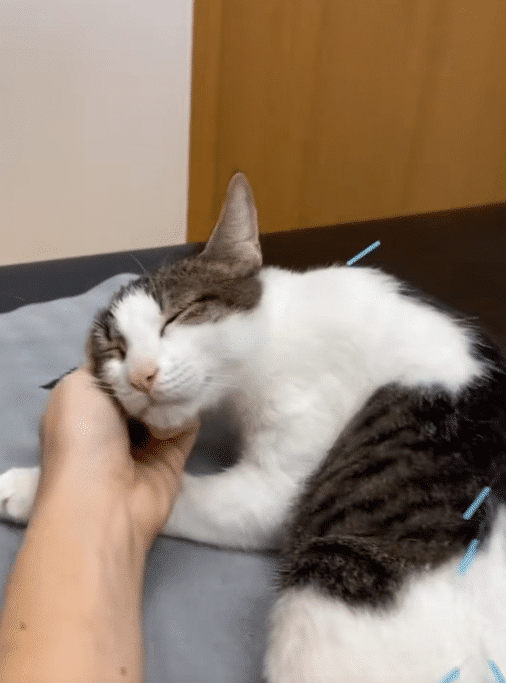
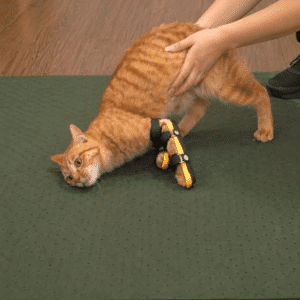
Eventually, therapy moved into supported standing and walking exercises.
Using careful hand support and rehabilitation straps, Taylor helped the cat place weight onto his weakened back legs little by little.
At first, he could barely balance for more than a second before collapsing gently sideways.
But he kept trying.
Again and again.
The hardest part came during hydrotherapy sessions.
Inside an underwater treadmill, warm water supported part of his body weight, allowing him to move his legs more freely without full pressure from gravity.
Slowly, his legs began making stepping motions inside the water.
The movements were shaky.
Uncertain.
Incomplete.
But they were real.
The Moment Hope Became Visible
Over time, the impossible slowly became possible.
The cat began standing for longer periods.
His legs pushed more intentionally beneath him.
His balance improved.
Then one day, with everyone watching closely, he took several wobbly steps forward completely on his own.
No dragging.
No collapsing.
Just movement.
The room erupted with emotion.
Not because he walked perfectly —
but because he had fought so hard simply for the chance to try.
More Than Physical Recovery
This journey was never only about walking.
It was about dignity.
Comfort.
Quality of life.
And the belief that disabled animals still deserve every opportunity to heal and thrive.
Paralysis does not always mean the end of happiness.
And recovery does not always happen overnight.
Sometimes it unfolds slowly —
through patience,
specialized care,
and countless quiet moments nobody else sees.
A Story Of Hope, Healing, And Determination
Today, the cat continues growing stronger with every step forward.
His progress remains ongoing, but his story already carries a powerful message:
Hope can exist even after devastating injury.
Healing can happen gradually.
And sometimes, determination speaks loudest through the smallest movements.