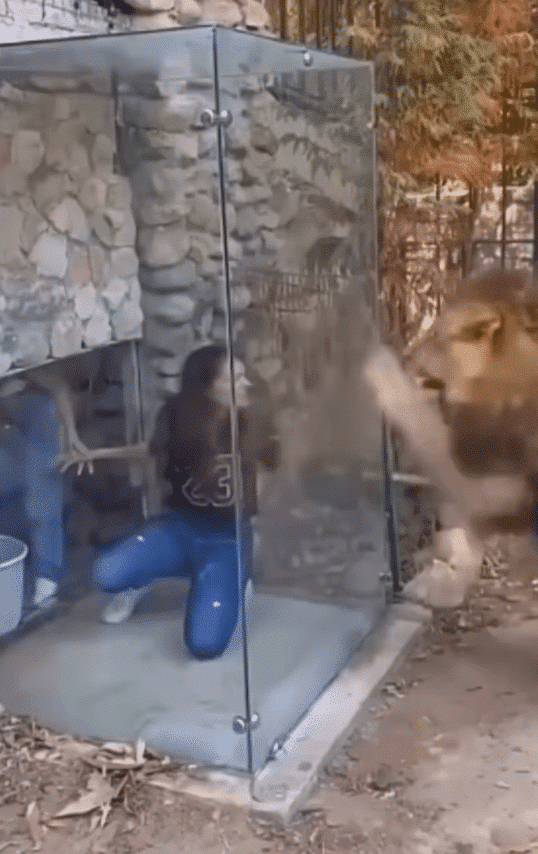
A normal afternoon at the zoo reportedly turned into a terrifying experience when a young woman standing near a lion enclosure began teasing the animal through the glass — only for the massive predator to suddenly lunge forward with incredible force.
According to the account, visitors had gathered around the exhibit to watch the lion as it moved near the protective barrier. At first, the atmosphere seemed relaxed. Families were nearby, children were watching, and several people appeared fascinated by the rare chance to stand only inches from one of the world’s most powerful animals.
But what began as curiosity quickly became dangerous.
Witnesses said the woman started tapping, scratching, or making movements against the glass to get the lion’s attention. Friends nearby reportedly laughed as the animal moved closer. For a brief moment, the scene may have seemed playful.
Then everything changed.
Without warning, the lion lunged at the barrier, slamming into the glass hard enough to send shock through the crowd. Visitors screamed and stepped back as the calm exhibit area erupted into panic.
Fortunately, the barrier held, and no injuries were reported. But the moment left many people shaken — and sparked a much larger conversation about wildlife respect, personal responsibility, and the false sense of safety people sometimes feel around dangerous animals.
A Peaceful Zoo Visit Turns Tense
Zoos are designed to give visitors a close look at animals they may never see in the wild. For many families, that closeness is part of the experience. Children can watch elephants, giraffes, monkeys, reptiles, birds, and big cats from a safe viewing area.
But that closeness can also create a misunderstanding.
Because a barrier exists, some visitors forget that the animal behind it is still wild.
A lion behind glass is not tame. It is not a pet. It does not understand human humor, teasing, or social media behavior. It responds according to instinct, environment, and stimulation.
In this case, the young woman reportedly became focused on the lion and began interacting with it through the glass. At first, the animal seemed calm. Some visitors may have interpreted its attention as curiosity.
But a lion’s stillness should never be mistaken for harmlessness.
A predator can shift from calm observation to explosive movement in a fraction of a second.
What Looked Playful May Have Felt Provocative
Human beings often interpret animal behavior through human emotions. If an animal looks at us, we may think it is interested. If it follows our movements, we may think it is playing. If it reacts to tapping or gestures, we may laugh and assume the interaction is harmless.
But wild animals do not always experience those moments the way people do.
For a lion, repeated tapping, scratching, sudden movement, or direct attention may feel stimulating, irritating, threatening, or challenging. Even if the person does not intend harm, the animal may respond with instinctive force.
That is why zoos often post signs asking visitors not to tap on glass, shout at animals, throw objects, or provoke reactions. Those rules are not there to make the visit less fun. They are there to protect people, animals, and staff.
A few seconds of entertainment can create stress for an animal and danger for everyone nearby.
The Lion’s Sudden Charge Shocks Visitors
According to the story, the turning point came without warning.
The lion suddenly lunged at the glass barrier, striking it with tremendous force. The sound alone reportedly startled visitors. Some screamed and rushed backward, fearing the glass might break.
Even when zoo enclosures are built with strong safety standards, seeing a lion hit a barrier at close range can be deeply frightening. The impact reveals the raw strength that had been separated from the crowd by only a transparent wall.
That is what made the moment so unsettling.
Seconds earlier, the glass may have felt invisible — like a screen between visitor and exhibit.
After the impact, everyone remembered what it truly was: a critical safety barrier standing between people and a powerful wild predator.
Zoo Staff Respond Quickly
Zoo staff and security personnel reportedly moved quickly to secure the area and direct visitors away from the enclosure. That response mattered, even though no one was physically injured.
When a large animal becomes agitated, staff must evaluate the safety of the exhibit, the condition of the barrier, and the animal’s behavior. They may need to move visitors back, close the viewing area, inspect the glass, and make sure the animal is not further provoked.
In situations like this, fast action helps prevent panic from becoming a bigger safety issue.
It also protects the animal. A stressed lion may continue reacting if people crowd the glass, shout, or record too closely.
The best response is distance, calm, and professional control.
Why the Video Went Viral
The incident spread online because it captured a dramatic contrast: a person treating the moment lightly, followed by a sudden reminder of how powerful nature can be.
Viewers reacted strongly. Some criticized the woman for provoking the lion. Others focused on how close the situation came to becoming dangerous. Many said the video should be used as a lesson for zoo visitors everywhere.
The story also touched a deeper theme: people often trust systems without thinking about what those systems are protecting them from.
The glass looked strong.
The setting looked controlled.
The visit felt safe.
Then one impact changed the entire mood.
That moment became symbolic for many people because it showed how quickly confidence can turn into fear when a hidden risk becomes visible.
Safety Barriers Are Strong, But Not an Invitation
Modern zoo enclosures are carefully designed to separate visitors from animals. Thick glass, moats, fences, reinforced structures, and controlled pathways help protect the public while allowing people to observe wildlife.
But safety systems work best when visitors follow rules.
A barrier is not permission to tease, provoke, or test an animal’s reaction. It is a protective measure. Treating it like a challenge can create unnecessary danger.
This applies beyond zoos too. In daily life, people rely on safety systems all the time — home security, car insurance, banking protections, workplace rules, real estate inspections, medical guidelines, and emergency procedures. Those systems reduce risk, but they do not eliminate the need for responsible behavior.
Safety is strongest when protection and judgment work together.
Wild Animals Deserve Respect
Lions are not villains for reacting like lions. They are wild animals with instincts shaped by survival. Their strength, speed, and intensity are exactly why people are fascinated by them in the first place.
Respecting a lion means appreciating its beauty without trying to provoke a reaction.
That respect also benefits animal welfare. Constant tapping, shouting, or teasing can stress animals in captivity. Even if a visitor believes they are “just playing,” the animal may experience the interaction very differently.
Responsible zoo visits teach children and adults the same lesson: observe quietly, follow posted rules, and remember that wildlife should never be treated like entertainment props.
Curiosity Needs Boundaries
Curiosity is not a bad thing. It is one of the reasons people visit zoos, read about animals, watch documentaries, and support conservation. Curiosity helps people learn.
But curiosity without boundaries can become reckless.
The desire to get a reaction, record a viral clip, or make friends laugh should never come before safety. A close encounter with a wild animal may feel exciting, but excitement can cloud judgment.
In this story, the woman may not have intended to create danger. But the result showed how quickly a playful moment can turn frightening.
Final Thoughts
A day at the zoo reportedly became unforgettable when a young woman teased a lion near its enclosure and the animal suddenly slammed into the glass barrier.
No one was hurt, but the moment shocked visitors and spread quickly online because it revealed the power people sometimes forget is waiting behind zoo barriers.
The lesson is simple: wild animals deserve distance, respect, and caution — even when they are behind glass.
A lion does not need to break through a barrier to remind us what it is.
Sometimes one sudden lunge is enough.