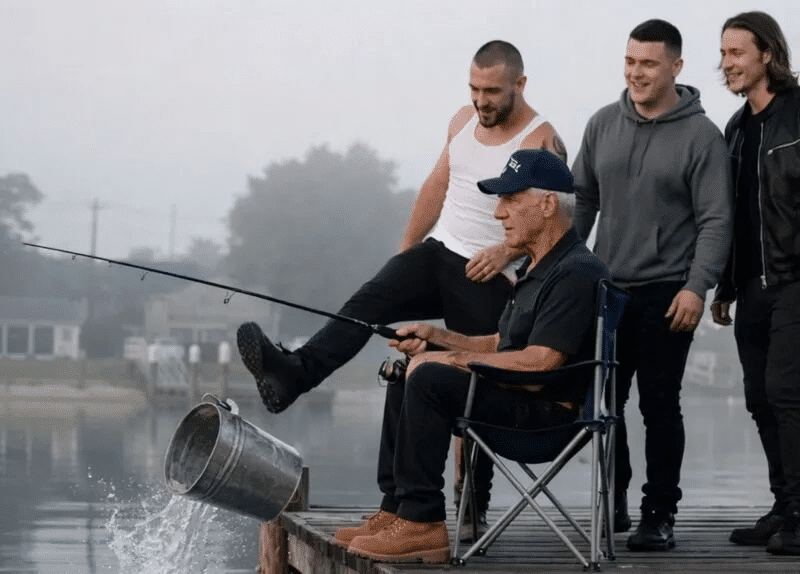
On a cold, misty morning beside a quiet lake, an elderly man sat alone at the edge of an old wooden pier, doing what he loved most: fishing in peace. The air was still, the water barely moved, and a soft layer of fog covered the distant shoreline. It was the kind of morning that invited silence, patience, and reflection.
The man sat in a folding chair with his fishing rod resting in his hands. Beside him was a small metal bucket with a few fish already inside. Nothing about the scene seemed unusual. He was simply enjoying a calm moment outdoors, far away from noise, stress, and conflict.
But that peace did not last long.
Footsteps soon echoed across the old boards of the pier. Three young men approached from behind, speaking loudly and laughing among themselves. Their confidence was obvious. They walked with the kind of arrogance that suggested they were used to pushing people around and getting away with it.
They stopped behind the old man.
One of them smirked and asked, “Hey, old man, you’re not from around here, are you?”
Another stepped closer and added, “Do you even know where you’re sitting?”
Then came the demand that changed the mood completely.
“This is our lake. If you want to fish here, you pay.”
The Old Man Refuses to Be Intimidated
The elderly fisherman did not react right away. He did not jump up, argue, or show fear. Instead, he calmly reeled in his line, checked the hook, and slowly turned his head.
His voice was steady when he answered.
“The lake belongs to everyone. I have the right to be here.”
The young men looked at one another and laughed. To them, his calmness seemed like weakness. They expected him to be frightened, embarrassed, or eager to leave. But he showed no sign of panic.
That only irritated them more.
One of the young men leaned forward, his tone becoming sharper.
“I’ll say it one last time. Either you pay, or you get out of here.”
The old man turned back toward the water as if the threat had not even reached him. He kept his eyes on the float, giving them no reaction at all.
That silence was more powerful than any insult.
For people who rely on intimidation, being ignored can feel like losing control. The young men had expected fear. Instead, they were met with patience.
The Situation Escalates
Their laughter faded. The mood shifted from mockery to anger.
One of them stepped forward and kicked the metal bucket beside the old man’s chair. The bucket clanged loudly against the wooden pier before tumbling into the lake. The fish disappeared beneath the surface, sending ripples across the water.
Still, the elderly man did not shout.
He did not curse.
He did not even stand.
He simply adjusted his fishing rod and continued watching the water.
The young men were stunned by his lack of reaction. What they had meant as humiliation had failed. Instead of frightening him, they had only exposed their own cruelty.
One of them clenched his fists and stepped closer.
Apparently convinced that words were not enough, he raised his hand as if he were about to strike the old man.
That was the moment everything changed.
The Unexpected Turn
Just as the young man moved forward, the elderly fisherman stood up with surprising speed. His calm expression did not change, but his movements were sharp, controlled, and confident.
Within seconds, he caught the attacker’s arm, redirected his momentum, and brought him down to the pier. The young man, who only moments earlier had been acting untouchable, suddenly found himself helpless on the ground.
The second young man rushed forward, but the old man reacted just as quickly. With practiced control, he stopped him before the situation could go any further.
The third young man hesitated. His confidence disappeared as he stepped backward. In his panic, he lost his footing and slipped off the edge of the pier, splashing into the cold lake below.
In less than a minute, the entire balance of power had shifted.
The men who had arrived laughing and making demands were now shocked, embarrassed, and afraid.
A Past They Never Expected
The old man stood calmly on the pier, breathing steadily. He looked at the young men, not with rage, but with quiet authority.
“You don’t know who you’re dealing with,” he said.
Then he revealed what none of them had expected.
He had spent 30 years serving in a special police unit.
Suddenly, everything made sense. His calmness had not come from weakness. It came from experience. He knew exactly how to handle pressure, how to read danger, and how to defend himself only when necessary.
The young men had made a mistake many people make. They judged someone by age, appearance, and silence. They assumed an elderly man sitting alone on a pier would be an easy target.
They were wrong.
A Lesson in Respect
The old man did not continue the confrontation. He did not try to humiliate them further. He simply gave them one command.
“Leave.”
This time, they listened.
There were no more threats. No more laughter. No more demands for money. The young men backed away quickly, helping each other leave the pier as the one who had fallen into the water climbed out, soaked and humiliated.
The quiet returned.
The elderly man picked up his fishing rod, sat back down in his folding chair, and looked out over the lake once again. The mist still floated above the water. The morning was cold and still, just as it had been before they arrived.
But something had changed.
The young men had learned a lesson they would not forget.
The Bigger Message Behind the Story
This story resonates because it reminds us that appearances can be misleading. Strength does not always come with a loud voice, a young body, or an aggressive attitude. Sometimes the strongest person in the room is the one who says the least.
The elderly fisherman did not need to prove anything. He did not react to insults, threats, or disrespect. He stayed calm until action became necessary. That kind of discipline often comes from years of experience, emotional control, and a deep understanding of consequences.
The story also reflects an important lesson about respect. Whether someone is young or old, wealthy or poor, powerful or quiet, they deserve basic dignity. Trying to intimidate others may feel powerful in the moment, but it can lead to consequences that are hard to forget.
In life, just as in business, real estate, personal finance, banking, insurance, or legal matters, assumptions can be costly. Misjudging a person or a situation can turn confidence into regret very quickly.
Final Thoughts
What began as a peaceful fishing trip became an unforgettable lesson in humility. Three young men approached an elderly fisherman believing they could scare him away. Instead, they discovered that calm does not mean weak, age does not mean helpless, and silence does not mean fear.
The old man never looked for trouble. He only wanted to fish in peace.
But when trouble came looking for him, he handled it with control, confidence, and quiet strength.
Sometimes, respect is taught through words.
And sometimes, it is learned the hard way.