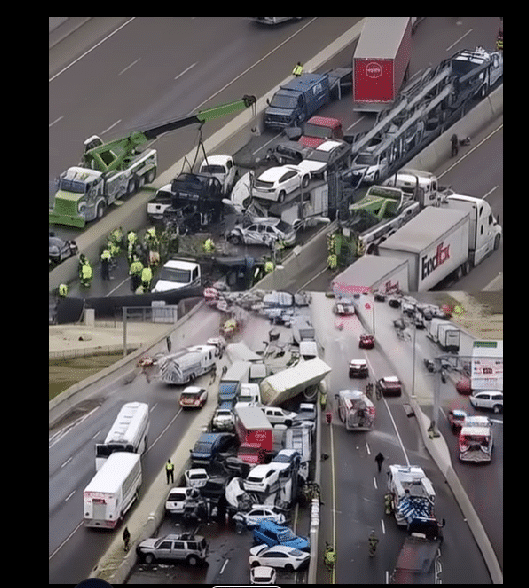
A normal morning commute turned into a devastating disaster when icy conditions triggered a massive chain-reaction crash on Interstate 35W in Fort Worth, Texas. The crash, which involved more than 100 vehicles, left families grieving, dozens of people injured, and the community searching for answers about how a routine drive became a deadly pileup within seconds.
Some viral posts have described the tragedy with conflicting numbers, including claims that more than 65 people died. However, official findings show that six people were fatally injured, while at least 65 people were treated for injuries after the crash. The National Transportation Safety Board reported that the February 11, 2021 crash involved 133 vehicles and occurred after ice accumulated on an elevated section of the roadway.
A Morning Drive Turns Into Chaos
The crash began around 6:00 a.m., when vehicles traveling in the southbound toll lanes started sliding on the icy elevated roadway. Some vehicles struck concrete barriers, and drivers approaching from behind had little time to react. Within moments, more vehicles slammed into the wreckage, creating a chain reaction that stretched across the highway.
Cars, pickup trucks, commercial vehicles, and 18-wheelers became trapped in a scene that many witnesses later described as terrifying. Some vehicles were crushed between larger trucks. Others were wedged beneath trailers or pushed into barriers. For drivers already on the road, there was almost no warning and very little room to escape.
The crash site quickly became a mass-casualty emergency. First responders arrived to find a long, tangled line of wreckage, with people trapped inside vehicles and others standing in freezing conditions after escaping the crash.
Emergency Crews Face a Difficult Rescue
Firefighters, police officers, paramedics, and tow crews worked for hours in dangerous winter conditions. The scale of the crash made every rescue more difficult. Emergency workers had to climb over damaged vehicles, cut people free from wreckage, and create access routes through blocked lanes.
Local reports at the time said six people were killed and 65 people were treated at area hospitals, with dozens transported by ambulance.
Nearby hospitals prepared for a surge of patients, while emergency crews continued searching vehicles to make sure no one was left behind. For survivors, the minutes after the crash were filled with fear, confusion, and desperate attempts to contact loved ones.
What Investigators Found
The NTSB later determined that the probable cause of the crash was ice accumulation on the elevated roadway, which caused drivers to lose control and collide with barriers and other vehicles. Investigators also found that the roadway operator’s monitoring process failed to detect that the elevated portion of I-35W needed additional deicing treatment after freezing rain and mist arrived in the area.
The agency also noted that drivers traveling too fast for winter weather conditions contributed to the severity of the crash. Had vehicles been moving more slowly, drivers may have had more time to react and the impact forces may have been reduced.
The findings turned the tragedy into a broader conversation about road maintenance, winter weather preparation, warning systems, and driver behavior during hazardous conditions.
The Human Cost Behind the Numbers
Behind every statistic was a person whose life was changed forever. Six families lost loved ones that morning. Many others faced serious injuries, trauma, medical bills, insurance claims, lost income, and long recovery periods.
Large crashes like this can create long-term financial and emotional consequences. Survivors may need physical therapy, mental health support, vehicle replacement, time away from work, legal assistance, and help navigating auto insurance or health insurance claims. Families who lose loved ones may face funeral expenses, estate matters, and wrongful death legal questions.
Years later, the crash continued to have legal consequences. In 2025, KERA reported that the family of one woman killed in the pileup reached a settlement with the tollway operator, while other legal claims connected to the crash continued.
A Reminder About Winter Driving
This tragedy remains a powerful reminder that winter road hazards can be deceptive. A roadway may look wet but actually be covered in black ice. Elevated bridges and overpasses can freeze faster than other road surfaces, creating sudden danger for drivers who do not realize the pavement has changed.
Transportation experts often stress the importance of reducing speed, increasing following distance, avoiding sudden braking, and paying close attention to weather warnings. No driver can control every road condition, but caution can reduce the risk of a crash or lessen the severity of an impact.
For commuters and families, the incident also highlights the importance of preparation. Keeping emergency supplies in a vehicle, maintaining proper insurance coverage, reviewing personal finance plans, and knowing what to do after an accident can make a major difference during a crisis.
Final Thoughts
The Fort Worth I-35W pileup was not simply a traffic accident. It was a heartbreaking chain of events shaped by ice, speed, road conditions, and split-second reactions. Six people lost their lives, dozens were hurt, and many survivors carried the memory of that morning long after the wreckage was cleared.
The tragedy also shows why accurate reporting matters. Viral posts may confuse the number of deaths and injuries, but the verified facts are already devastating enough.
A normal drive can change in seconds. That morning in Fort Worth proved how fragile life can be—and why road safety, responsible driving, and strong emergency preparation must never be taken lightly.