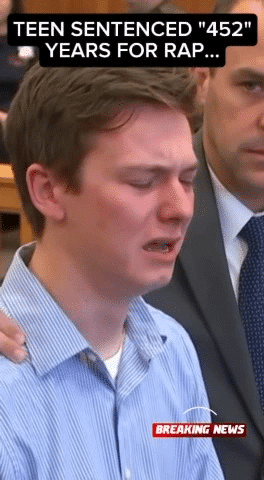
A criminal case involving a 17-year-old defendant has sparked widespread discussion after he was sentenced to 452 years in prison. The sentence, which extends far beyond a natural lifetime, shocked many people online and renewed debate about punishment, accountability, public safety, and how the justice system should handle serious crimes committed by minors.
According to the account, the teenager’s life appeared ordinary before the case changed everything. He was still young, still growing, and still at an age when many people are thinking about school, friendships, future careers, family expectations, and the transition into adulthood.
But one series of actions placed him in the center of a courtroom, facing consequences that would permanently alter the course of his life.
The case is not only about the length of the sentence. It is also about the difficult questions that come with it: how should society respond when a young person commits a serious crime? Should age change the way punishment is applied? Can accountability exist while still leaving room for rehabilitation?
From Teenager to Defendant
Before the court proceedings, the teen was described as someone who still had a future ahead of him. Like many young people, he may have believed that life would continue offering second chances and opportunities to correct mistakes.
But the justice system does not treat every mistake the same way. Some actions carry consequences that cannot be easily reversed.
Once the case entered court, the teenager’s identity changed in the eyes of the public. He was no longer seen only as a student, a son, or a young person still learning how to make responsible decisions. He became a defendant facing the full weight of serious charges.
Inside the courtroom, the atmosphere was reportedly tense and emotional. Family members sat quietly as the judge reviewed the case. Some appeared devastated. Others seemed unable to process the severity of what was happening.
Then came the sentence: 452 years in prison.
For those present, the number was overwhelming. It was not a sentence that suggested release after rehabilitation or a return to normal life. It was effectively a lifetime behind bars.
Why Sentences Can Reach Hundreds of Years
A sentence of 452 years may sound impossible at first, but extremely long prison terms can happen when multiple charges are sentenced consecutively. That means each sentence is served one after another instead of at the same time.
Courts may use this approach in cases involving multiple offenses, repeated criminal acts, or serious harm. From a legal standpoint, consecutive sentencing is often intended to recognize each charge separately and ensure that the punishment reflects the full scope of the case.
Supporters of long sentences argue that they serve several purposes. They hold offenders accountable, protect the public, and send a strong message that serious crimes carry severe consequences.
Critics, however, argue that sentences stretching across centuries raise questions about proportionality, especially when the defendant is still a minor. They ask whether a sentence beyond a lifetime allows any room for growth, remorse, or rehabilitation.
This is where the case becomes more than a legal headline. It becomes a broader conversation about what justice should mean.
The Debate Over Youth and Responsibility
One of the biggest issues in this case is the defendant’s age. At 17, a person may be close to legal adulthood, but still not fully mature emotionally or mentally. Experts in adolescent development have long argued that teenagers are more likely to act impulsively, respond to peer pressure, and fail to fully understand long-term consequences.
That does not mean young people should avoid accountability. Serious harm demands serious legal consequences. Victims and their families deserve justice, safety, and recognition of the pain they experienced.
But many people believe that youth should still matter during sentencing. They argue that a teenager’s brain is still developing and that young people may have a greater capacity to change over time.
This debate has divided public opinion. Some believe the 452-year sentence was justified because the crimes were serious and the legal system must prioritize victims and public safety. Others believe that even in severe cases, a sentence that guarantees a teenager will die in prison removes any possibility of redemption.
Public Reaction Online
After the case spread across social media, reactions came quickly. Some people supported the sentence, saying that actions must have consequences regardless of age. They viewed the punishment as a necessary response to serious wrongdoing.
Others reacted with concern, saying that a sentence longer than a lifetime reflects a justice system focused more on permanent punishment than rehabilitation. They questioned whether society benefits when a young person is given no meaningful chance to prove change decades later.
The discussion also touched on the financial cost of long-term incarceration. Housing someone in prison for life can involve major public expenses, including medical care, security, food, facility costs, insurance-related liabilities, and government budgeting. These concerns often overlap with broader debates about public spending, taxation, personal finance priorities, and whether more resources should be invested in prevention, education, mental health care, and community support.
The Courtroom Moment That Moved Viewers
Beyond the legal arguments, one moment reportedly stayed with many people.
As the teen was escorted from the courtroom, he turned and looked toward his mother. No dramatic speech was needed. The silence said enough.
That single glance captured the emotional weight of the sentence. It represented separation, regret, fear, and the realization that life outside prison might never return.
For his family, the sentence meant missed birthdays, holidays, graduations, milestones, and ordinary moments that most families take for granted. For the victims and their loved ones, the courtroom moment may have represented accountability after deep pain.
That is what makes cases like this so emotionally difficult. Multiple families are changed forever. One side lives with harm and trauma. The other lives with the consequences of a life lost to incarceration.
A Larger Lesson About Choices
This story is a powerful reminder that choices can carry permanent consequences. Some decisions happen in seconds, but the effects can last for decades.
That lesson applies far beyond criminal law. In everyday life, people make decisions about relationships, money, loans, banking, insurance, investments, real estate, and personal responsibility. While most choices do not lead to prison, poor decisions can still create long-term damage that is difficult to repair.
For young people especially, the case highlights the importance of guidance, emotional control, mentorship, and understanding consequences before acting. Prevention matters. Education matters. Family support, community programs, and early intervention can all play a role in helping young people avoid destructive paths.
Final Thoughts
The case of a 17-year-old receiving a 452-year prison sentence is more than a shocking headline. It is a deeply human story about harm, justice, youth, accountability, and the future.
For some, the sentence represents necessary punishment for serious crimes. For others, it raises painful questions about whether a teenager should ever be given a punishment that leaves no realistic path toward redemption.
A fair justice system must protect victims, hold offenders accountable, and keep communities safe. But it must also continue asking difficult questions about rehabilitation, proportionality, and the possibility of change.
In the end, this case reminds us that one moment can alter everything. Some choices cannot be undone, and some consequences last far longer than anyone imagines.